Public Broadcasting Conflict Resolved Amid Political Tensions
After a contentious legal dispute stemming from political pressures, NPR and the Corporation for Public Broadcasting (CPB) have settled their differences, ensuring continued support for public radio. The $36 million contract, initially withdrawn by CPB under pressure from the Trump administration, has now been reinstated.

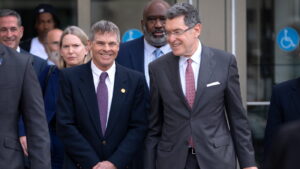
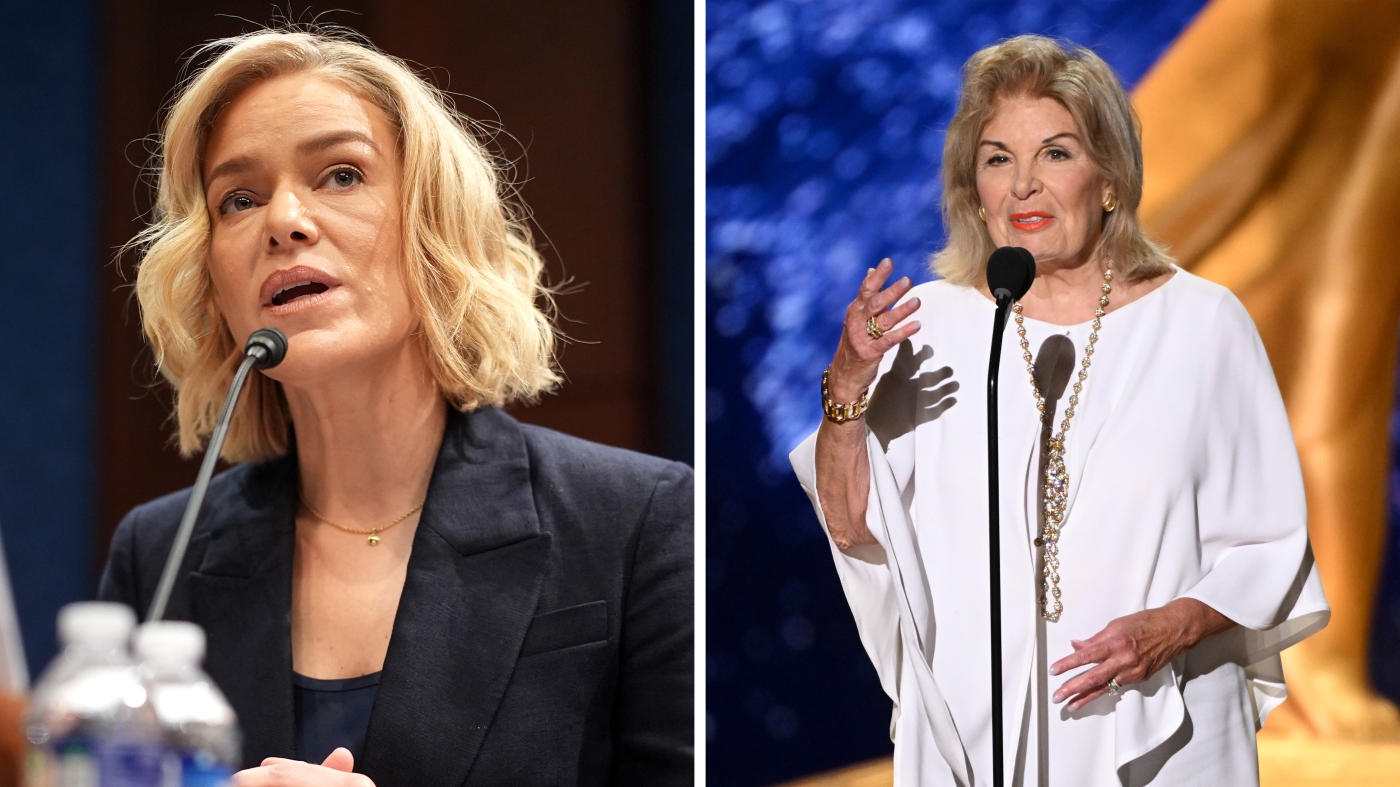
On left, NPR President and CEO Katherine Maher testifies during a House Oversight and Government Reform Committee hearing at the U.S. Capitol on March 26. On right, CPB President and CEO Patricia Harrison accepts the Governors Award on CPB’s behalf during the 2025 Creative Arts Emmy Awards on Sept. 7. Andrew Harnik/Getty Images and Phil McCarten/Invision/AP
Andrew Harnik/Getty Images and Phil McCarten/Invision/AP
The Corporation for Public Broadcasting (CPB) has decided to honor a $36 million, multi-year contract with NPR after initially canceling it under pressure from the Trump administration. This decision follows a lawsuit from NPR, which accused the CPB of succumbing to political influence to financially penalize the network due to its news coverage. NPR has agreed to waive all fees related to the satellite service it provides to local public radio stations.
Despite the settlement, CPB has not acknowledged any wrongdoing or political influence. In a statement, CPB President and CEO Patricia Harrison expressed satisfaction with the end of the litigation, viewing it as a forward step for public media. The CPB had awarded a separate contract to Public Media Infrastructure (PMI), a consortium aiming to enhance digital distribution systems.
Federal funding for public broadcasting ceased on October 1, following a party-line vote in Congress. The CPB, established to distribute federal funds to public media, now operates with reduced staff, impacting local stations significantly. The lawsuit highlighted internal conflicts within CPB, revealing attempts to maintain its future amid pressure from the White House.
U.S. District Court Judge Randolph Moss criticized CPB’s legal arguments during hearings, especially after a White House official advised against working with NPR. The contract cancellation and subsequent lawsuit strained the long-standing partnership between NPR and CPB. With federal funding cuts led by Trump, NPR and PBS faced accusations of bias, which their executives have denied.
As the legal proceedings continue, NPR’s broader case against the executive order prohibiting federal funding remains unresolved. A hearing is scheduled for December to determine its merits.