Concerns Arise Over Defense Bill’s Impact on Aviation Safety
In a development that has sparked significant concern among aviation safety experts, a provision in a proposed defense policy bill has drawn criticism for potentially undermining hard-won safety improvements. This follows the tragic mid-air collision in January that resulted in the loss of 67 lives.

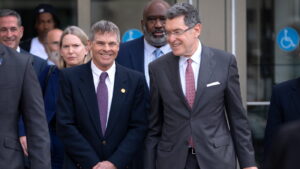
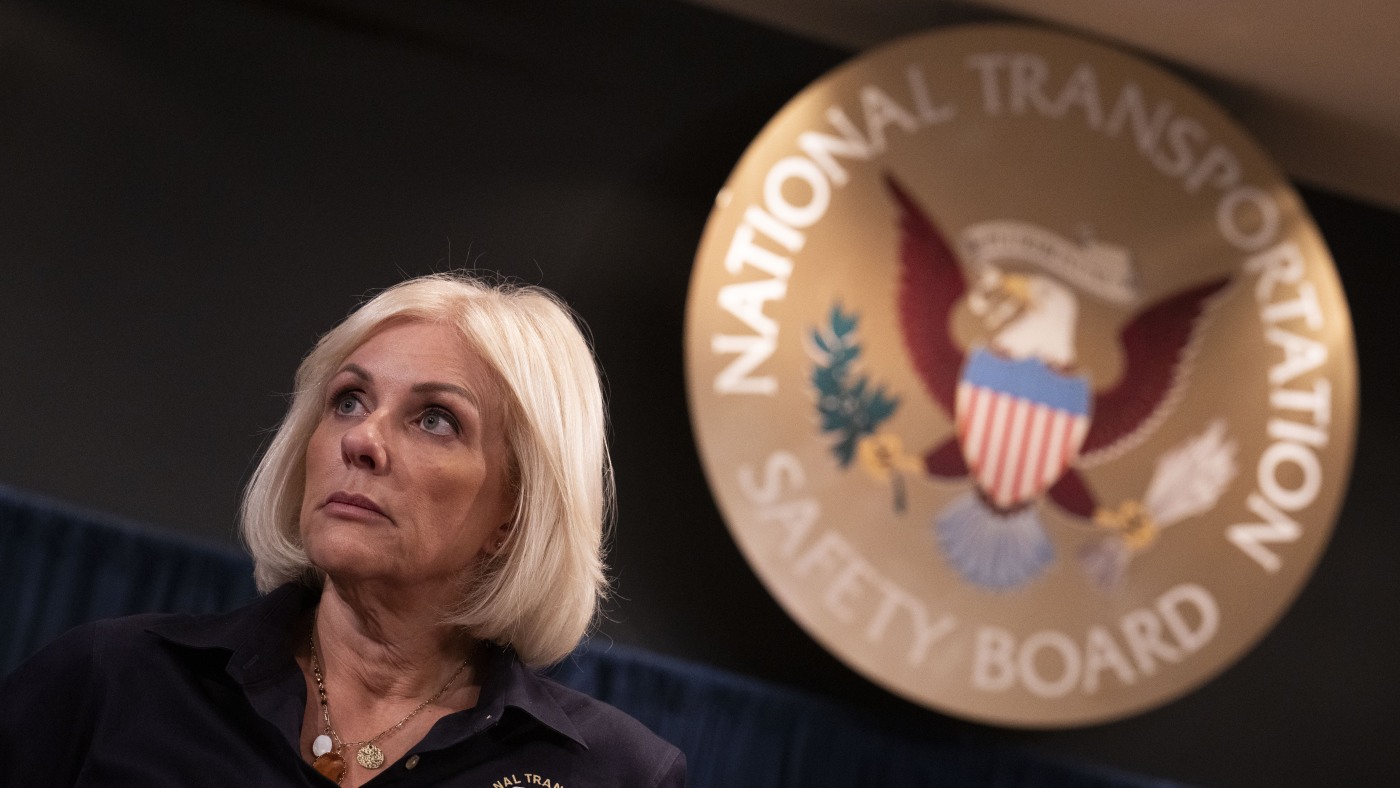
National Transportation Safety Board chairwoman Jennifer Homendy gave a strong rebuke of a defense authorization bill that rolls back safety improvements. The board recommended the changes after the January collision of a military Black Hawk helicopter and an American Airlines regional jet near Ronald Reagan Washington National Airport, killing 67 people. Kayla Bartkowski/Getty Images
The National Transportation Safety Board (NTSB) has voiced strong opposition to a section in the National Defense Authorization Act that threatens to reverse safety advancements. These measures were recommended following a devastating incident involving a military Black Hawk helicopter and an American Airlines regional jet.
In the aftermath of the collision, the Department of Defense committed to requiring military aircraft to transmit their location using Automatic Dependent Surveillance-Broadcast (ADS-B) technology. However, the proposed bill introduces exemptions that could revert to the conditions that contributed to the nation’s deadliest aviation disaster in over two decades. More details here.
“We should be working together in partnership to prevent the next accident, not inviting history to repeat itself by recreating the same conditions that were in place on January 29th,” NTSB chair Jennifer Homendy emphasized.
In a detailed letter to the House and Senate Armed Services Committees, Homendy outlined her concerns, noting that no lawmakers consulted her during the bill’s drafting. Read the letter.
While committee leaders were unavailable for comment, several senators expressed similar concerns, advocating for the ROTOR Act, which mandates ADS-B technology for aircraft and limits exemptions for military helicopters.
“As drafted, the NDAA protects the status quo, allowing military aircraft to keep flying in DC airspace under different rules and with outdated transmission requirements,” read a joint statement from Senators Ted Cruz, Maria Cantwell, Jerry Moran, and Tammy Duckworth. “This comes as Pentagon data shows a spike in military aircraft accidents since 2020. The families of the victims deserve accountability.”
Families affected by the collision, such as Tim and Sheri Lilley, whose son was among the victims, also called for stronger provisions. “The flying public and all those that utilize our airspace deserve better than what this bill provides,” they said, urging Congress to enhance the bill’s safety measures.