As the global political landscape shifts, questions about America’s role on the world stage have become increasingly pertinent. In a recent discussion, NPR’s Sarah McCammon explored these themes with Kori Schake from the American Enterprise Institute, focusing on Schake’s insights from her piece in Foreign Affairs titled, Dispensable Nation: America in a Post-American World.
Examining America’s Changing Influence
Kori Schake’s analysis paints a picture of the United States in a world where its once-dominant position is no longer guaranteed. According to Schake, the U.S. is experiencing a decline in its traditional role as the global leader. This transition reflects broader geopolitical changes and challenges to America’s longstanding influence.
Implications for Global Politics
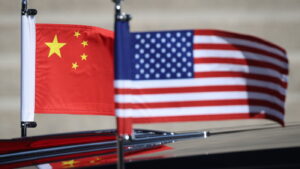
The concept of a “Post-American World” raises questions about the implications for international relations and global stability. Schake suggests that as other nations rise in prominence, the U.S. may find itself having to navigate a more multipolar world. The dynamics of power are becoming more distributed, and this could redefine how global governance is approached.
Strategic Adjustments
In her conversation with McCammon, Schake emphasizes the importance of strategic adjustments for the United States. She argues that America must rethink its foreign policy strategies to adapt to the emerging global order. This adaptation involves not only military and economic strategies but also diplomatic efforts to build alliances and partnerships.
Looking Ahead
As the conversation between McCammon and Schake highlights, the future of American influence is uncertain yet full of opportunities for redefinition. The nation’s ability to adapt to these changes will be crucial in determining its role and effectiveness on the world stage in the years to come.