Supreme Court to Review Controversial Trump Tariffs
The Supreme Court is set to assess the legality of the extensive tariffs introduced by President Trump through an executive order in April, a date Trump termed “liberation day.” The upcoming November hearing will address the contentious tariffs, which have sparked debate and have been deemed illegal by two lower courts.
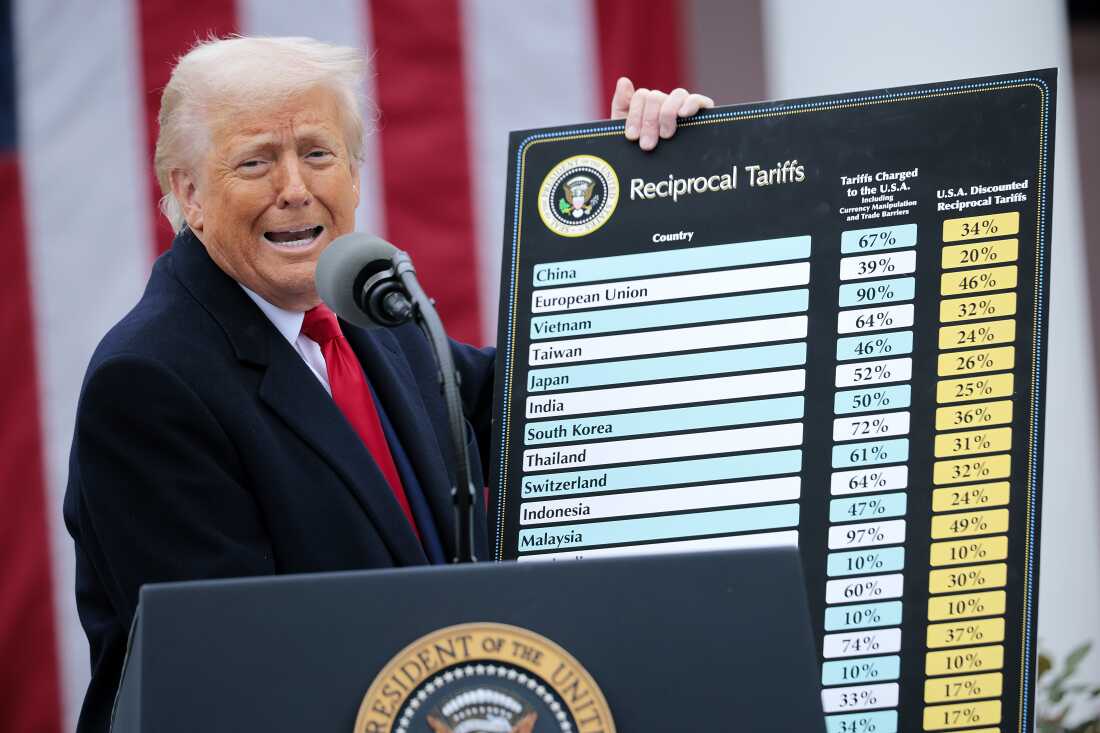
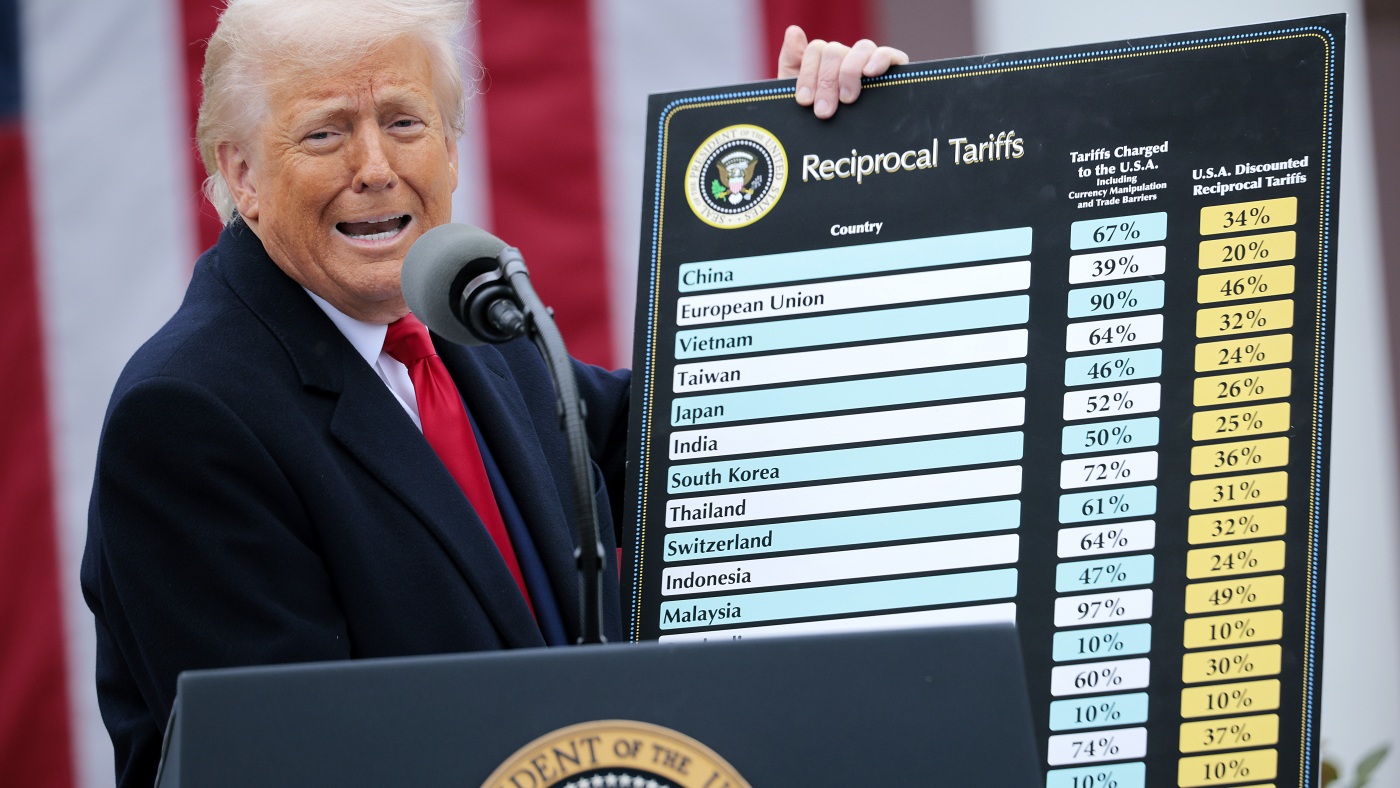
President Trump holds up a chart on April 2 while announcing tariffs against other countries. The Supreme Court will hear arguments in November on the legality of those tariffs.
Chip Somodevilla/Getty Images
Since the tariffs’ introduction, an estimated trillion dollars have been collected from both U.S. and foreign businesses, a sum that might need to be refunded if the tariffs are overturned, according to Treasury Secretary Scott Bessent. President Trump is pressing for a Supreme Court reversal amid the legal challenges.
In defense of the tariffs, Solicitor General D. John Sauer wrote, “With tariffs, we are a rich nation; without tariffs, we are a poor nation.” The administration argues that previous presidents have enacted similar measures, though the Supreme Court will evaluate whether Trump’s tariffs are broader than historical precedents and whether they were legitimately authorized by Congress.
The tariffs, introduced with the dual aim of curbing fentanyl smuggling across U.S. borders and addressing trade deficits, have faced strong opposition from the business community. Critics, including some business leaders, argue that the tariffs threaten to bankrupt rather than save them and claim they exceed Congressional authority granted under the International Emergency Economic Powers Act (IEEPA).
A coalition of a dozen states has also challenged the tariffs, contending that the IEEPA does not permit such a broad application. They argue that the connection between taxing goods like tomatoes and combating fentanyl trafficking is tenuous, stating, “Taxing Tomatoes does not deal with fentanyl.”
The Trump administration warns that upholding the lower court rulings could undermine a vital tool for managing emergencies and transform judges into arbiters of foreign policy, potentially allowing other countries to manipulate the U.S. economy through retaliatory trade policies.