Recall Campaign in Taiwan’s Legislature: Opposition Retains Majority
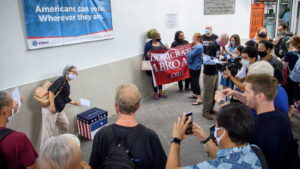
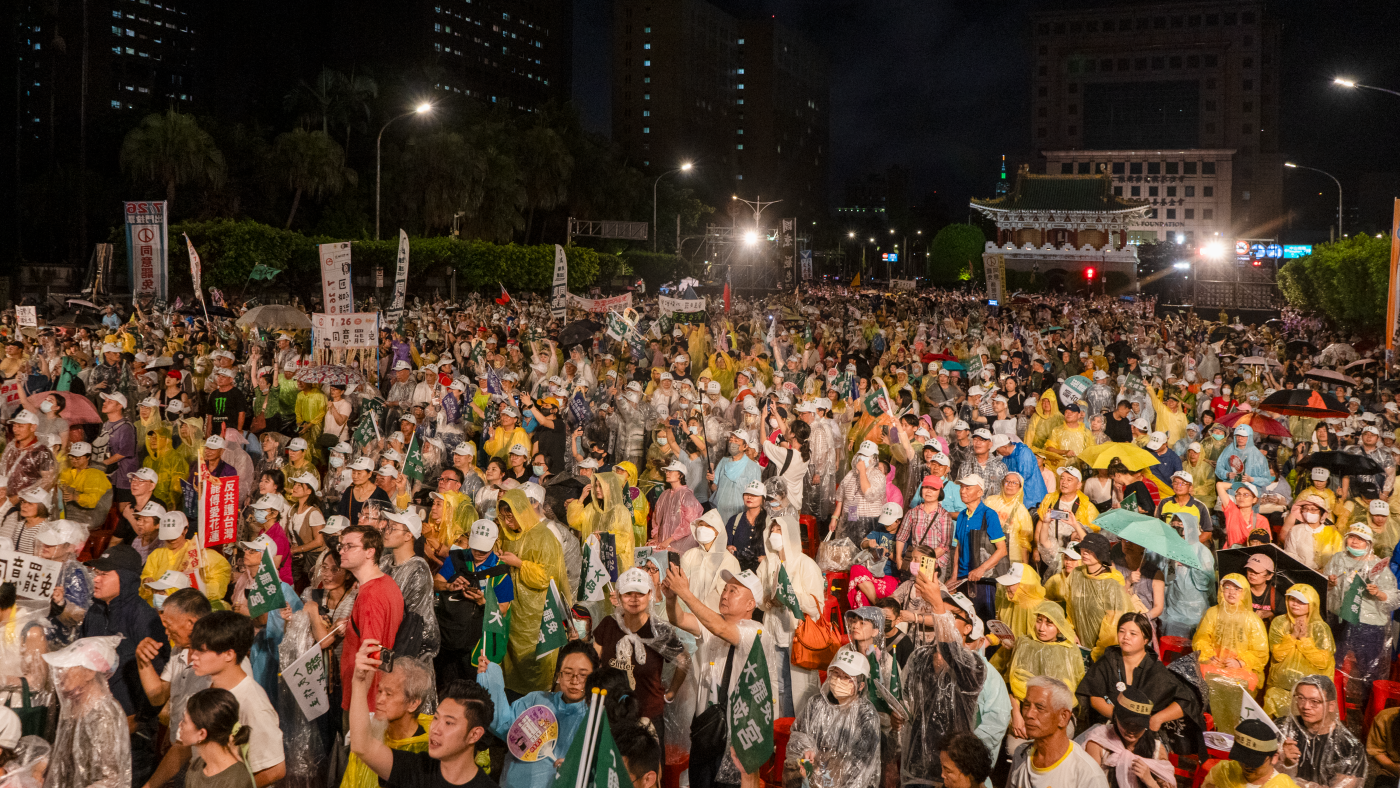
In a significant political event in Taiwan, an attempt to recall opposition lawmakers has failed, allowing them to maintain their parliamentary majority. This development marks a pivotal moment, as it was the first instance of recall petitions executed on a national scale in Taiwan, highlighting a new chapter in the island’s political landscape.
The campaign targeted 24 opposition lawmakers accused of jeopardizing Taiwan’s national security and aligning too closely with China. Despite the recall efforts, these lawmakers will continue to control the legislature, a position they secured following the 2024 general elections where the Democratic Progressive Party’s (DPP) William Lai won the presidency but lost parliamentary control.
Since assuming power, the opposition has challenged President Lai’s policies by blocking appointments, reducing budgets, and opposing defense spending. Mitch Yang, a local recall campaigner, emphasized the perceived threat posed by the opposition, stating, “Their purpose is to weaken Taiwan. They want to sabotage Taiwan from within,” suggesting their actions might reduce the cost for the Chinese Communist Party (CCP) to invade.
Meanwhile, Beijing has intensified its military and diplomatic pressure on Taiwan, maintaining its claim of sovereignty over the self-governing island. In response, Taiwan’s largest opposition party, the KMT, argues they are not pro-China but aim to facilitate dialogue while ensuring deterrence and defense. Alexander Huang, KMT’s international affairs director, stated, “We should be smarter. And smarter means deterrence plus dialogue.”
The KMT further defends its budget cuts as a means to hold the government accountable and avoid rubber-stamp politics. However, Nathan Batto, a research fellow at the Institute of Political Science at Academia Sinica, suggests the opposition’s tactics might have alienated grassroots supporters as tensions have sometimes erupted into physical altercations within the legislative chamber.
The recall efforts, according to KMT officials, are seen as a political maneuver by the government to challenge democratic outcomes. Despite these claims, experts like Batto argue that the recall petitions do not violate democratic principles, as the constitution permits such actions.
With the KMT holding 52 of the 113 parliamentary seats and other opposition parties joining forces, they continue to outnumber the ruling DPP’s 51 seats. Campaigners hoped the recall could shift the parliamentary balance, but the results have left opposition groups feeling more confident. Chance Xu from the KMT’s foreign department remarked, “The silent majority have shown their voice,” urging President Lai to consider dialogue over confrontation.
As a second round of recall petitions approaches, seven more opposition legislators may face losing their seats. However, analysts suggest it is improbable that these efforts will enable the government to regain parliamentary control. President Lai may have to navigate an opposition-dominated parliament until his term concludes in 2028, with experts like Dafydd Fell of the SOAS Centre of Taiwan Studies advising the need for outreach and compromise.