Challenges Arise in Enforcing Trump’s Tariffs Amid Staffing Shortages and Smuggling
Amid the turbulence of trade policies, President Trump’s imposition of extensive tariffs has sparked a complex web of challenges for U.S. import regulation. While these tariffs aim to bolster domestic manufacturing and increase revenue, enforcement hurdles complicate the collection process.

Charles Rex Arbogast/AP
Despite some tariffs being paused or withdrawn, the overall level remains elevated compared to pre-Trump administration levels. However, federal agencies tasked with import screening face significant challenges, contending with overwhelming volumes and a shortage of resources. Meanwhile, exporters increasingly exploit loopholes to evade these tariffs.
Rising Incentives for Smuggling
The heightened tariffs, particularly those targeting China, have inadvertently incentivized smuggling activities. Even after a recent U.S.-China agreement, tariffs on Chinese imports hover around 30%, significantly higher than those from other countries. Matt Lapin, a trade compliance attorney, notes, “The incentive for bad actors to act worse or for previously good actors to skirt the law — that incentive is just increasing.”
Transshipping, a tactic involving rerouting products through third countries, is a common method used to bypass tariffs. David Rashid, an auto parts business owner in Illinois, experienced firsthand the disappointment of discovering competitors exploiting this loophole. His initial support for Trump’s tariffs turned into frustration when he realized Chinese competitors were avoiding tariffs by using countries like Thailand and Vietnam as transit points.
Resource Constraints in Tariff Collection
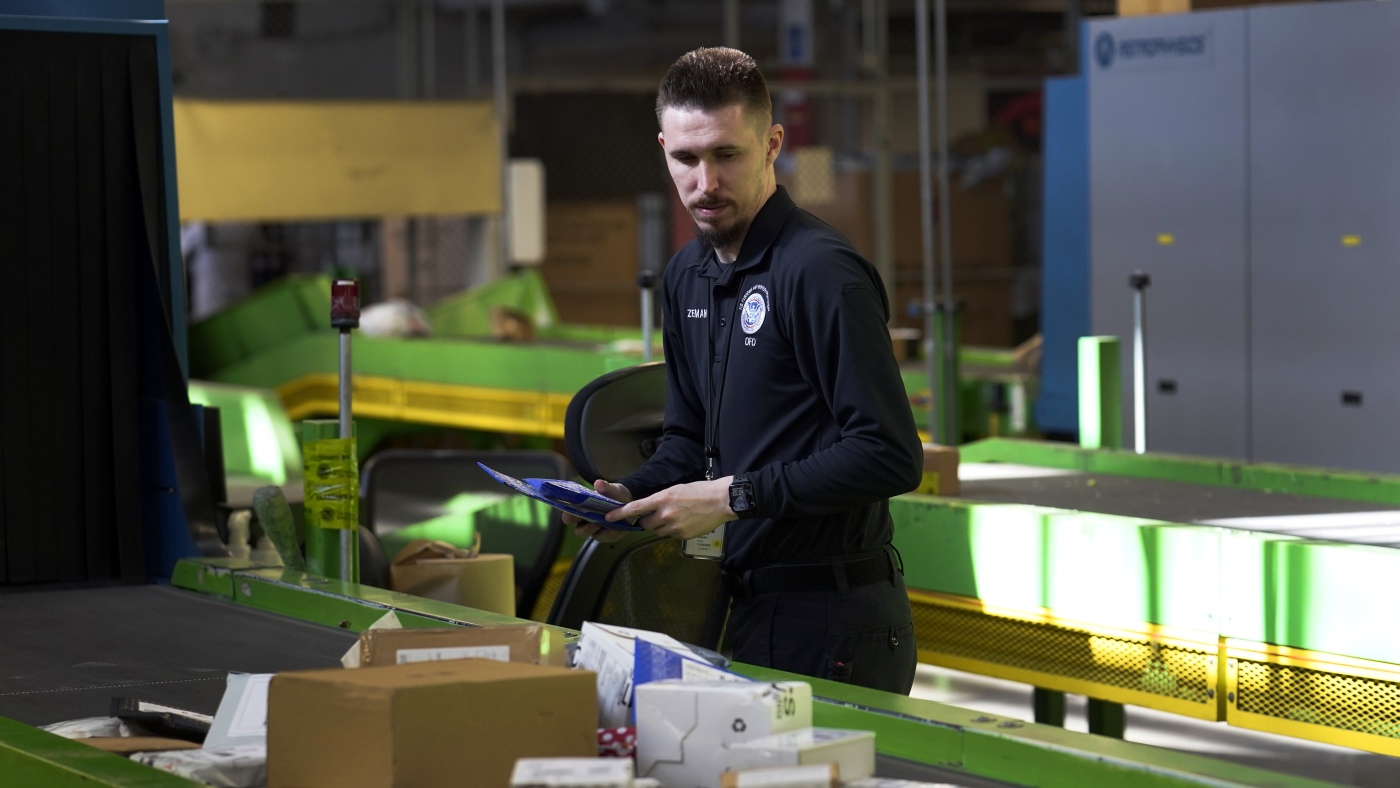
U.S. Customs and Border Protection (CBP) is responsible for screening imports and collecting tariffs, yet the agency is stretched thin. With new tariffs on over a billion low-value packages annually, primarily from Chinese e-commerce platforms, the agency faces a daunting task. Ram Ben Tzion, a logistics software supplier, questions CBP’s capacity to handle this massive workload effectively.

Charles Rex Arbogast/AP
CBP’s chronic understaffing exacerbates the issue, with looming retirements threatening to further deplete its workforce. A former senior enforcement official highlighted the persistent shortage of import specialists, crucial for detecting trade fraud. Although the agency is mandated to employ approximately 1,000 specialists, it often falls short of this target.
“People Don’t Get Caught”
Milton Magnus, owner of M&B Hangers in Alabama, recounts his struggle against tariff evasion. Despite hiring private investigators and submitting evidence of trade violations, he received no response from authorities. His frustration mirrors a broader sentiment among U.S. business owners who face similar challenges.
Efforts to address trade fraud include a proposed $20 million fund for the Department of Justice to strengthen its trade fraud prosecution capabilities. However, a government-wide hiring freeze and budget cuts hinder progress. A former DOJ official expressed frustration at the lack of resources, emphasizing the need for additional personnel to tackle the influx of cases.
The absence of leadership within the DOJ’s trade fraud task force further complicates enforcement efforts. Rashid argues that the inability to prosecute trade crimes not only impacts businesses but also results in substantial lost revenue for the U.S. government.