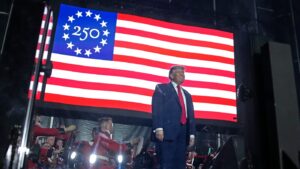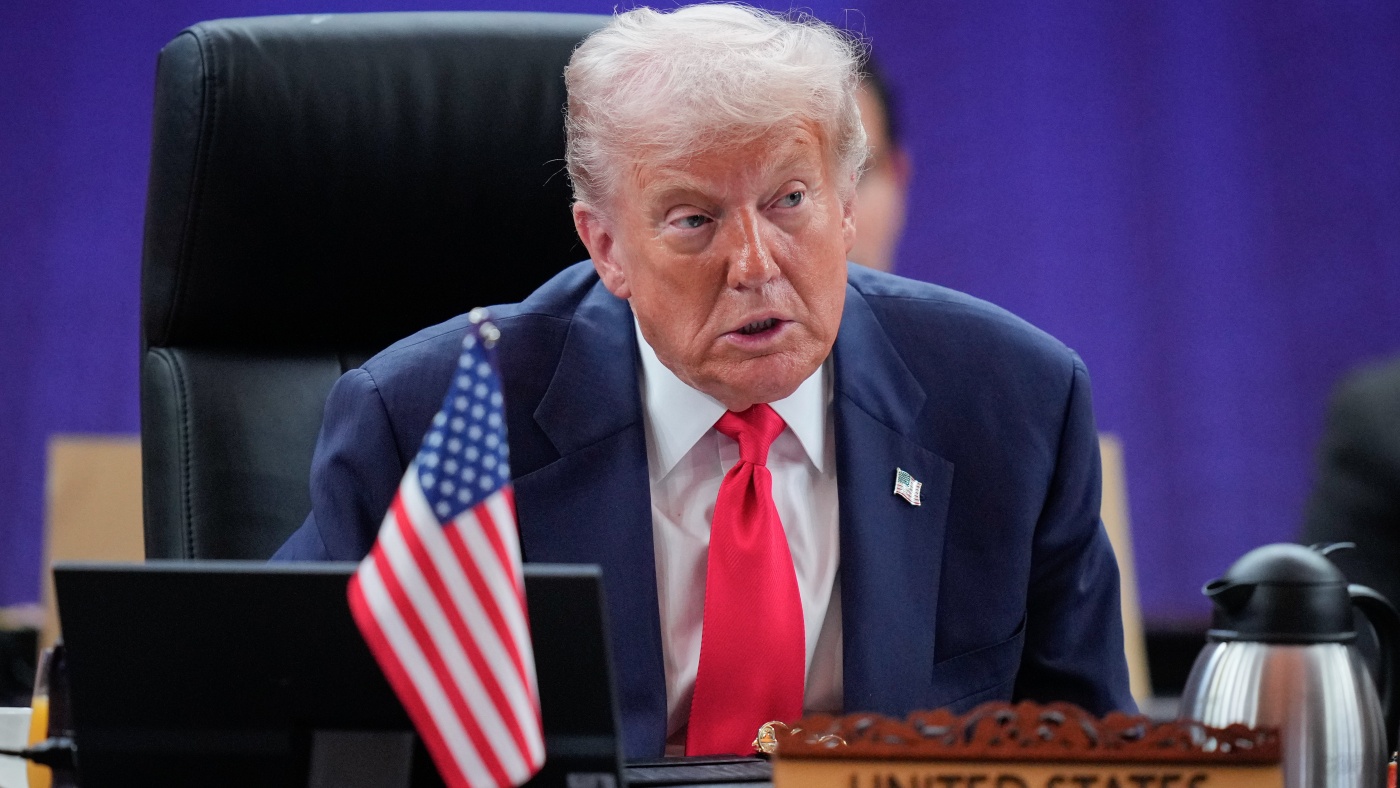

President Donald Trump addresses during the ASEAN US Summit in Kuala Lumpur, Malaysia, Sunday, Oct. 26, 2025. Vincent Thian//AP POOL
In an atmosphere charged with anticipation, leaders from the United States and China are making strides toward a possible trade deal, according to officials from both nations. This preliminary agreement, discussed at a high-profile meeting, may soon come to fruition under the guidance of President Donald Trump and China’s Xi Jinping.
While the potential agreement doesn’t fully resolve issues such as manufacturing disparities and access to cutting-edge technology, its confirmation would likely soothe international markets. The impending deal arises amidst tensions, with Beijing’s recent restrictions on rare earth exports and Trump’s threats of additional tariffs escalating global economic concerns.
Li Chenggang, China’s chief trade negotiator, indicated that both parties have found common ground, describing the development as a “preliminary consensus.” Meanwhile, U.S. Treasury Secretary Scott Bessent emphasized the creation of a “very successful framework.”
Trump reiterated his confidence in the negotiations, stating both sides are eager to reach a deal. He is slated to meet Xi in South Korea, marking the conclusion of his Asian tour, and hinted at future engagements in Beijing or on U.S. soil.
Further to these developments, Bessent shared with CBS’ “Face the Nation” that the threat of higher tariffs on China is “effectively off the table.” The talks have led to initial agreements regarding the reduction of fentanyl precursor chemicals entering the U.S. and increased Chinese purchases of American agricultural products. Additionally, China will delay export controls on rare earth elements.
The ASEAN summit in Kuala Lumpur served as the backdrop for these discussions, with Trump focusing on enhancing his international deal-making credentials. However, his approach has stirred disruptions globally and domestically, including conflicts with Democrats leading to a government shutdown.

United States Secretary of the Treasury Scott Bessent reacts during a meeting between President Donald Trump and Brazil’s President Luiz Inacio Lula da Silva on the sidelines of the ASEAN Summit in Kuala Lumpur, Malaysia, Sunday, Oct. 26, 2025. Mark Schiefelbein/AP
Trump attends ceasefire ceremony between Thailand and Cambodia
During the summit, Thailand and Cambodia formalized an extended ceasefire agreement, witnessed by Trump. His threats of economic sanctions earlier pushed the two nations to de-escalate tensions at their contested border.
The agreement involves Thailand releasing Cambodian detainees and Cambodia withdrawing heavy artillery, with regional monitors ensuring compliance.
“We did something that a lot of people said couldn’t be done,” Trump declared. Cambodian Prime Minister Hun Manet hailed it as a “historic day,” while Thai Prime Minister Anutin Charnvirakul viewed it as a foundation for enduring peace.
Trump also signed economic agreements with Cambodia, Thailand, and Malaysia, aiming to bolster trade in critical minerals and reduce reliance on China.
“It’s very important that we cooperate as willing partners with each other to ensure that we can have smooth supply chains, secure supply chains, for the quality of life, for our people and security,” stated U.S. Trade Representative Jamieson Greer.

President Donald Trump, centre left, poses with other leaders during the ASEAN US Summit in Kuala Lumpur, Malaysia, Sunday, Oct. 26, 2025. Vincent Thian/AP POOL
Trump reengages with a key region of the world
Having attended the ASEAN summit only once during his first term, Trump seized this opportunity to reconnect with countries representing a $3.8 trillion economy and 680 million citizens.
“The United States is with you 100%, and we intend to be a strong partner and friend for many generations to come,” Trump assured, praising his counterparts as “spectacular leaders” with the Midas touch.
Trump’s tariff threats played a pivotal role in encouraging negotiations between Thailand and Cambodia, which have seen significant violence over their border dispute. His ultimatum to withhold trade agreements unless hostilities ceased was instrumental in achieving a fragile truce.
Malaysian Prime Minister Anwar Ibrahim lauded the Thailand-Cambodia agreement, observing, “it reminds us that reconciliation is not concession, but an act of courage.”
Tariffs are in focus on Trump’s trip
At the summit, Trump held talks with Brazilian President Luiz Inácio Lula da Silva amid tensions over Brazil’s handling of former President Jair Bolsonaro’s prosecution. Trump hinted at potential tariff reductions on Brazil, contingent on leniency for Bolsonaro.
Conversely, Trump overlooked Canadian Prime Minister Mark Carney, upset over a Canadian ad criticizing his trade policies, and announced increased tariffs on Canada via social media.
Absent from the summit was Indian Prime Minister Narendra Modi. Although once close, their relationship has cooled due to recent tariff hikes on India and Trump’s claim of mediating an India-Pakistan conflict, which has strained ties.