Intel’s Strategic Move: U.S. Government Acquires Significant Stake
The U.S. government has taken an unprecedented step in its economic strategy by acquiring a substantial stake in Intel, one of America’s leading semiconductor companies. This move demonstrates a robust partnership between the state and private sector, aiming to strengthen domestic chip production capabilities.

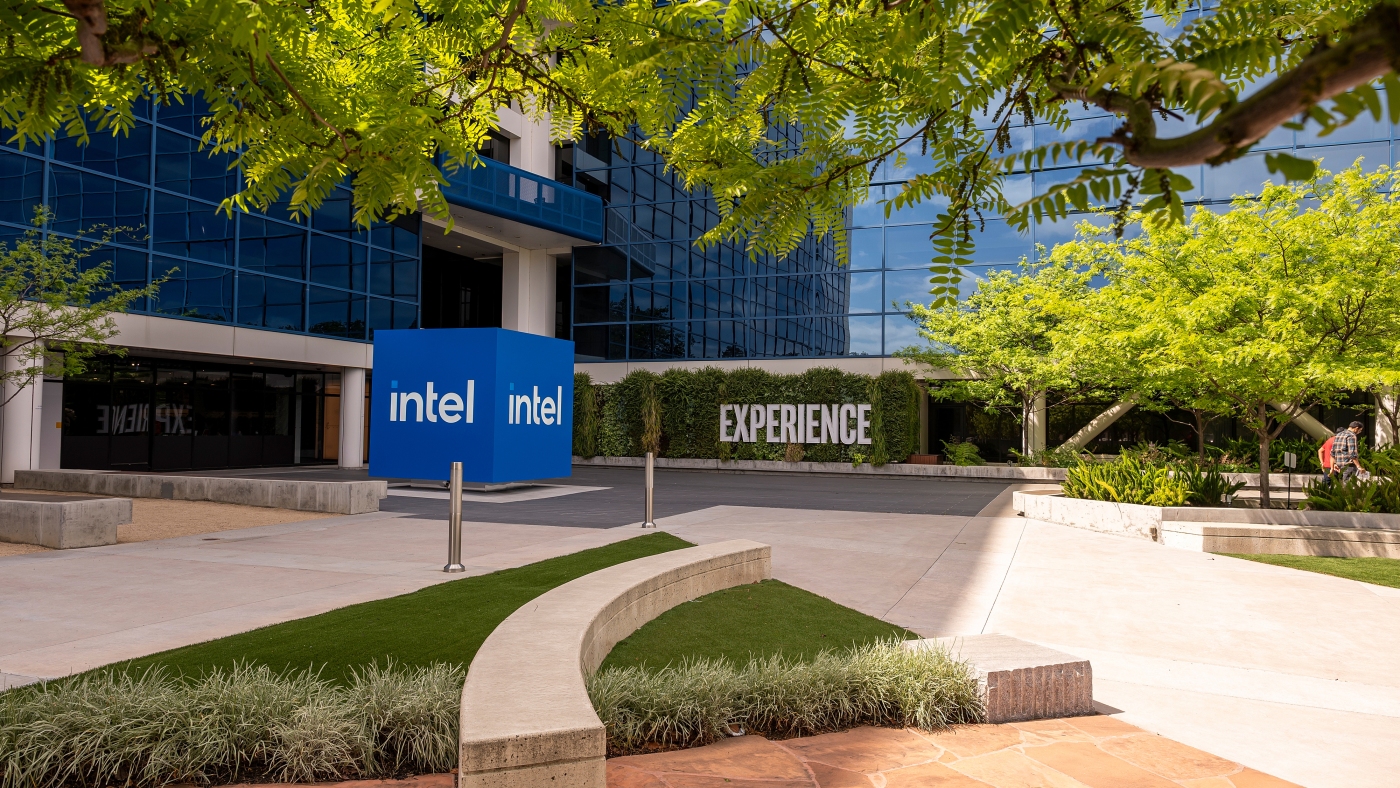
The Intel headquarters in Santa Clara, California, US, on Wednesday, April 23, 2025. David Paul Morris/Bloomberg via Getty Images
Recently, President Trump announced a significant agreement with Intel, wherein the U.S. government will acquire a 10% stake in the company. This decision came after discussions with Intel’s CEO, Lip-Bu Tan, at the White House. “He agreed, and they’ve agreed to do it, and I think it’s a great deal for them,” Trump stated, highlighting the favorable outcome for the United States.
Intel confirmed in a statement that the government will invest $8.9 billion in Intel common stock. This investment reflects the administration’s confidence in Intel’s capacity to advance national priorities and expand the domestic semiconductor industry.
The financial arrangement includes $5.7 billion funded through grants from the CHIPS and Science Act of 2022, which allocated nearly $53 billion for chip-related activities. Intel has already received $2.2 billion under this act, bringing the total government investment to $11.1 billion. Additionally, $3.2 billion will be awarded through the Defense Department’s Secure Enclave program to bolster U.S. semiconductor manufacturing.
The agreement allows the government to purchase 433.3 million primary shares of Intel at $20.47 per share, representing a 9.9% stake. However, the government will not have board representation or governance rights and will align its votes with the company’s board, except in limited cases.
President Trump described the deal as a “great Deal for America and, also, a great Deal for INTEL,” emphasizing the importance of semiconductor manufacturing for the nation’s future.
This strategic move is part of a broader effort by the Trump administration to encourage chip production within the U.S. and marks a shift in the extent of control the government exercises over private companies.
Commerce Secretary Howard Lutnick acknowledged the deal on CNBC, stating, “So we’ll deliver the money, which was already committed under the Biden administration. We’ll get equity in return for it.” Following Trump’s announcement, Lutnick also posted on X, calling it a “historic agreement” that grants the U.S. a 10% stake in Intel.
Intel has encountered challenges in recent years, particularly in the competitive field of chips for artificial intelligence. The company lags behind Nvidia, its Santa Clara-based competitor, which has become the world’s largest company by market capitalization.
In August, Trump revealed that Nvidia would pay the U.S. government 15% of its revenues from H20 chip sales in China, allowing continued sales in that market. Nvidia has declined to comment on the specifics but stated it complies with U.S. regulations.
Intel’s financial performance has declined, with the company reporting net losses for the first two quarters this year, affecting its market capitalization.
President Trump had previously urged Intel CEO Tan to resign due to investments in Chinese tech firms, leading to a direct meeting between the two at the White House. Afterward, Trump praised the discussion and Tan’s role in the company.
Intel plans to invest over $28 billion in new chip production facilities in Ohio. However, the project faces delays, and analysts question whether there will be enough demand for the chips produced.
Chris Miller, a professor at Tufts University, raised concerns about the demand for Intel’s future production, saying, “One of the questions that we still haven’t seen answers to yet in the public sphere, at least, is how this discussion about equity financing relates to the question of who’s going to be the customer for Intel’s factories.”