Historical Context of Federal Control Over D.C.
The unique governance structure of Washington, D.C., has long been a topic of debate. Recent developments have reignited discussions as President Trump takes significant steps to assert federal control over the district. This move involves deploying the D.C. National Guard and temporarily taking over the city’s police force, actions that mark a pivotal moment in the ongoing dialogue about D.C.’s autonomy.
In a declaration, Trump described the action as a measure to “rescue our nation’s capital from crime, bloodshed, bedlam and squalor and worse.” He referred to it as “Liberation Day in D.C.,” expressing a desire to reclaim the capital.
Although Trump’s statements suggest a crisis, statistics from the Metropolitan Police Department show a different picture. Violent crime in D.C. has considerably decreased, reaching a 30-year low in 2024 and dropping an additional 26% compared to the previous year.
Understanding Home Rule
The concept of home rule in D.C. was established by Congress in 1973, enabling residents to elect their own mayor and city council. However, it retained congressional oversight over the district’s legislation and budget. This form of self-governance marked a departure from nearly a century of governance by presidentially appointed commissioners.
The Home Rule Act placed limitations, such as prohibiting the district from taxing commuters, universities, and national organizations, which continue to impact D.C.’s financial autonomy today.
The Evolution of D.C.’s Governance
Originally, the governance of D.C. was more localized. In 1802, Congress incorporated the city, allowing for an elected city council and a president-appointed mayor. However, following the Civil War, the demographic shifts and increasing Black political participation led to changes in governance structure.
By 1871, Congress established a territorial government with an elected delegate, but this was replaced in 1874 by a three-member presidentially appointed commission following concerns about rising Black governance.
The Pursuit of Home Rule in the 20th Century
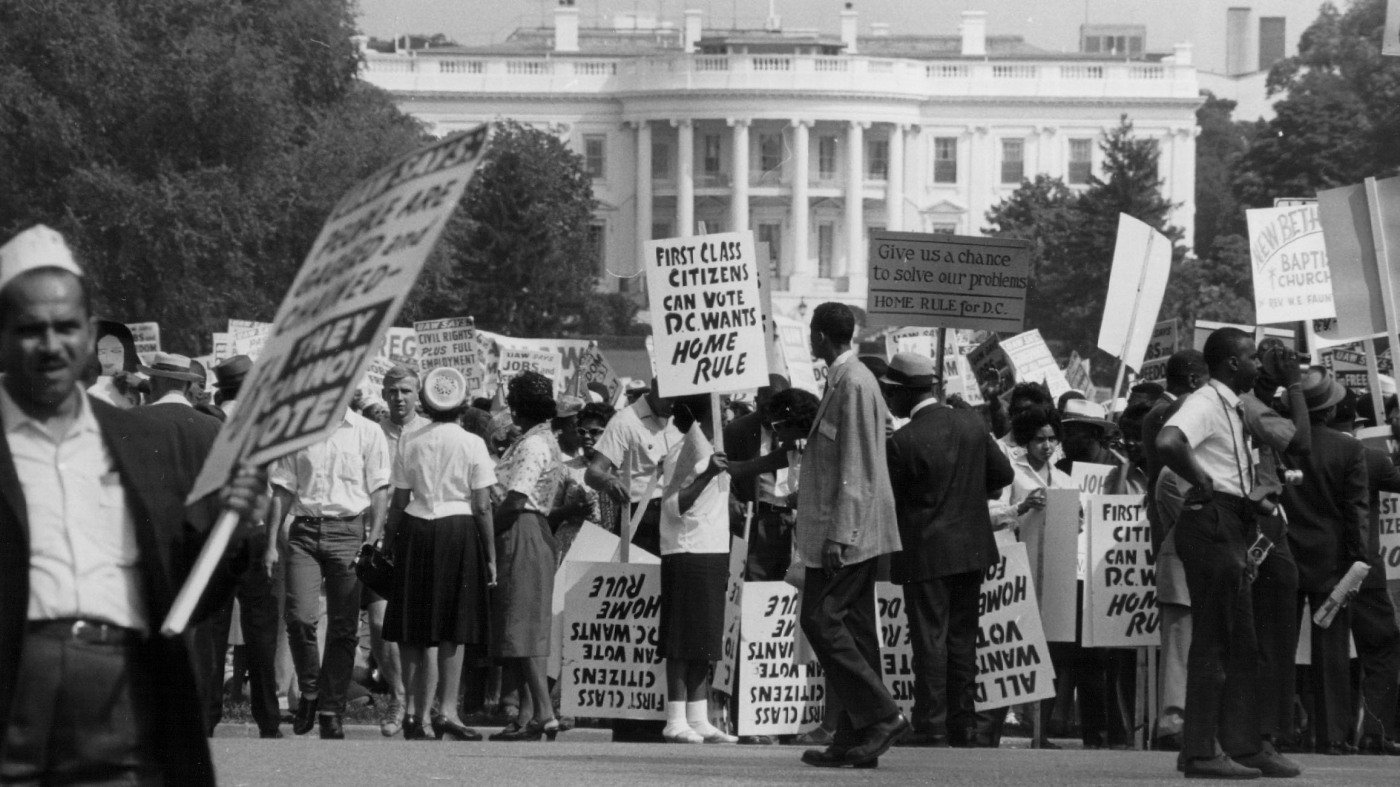
By the 1960s, D.C. residents, particularly the majority-Black population, were advocating for home rule, aligning with the Civil Rights Movement’s goals. In 1973, Congress passed the Home Rule Act, motivated partly by the Cold War’s emphasis on democracy. The act aimed to reduce logistical burdens on Congress but retained federal oversight.
The Role of the Control Board in the 1990s
Despite the establishment of home rule, D.C. faced financial challenges in the 1990s, exacerbated by congressional restrictions. By 1995, the district’s financial crisis led to the creation of the Control Board, which oversaw D.C.’s finances and could override local decisions. This period of oversight ended with the 1997 National Capital Revitalization and Self-Government Improvement Act, which helped D.C. regain financial stability.
Trump’s Unprecedented Federal Takeover
While federal control over D.C. isn’t new, the current takeover of law enforcement by President Trump is unprecedented. According to Congresswoman Eleanor Holmes Norton, Trump is the first president to federalize the D.C. police department. This move highlights ongoing issues with D.C.’s limited autonomy and has reignited discussions about statehood.
In a 2016 referendum, 86% of D.C. residents supported statehood, but the proposal has struggled to gain traction in Congress. Trump’s recent actions might catalyze further support for D.C. statehood by drawing national attention to the district’s lack of power.