Trump Aims to Eradicate Mail-In Voting Ahead of Midterms
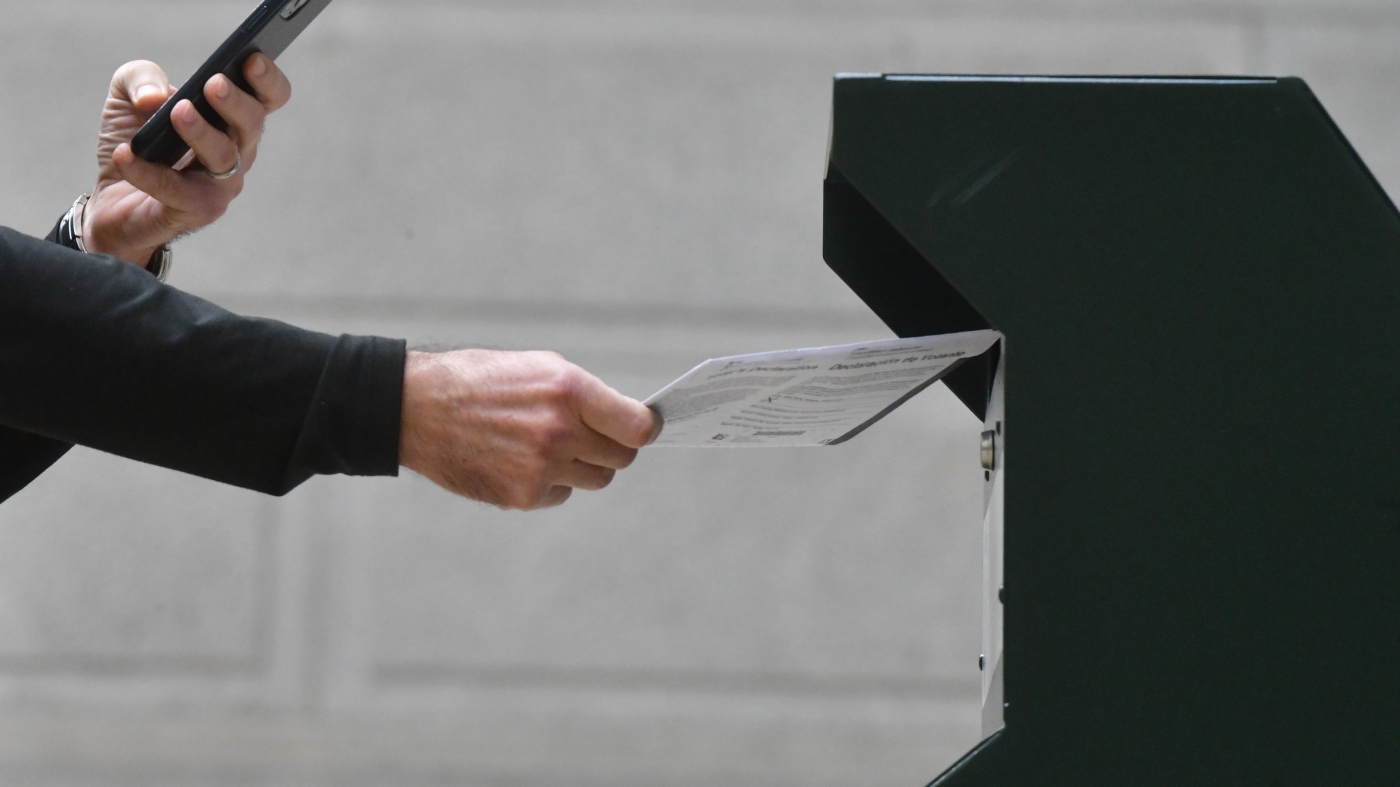
In a bold move, former President Donald Trump has announced plans to eliminate mail-in voting and certain voting machines as part of a new initiative ahead of the upcoming midterm elections. Trump’s statement was made on Truth Social, his social media platform, where he expressed intentions to lead a movement against these voting methods, citing them as unreliable without providing evidence.
His strategy includes the introduction of an executive order to prevent states from utilizing mail ballots and some voting machines. Trump claims these machines are “highly inaccurate,” more costly, and less dependable compared to paper ballots.
During a meeting with Ukrainian President Volodymyr Zelenskyy at the White House, Trump declared, “We’re going to start with an executive order that’s being written right now by the best lawyers in the country to end mail in ballots because they’re corrupt. And it’s time that the Republicans get tough and stop it because the Democrats want it. It’s the only way they can get elected.”
Despite previously encouraging his supporters to use mail-in voting before the 2024 presidential election, Trump’s current stance contrasts with voting trends. Since the 2020 election, Democrats have shown a higher propensity to vote by mail compared to Republicans, a trend amplified by GOP-led states introducing more restrictions on mail-in voting.
However, legal experts contend that Trump lacks the authority to dictate election procedures, as the Constitution entrusts Congress, not the president, with the regulation of federal elections. “There’s really nothing that the executive branch can do on its own in terms of direct mandates,” stated Michael Morley, a law professor at Florida State University.
UCLA law professor Richard Hasen echoed this sentiment, explaining that any attempt to ban mail-in ballots or specific voting machines would necessitate congressional cooperation, which appears unlikely.
The Center for Election Innovation & Research’s executive director, David Becker, emphasized the Founders’ intention to keep the president out of election governance. “Hamilton foresaw, and made clear in Federalist 59 that a democracy must diversify power of elections in order to protect itself from an overzealous executive,” Becker noted.
As the midterm primaries approach, the logistics of implementing such drastic changes are daunting. Matt Germer of the R Street Institute highlighted the challenges, including potential litigation and the need for states to pass new laws or voting plans. “In some places, I think things like restricting voting by mail mechanically would just mean forcing more people to come in and vote in person,” Germer pointed out.
Barbara Smith Warner, from the National Vote at Home Institute, expressed skepticism about the feasibility of eliminating mail-in voting within the proposed timeframe. She believes the underlying motive might be to “destabilize” the forthcoming elections, undermining public confidence.
Reflecting on Trump’s past attempts to challenge election results, Hasen warned of possible interference in future elections. “And so now is the time to take preparations on the part of states and parts of courts and others to ensure that the elections that we conduct in 2026 will be conducted with fairness and integrity,” Hasen advised.