As President Trump prepares to address Congress and the nation in his first State of the Union speech of his second term, he is confronted by numerous challenges ranging from tariffs to the situation with Iran.
STEVE INSKEEP, HOST:
President Trump is set to speak to Congress and the country tonight.
(SOUNDBITE OF ARCHIVED RECORDING)
PRESIDENT DONALD TRUMP: It’s going to be a long speech because I have – we have so much to talk about.
LEILA FADEL, HOST:
The State of the Union address serves as a crucial platform for any president to either set or reset the national agenda. Currently, a significant portion of Americans are dissatisfied with the state of the nation. According to a recent NPR survey, 60% of respondents believe the country is worse off compared to a year ago. We will soon delve into this with a Republican analyst and speechwriter. But first, let’s preview the speech.
INSKEEP: NPR White House correspondent Franco Ordoñez offers his insights. Hello, Franco.
FRANCO ORDOÑEZ, BYLINE: Good morning, Steve.
INSKEEP: What can you tell us about the president’s strategy?
ORDOÑEZ: It seems the president’s team is finalizing a speech intended to reset the narrative, highlighting his achievements while also laying the groundwork for the upcoming midterms by addressing how the administration plans to tackle everyday costs. Ashley Koning, a pollster from Rutgers University, mentioned the challenges facing the administration.
ASHLEY KONING: There is so much on the table right now with the president going into this speech between whether we’re talking about the partial shutdown, the economy, immigration or Iran, and then clearly him seeing his worst poll numbers right now during his second term.
ORDOÑEZ: The unpredictability with President Trump is high, Steve. He often makes public statements without thoroughly explaining policies in a way that satisfies many Americans. Tonight is a chance for him to clarify his plans.
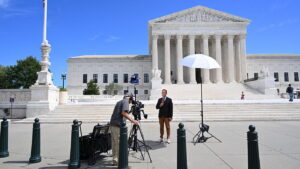
INSKEEP: That’s a good point, especially as he addresses the nation after the Supreme Court ruled his tariffs illegal.
ORDOÑEZ: Indeed, it’s a major blow to his agenda. Trump is proposing new tariffs under a different law, causing concern among some Republicans due to potential cost increases. Jon McHenry, a seasoned Republican strategist, suggested Trump use this moment to justify a policy many Americans oppose.
JON MCHENRY: He has an opportunity to say, this is why I think these tariffs are important, and we are going to handle it in this manner because I’m trying to preserve manufacturing jobs, because I’m trying to preserve farming jobs, rather than just saying, I can’t believe these people are against me. What losers and RINOs they are.
INSKEEP: It’s important to remember, Franco, that after the court’s decision, President Trump criticized the justices, calling them “unpatriotic and disloyal,” despite having appointed some of them.
ORDOÑEZ: Exactly, Steve. And those justices will be present tonight. The optics of this event, like many involving this president, will be significant. With the justices in attendance, the question remains whether Trump will resist personal attacks, as he did last week.
INSKEEP: Another pressing question is what stance the president will take regarding the potential conflict with Iran.
ORDOÑEZ: A similar concern exists here. Many within his party are worried about the U.S. being drawn into a prolonged conflict, which Trump himself vowed to avoid. Unlike past presidents, Trump has not publicly justified why military actions might be necessary. Tonight could be an opportunity to articulate his reasoning, allowing the public to understand his decisions. However, this approach is not typical for Trump.
INSKEEP: Thank you for the insights, NPR White House correspondent Franco Ordoñez.
ORDOÑEZ: Thank you, Steve.
Accuracy and availability of NPR transcripts may vary. Transcript text may be revised to correct errors or match updates to audio. Audio on npr.org may be edited after its original broadcast or publication. The authoritative record of NPR’s programming is the audio record.