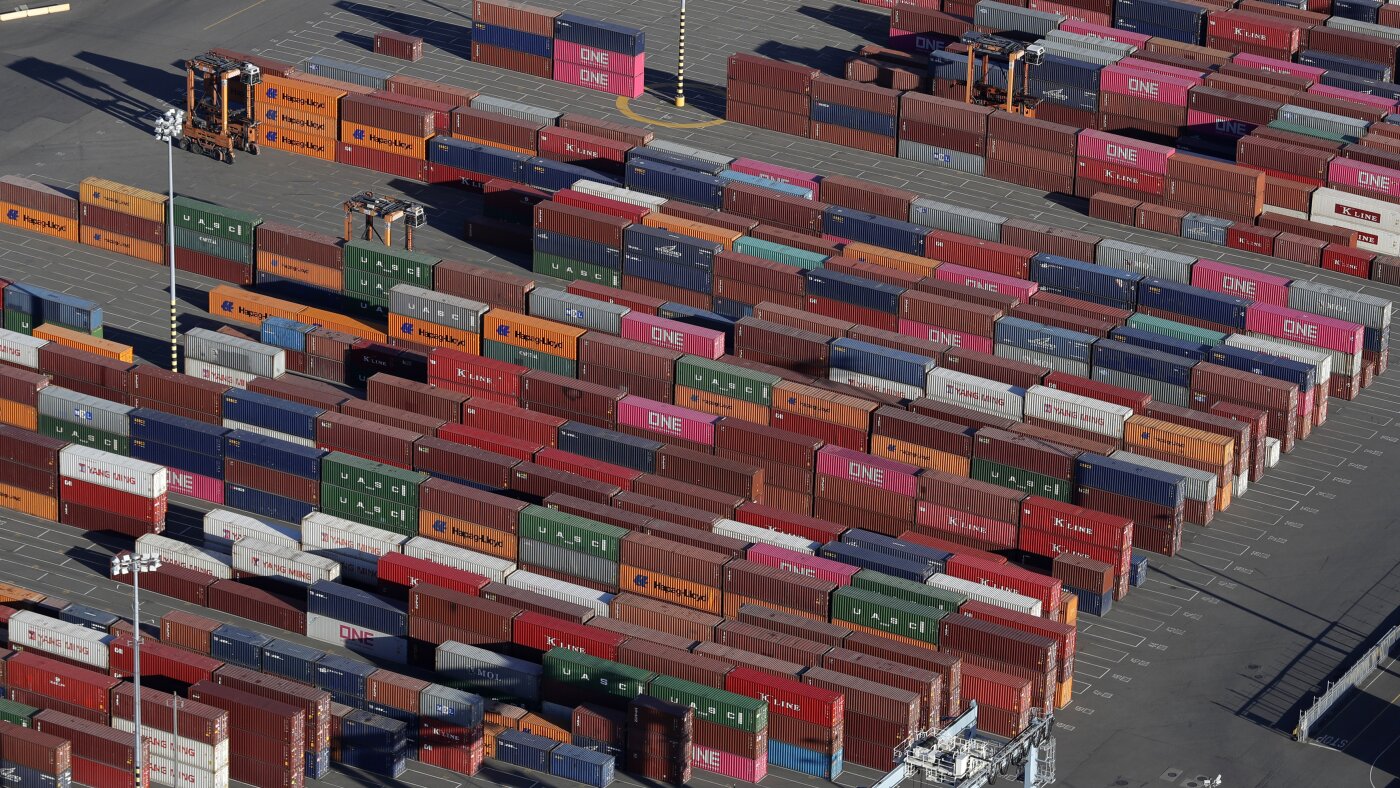

Cargo containers are staged near cranes at the Port of Tacoma in Washington.
Ted S. Warren/AP
In a recent development, U.S. customs officials have announced plans to establish a system for processing tariff refunds, aiming to implement it within 45 days. This follows the Supreme Court’s decision to nullify several tariffs imposed by former President Trump, leaving many businesses questioning the refund process.
Small business owners have expressed concerns about potentially needing to pursue individual lawsuits to obtain their refunds. This anxiety stems from legal advice suggesting such a need, compounded by previous comments from Trump administration officials about possible litigation delays in the refund process.
Last Friday, U.S. Customs and Border Protection representatives informed the U.S. Court of International Trade that, although their current computer system cannot handle the influx of refunds, they are working towards a more efficient solution. This new system would allow importers to receive refunds without filing individual lawsuits, utilizing the existing electronic portal for customs filings.
To date, the government has collected approximately $166 billion in tariffs from over 330,000 businesses, which the Supreme Court has now deemed unconstitutional. As Judge Richard Eaton of the Court of International Trade stated, “The law is clear. The duties were unlawful from the moment they were imposed. And that means that every single cent must be returned to the importer.”
Judge Eaton has mandated that U.S. Customs begin issuing refunds immediately, with interest, and expects an update from the agency soon. An earlier appeal by the Justice Department to delay the refund process for 90 days was rejected. During the Supreme Court proceedings, the Justice Department had assured that any overturned tariffs would be refunded, a promise that allowed continued tariff collection after a lower court ruling last May declared them illegal.
Sara Albrecht, head of the Liberty Justice Center, which challenged the tariffs in the Supreme Court, commented on the situation, saying, “They said, ‘There is no harm, because we can always refund the money.’ And they even included ‘with interest.’ To me it’s pretty clear that they don’t have a lot of room to argue that they can’t pay refunds.”