U.S. Ranchers Face New Challenges Amid Beef Import Plans
Amid rising beef prices and dwindling cattle supplies, American ranchers are expressing concerns over a proposed plan to increase beef imports from Argentina. The move, suggested by President Trump as a measure to curb soaring domestic costs, has been met with dismay from the ranching community.

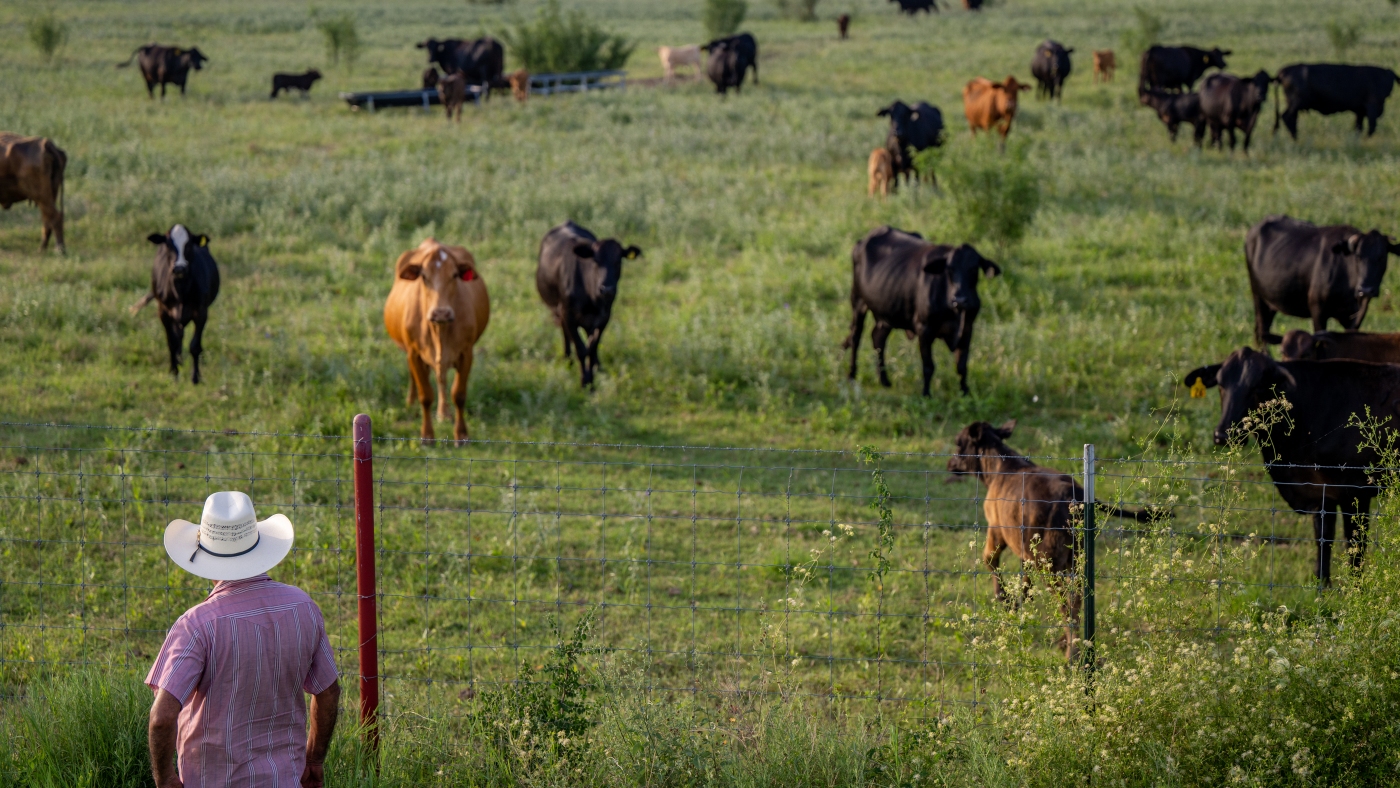
Farmer Jose Esquivel surveys his field of cattle on June 13, 2023 in Quemado, Texas. Brandon Bell/Getty Images North America
Destinee Weeks, a cattle rancher in northern Oklahoma, was particularly taken aback by the announcement. “It feels like a slap in the face to rural America,” she said, expressing feelings of being “invisible and overlooked.”
The backdrop for this controversy is a significant increase in beef prices, driven by a reduced cattle supply in the U.S. As of August, the cost of ground beef has reached approximately $6.63 per pound, significantly higher than four years ago, according to the Bureau of Labor Statistics.
Trump’s Argument for Beef Imports
President Trump has defended the plan, emphasizing Argentina’s economic struggles. In a statement on Truth Social, he suggested that his tariffs have previously supported American ranchers, stating, “The Cattle Ranchers, who I love, don’t understand that the only reason they are doing so well, for the first time in decades, is because I put Tariffs on cattle coming into the United States.”
The administration confirmed plans to increase the tariff-rate quota for Argentine beef imports, alongside a $20 billion currency swap aimed at aiding Argentina’s economy. This decision follows a series of tense exchanges between the administration and the ranching community.
Ranchers’ Concerns and Industry Dynamics
The United States Cattlemen’s Association has expressed apprehension about the potential impact of increased imports on the domestic industry. “A deal of this magnitude with Argentina would undercut the very foundation of our cattle industry,” noted Justin Tupper, USCA president.
Many ranchers attribute high beef prices to the dominance of four major meatpacking firms, which control over 80% of U.S. beef processing. Christian Lovell from Farm Action remarked, “The American rancher is not in control of the price of beef in this country.”
Recent legal actions have spotlighted this issue, with Tyson Foods and Cargill settling a lawsuit for $87.5 million over alleged price-fixing. Lovell criticized the import plan, stating, “Importing more beef is not going to fix that problem.”
Potential Impact of Argentine Beef
David Anderson, a livestock economist at Texas A&M University, noted the current high levels of beef imports into the U.S., including from Argentina. However, he is skeptical about the potential for Argentine beef to significantly impact U.S. prices, given America’s vast consumption. “They just don’t have the kind of supplies that they could export to us that would make much of a noticeable impact,” he explained.
Broader Agricultural Implications
The challenges faced by cattle ranchers are part of a broader context of agricultural trade tensions, exemplified by the fallout from Trump’s trade disputes with China, which have affected other sectors like soybean farming.
John Boyd Jr., a Virginia farmer, expressed concern over the cumulative impact of these policies on his operations. “Everything that the president is messing with and interfering with affects my farming operation,” he stated.
Despite governmental efforts to bolster the domestic beef industry through initiatives by the USDA, the sentiment among many ranchers remains one of frustration and concern for the future of their livelihoods.