
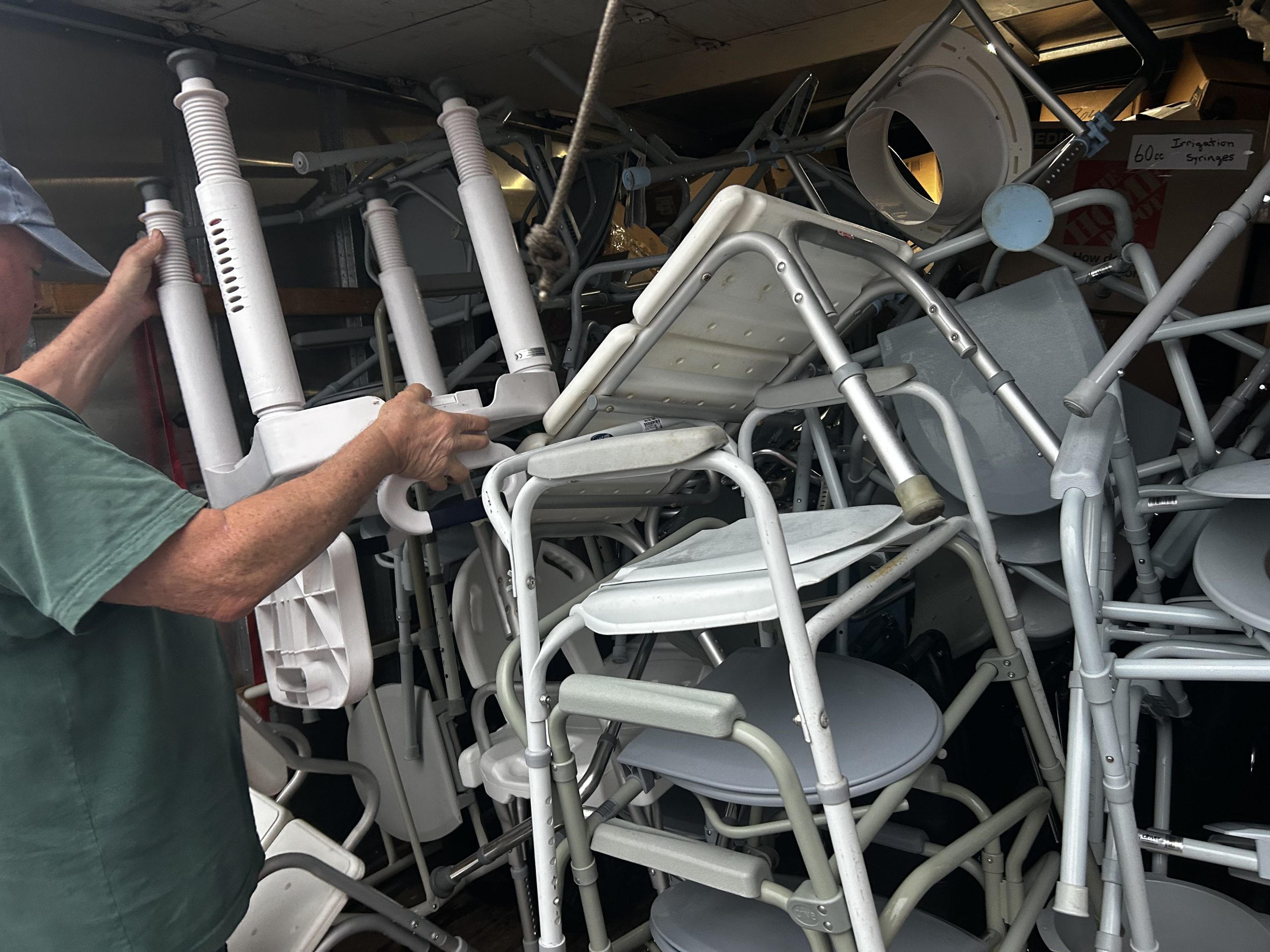
When a hospital stay ends, the medical bills don’t stop. For millions of Americans — particularly those living in rural communities — the cost of basic recovery equipment like wheelchairs, walkers, and hospital beds can be just as financially crushing as the treatment itself.
In Appalachian Ohio, one grassroots program is quietly filling a gap that insurance companies and federal policy have left wide open. What started as one home health aide collecting used medical equipment from her clients has grown into a regional network serving thousands of families who simply cannot afford to buy what they need to heal.
From One Woman’s Effort to a Regional Network
Milena Miller worked as a home health aide and noticed something that troubled her: patients would return home from the hospital, use a piece of medical equipment for a few weeks or months, and then leave it unused. Meanwhile, other patients were spending several thousand dollars on that same equipment — brand new — because they had no other option.
Miller began collecting the equipment herself, redistributing it to those who needed it. When Ed Newman, who headed the Zero Waste Program at the community development organization Rural Action, heard about her work, he saw something that could grow into a formal initiative. In 2021, Rural Action officially launched its medical equipment donation program in southeast Ohio.
Since then, more than 4,000 people have received free medical supplies through the program. In 2025 alone, it distributed $207,710 worth of equipment — including wheelchairs, rollators, and hospital beds — at no cost to recipients.
When Insurance Isn’t Enough
It might seem like insurance coverage would protect families from these kinds of costs. But Maria Bonner, the current director of the Rural Action program, says the problem runs deeper than simply being uninsured. It’s the fine print in existing coverage that leaves people stranded.
“Even if they have insurance,” she said, “it doesn’t cover this [equipment].”
A common example: most insurance plans only cover one wheelchair every five years. If a wheel breaks after four years, the patient must pay the full cost of a replacement out of pocket. For families already managing medical debt, that kind of unexpected expense can be devastating.
The financial pressure on Ohio families has only intensified in recent years. Medicare premiums have already increased heading into 2026 and are set to rise again in 2027. And when federal subsidies for the Affordable Care Act were allowed to expire at the end of 2025, millions of Americans lost their ACA health coverage. Ohio has seen the steepest drop in ACA enrollment in the country — a 32% decline. Many of the program’s recipients are also veterans, who often face long waits for medical equipment through VA channels.
These realities make donation programs like Rural Action’s not a luxury — but a lifeline.
The Human Stories Behind the Equipment
Bonner and her team hear these stories every day. One recent recipient — a man diagnosed with stage four cancer who has entered hospice — received a motorized wheelchair through the program.
“His wife is in a nursing home,” Bonner explained, “and this chair will allow him to continue to be able to see his wife, and for several hours each day until he passes, and then it’s going to be used by his wife.”
That single piece of donated equipment carries the weight of an entire family’s final chapter together.
Churches Step In Where Coverage Falls Short
Rural Action doesn’t operate through a central warehouse. Instead, it relies on a network of more than 30 church partners and community spaces scattered across southeast Ohio. Churches, Bonner says, bring something uniquely valuable to this kind of work: storage space, volunteers who already know their neighbors, and a built-in community for both donations and requests.
“Churches are instrumental to the network,” Bonner said.
Her team coordinates supplies between partner sites, manages funding, and provides logistical support. The program spreads almost entirely through word of mouth.
High Street Community Church in New Lexington, Ohio, is one of those partners. And the program there is run entirely by one person: Tricia Tilley, a mother of a child with special needs who understands the daily reality of navigating a healthcare system that doesn’t always account for people with disabilities.
Tilley started collecting equipment at her church after hearing about a similar effort in a neighboring town during the COVID-19 pandemic. As word spread, the demand exploded.
“Our whole community knows about us now,”
she said.
Her collection regularly fills in gaps that insurance coverage leaves behind. Adult diapers, for instance, are frequently denied by insurers because they aren’t deemed “medically necessary.” Tilley doesn’t mince words about that designation:
“But you pee your pants a couple times in public and see if it’s not necessary.”
She says donations arrive in remarkable ways — sometimes knee scooters appear unannounced at the church door just as her supply runs out. For Tilley, the work is straightforward: in a healthcare system that can leave families financially broken, helping a neighbor isn’t optional.
“I just couldn’t imagine working for the other team,”
she said.

Comments are closed.