Budget Grocery Shopping: A Growing Trend Amid Economic Challenges
In these economically challenging times, families are seeking more affordable ways to fill their grocery carts. Budget grocery stores and warehouse clubs are becoming increasingly popular as consumers look to cut costs without compromising on quality.
NPR’s series What’s Eating America explores the intricate forces impacting our food systems and how they are altering our eating habits.
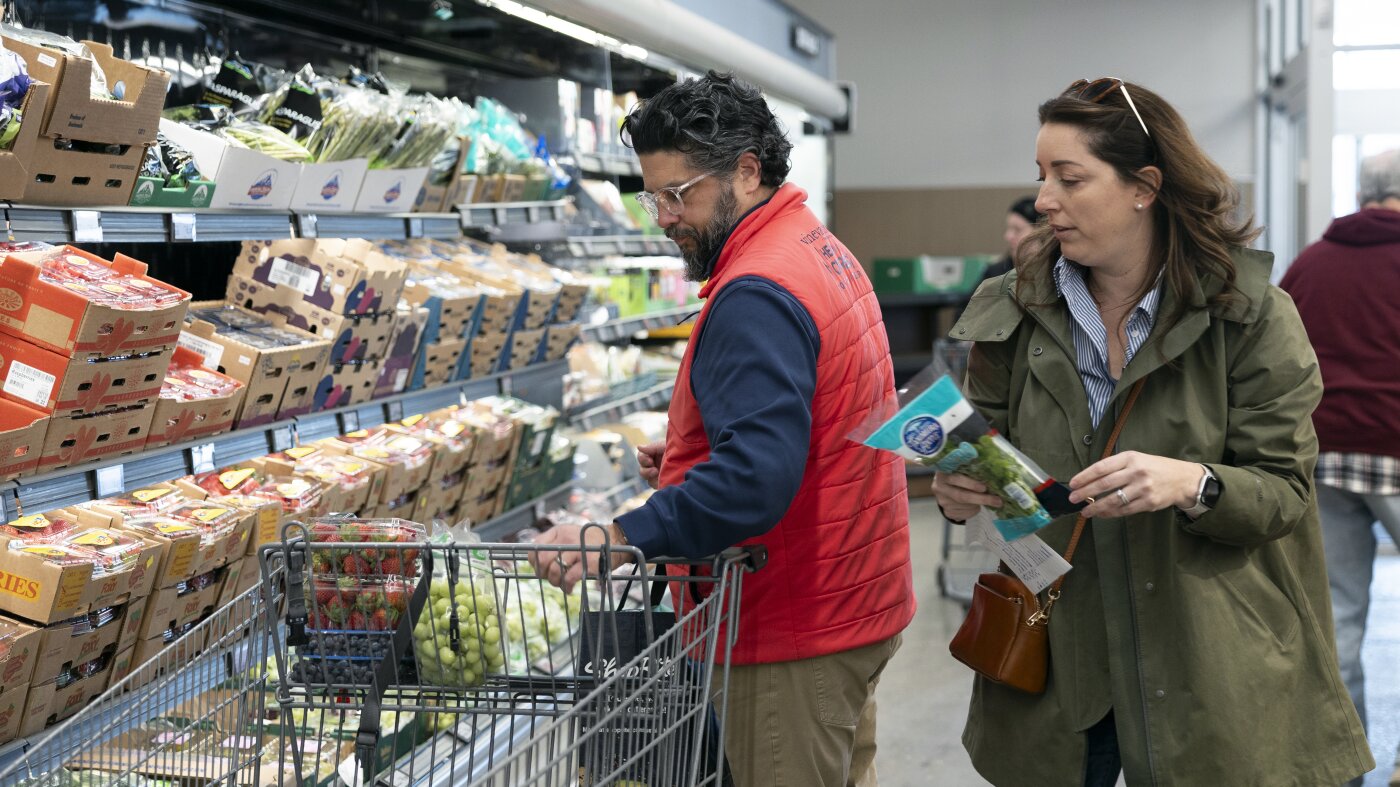
BELLMAWR, N.J. — Rachel Negro-Henderson, a healthcare administrator, began frequenting Aldi during the pandemic when her husband’s income as a crew coach was disrupted. Initially, she encountered familiar faces who seemed uneasy about their presence in the discount store. “People would not want to talk about why they were here, like it was a mistake,” she explained.
Today, the scene is different. Negro-Henderson, who resides in Audubon, N.J., with her family, notes a shift in attitudes. “Everyone’s like, ‘Yeah, I’m saving money. I might as well come here. I’m getting the same product,'” she shared.
Rising food insecurity during the COVID-19 pandemic and escalating grocery prices have made affordable meals elusive for many. Factors like inflation, potential tariffs, and cost-reduction strategies such as shrinkflation and electronic shelf labels further complicate the picture.
Grocery analyst Phil Lempert commented, “Consumers are just to a point where [they’re saying], ‘Give us a break. This is food. You don’t screw around with our food.'” Budget stores and warehouse clubs are gaining favor among shoppers prioritizing value. Social media reflects this trend, with users sharing finds from Aldi and meals crafted from Costco ingredients.
How Discount Grocers Maintain Low Prices
Budget grocery stores operate with efficiency, often being smaller and carrying fewer products compared to traditional supermarkets. Phil Lempert notes that stores like Aldi streamline operations by placing shipping boxes directly on shelves, cutting down on labor efforts.
Unlike the elaborate setups of premium stores, discount grocers focus on essentials. Lempert remarked, “If you look at the stores themselves, they’re bare-bones.”
European discount chains Aldi and Lidl are expanding in the U.S., with Aldi adding 17 million new customers last year and planning to open 180 more stores. Meanwhile, Grocery Outlet is closing 36 stores due to rapid expansion challenges.
Warehouse giants like Costco and Sam’s Club capitalize on their purchasing power to offer groceries at competitive prices. Costco’s famous $1.50 hot-dog-and-soda deal and $4.99 rotisserie chicken are well-known. Costco reported net sales of $28.41 billion for March, marking an 11.3% increase from the previous year.
According to Consumer Reports data, prices at Aldi and Lidl are over 8% lower than at Walmart, with only a few retailers, like WinCo and H-E-B, offering cheaper alternatives.
“You’re not really sacrificing anything”
Despite their appeal, budget stores may lack certain items, causing shoppers like Rachel Negro-Henderson to visit other local stores for specialty goods. “There’s bigger sacrifices in this world than having to run to another store to grab a shallot,” she commented.
Negro-Henderson and her husband appreciate Aldi’s low prices and sustainable practices, stating, “We realized quality-wise you’re not really sacrificing anything. You’re sacrificing name brands for the most part, but the quality is still great.”
Social media is abuzz with affordable cooking videos featuring budget-friendly recipes. Kiki Rough, inspired by personal experiences with food insecurity, shares innovative ways to make the most of limited ingredients.
Rough emphasizes the importance of mindset, advising, “You need to not be ashamed that we are in a difficult economy.” Grocery analyst Lempert predicts that frugal shopping habits will persist, noting a trend towards careful spending and avoidance of impulse purchases.
With more consumers focused on value, Lempert observes, “People are using shopping lists more than ever before. People are shopping more online, because they can compare prices easier. People are tired of getting ripped off on food prices.”
This article was originally written by www.npr.org