
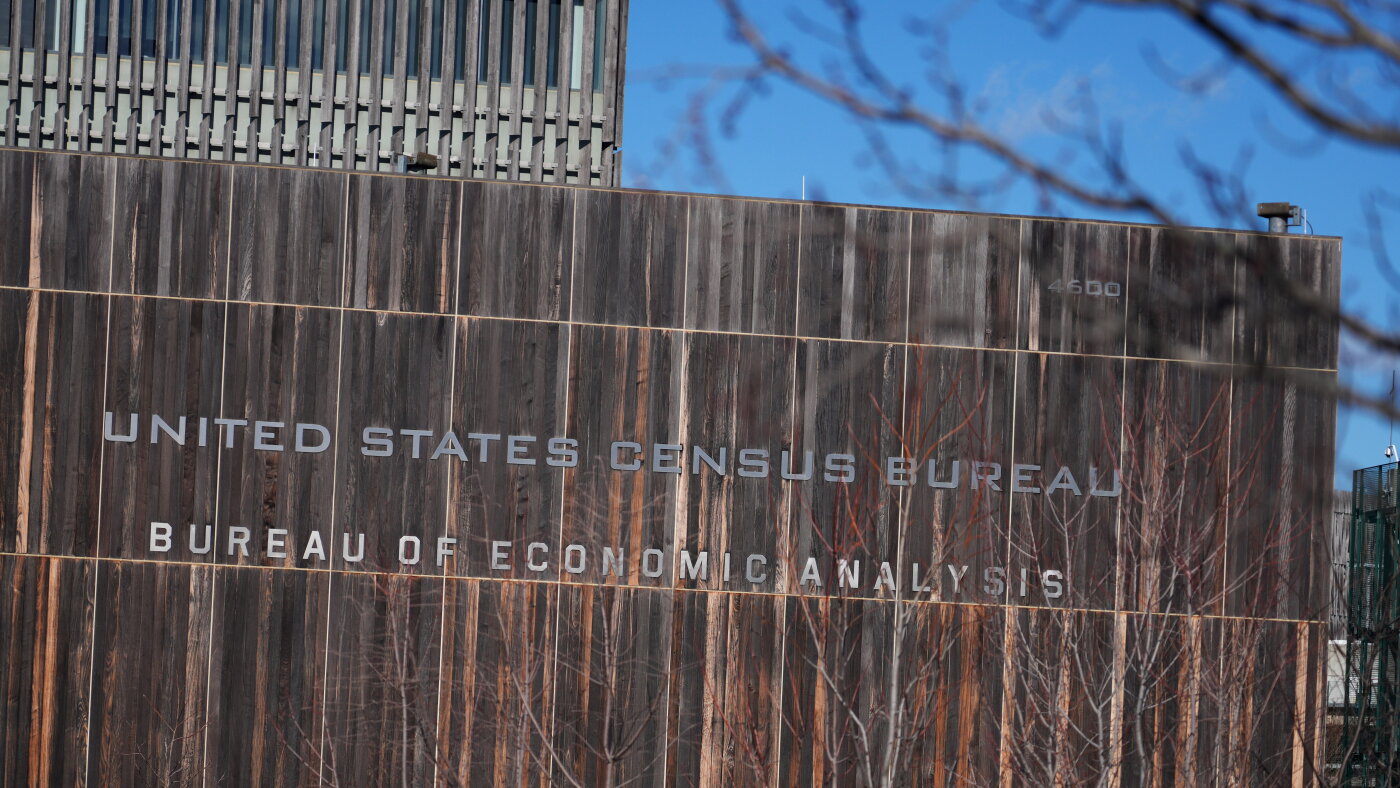
Changes in Census Bureau Policy Spark Concerns Over Political Influence
Amidst ongoing debates about the integrity of government data, recent modifications to the Census Bureau’s policy framework have raised eyebrows. The Commerce Department, which oversees the bureau, has quietly removed language designed to prevent political interference from its scientific integrity policy, according to information obtained by NPR.
The policy change was implemented on August 19, a day after the bureau released an unusual report concerning non-citizen voting. This report was linked to a think tank with connections to former Trump administration officials. The altered policy applies to all agencies under the Commerce Department, encompassing entities such as the National Oceanic and Atmospheric Administration and the Bureau of Economic Analysis, both of which play pivotal roles in providing critical national data.
This move has escalated concerns among former Census Bureau officials and data experts about potential political manipulation within the agency. As preparations for the 2030 national census commence, these changes could influence the distribution of political representation and federal funding across communities.
Scientific Integrity Policy Under Review
In January 2025, the Commerce Department revised its policy to foster a “culture of scientific integrity,” just before Trump’s second inauguration. The 2025 version explicitly prohibited interference in data collection and analysis that contradicted established scientific methods. It also emphasized the importance of unbiased scientific findings and underscored the need for independent reviews to uphold scientific integrity.
However, an NPR analysis has revealed that the updated policy no longer contains language preventing political interference, nor does it uphold “protection from inappropriate influence” as a hallmark of scientific integrity. This omission raises significant concerns among experts.
The Commerce Department and Census Bureau have not responded to NPR’s requests for comment concerning these changes.
Concerns Over Political Influence Intensify
Experts like Nancy Potok, a former deputy director at the bureau, consider the policy alteration a significant shift that removes safeguards against political meddling in the department’s data products. Potok emphasizes the importance of maintaining objectivity and impartiality in governmental statistical activities, as outlined in the 2018 “Trust Regulation” law.
Former Census Bureau Director Robert Santos, appointed by President Biden, notes the concerning timing of the policy change alongside the release of a controversial report on noncitizen voting. “It’s entirely possible that this was done to reconcile the Department of Commerce and the administration’s own actions,” Santos remarks, highlighting the absence of transparency and expert input in the report’s publication.
Recent actions by the Trump administration have also raised alarms, including the prohibition of a longstanding data privacy protection technique, which has delayed the release of new statistics and could reduce available data about local and small populations.
The revised policy introduces a new system for investigating violations, diminishing the role of department lawyers—a change that worries Beth Jarosz, vice president of the Association of Public Data Users. “There’s room for interference,” Jarosz states, pointing out that the new structure increases the possibility of external pressure on staff decisions.
This article was originally written by www.npr.org




Comments are closed.