A Revival of Cursive: Why Students and Teachers Are Embracing the Loops and Swirls
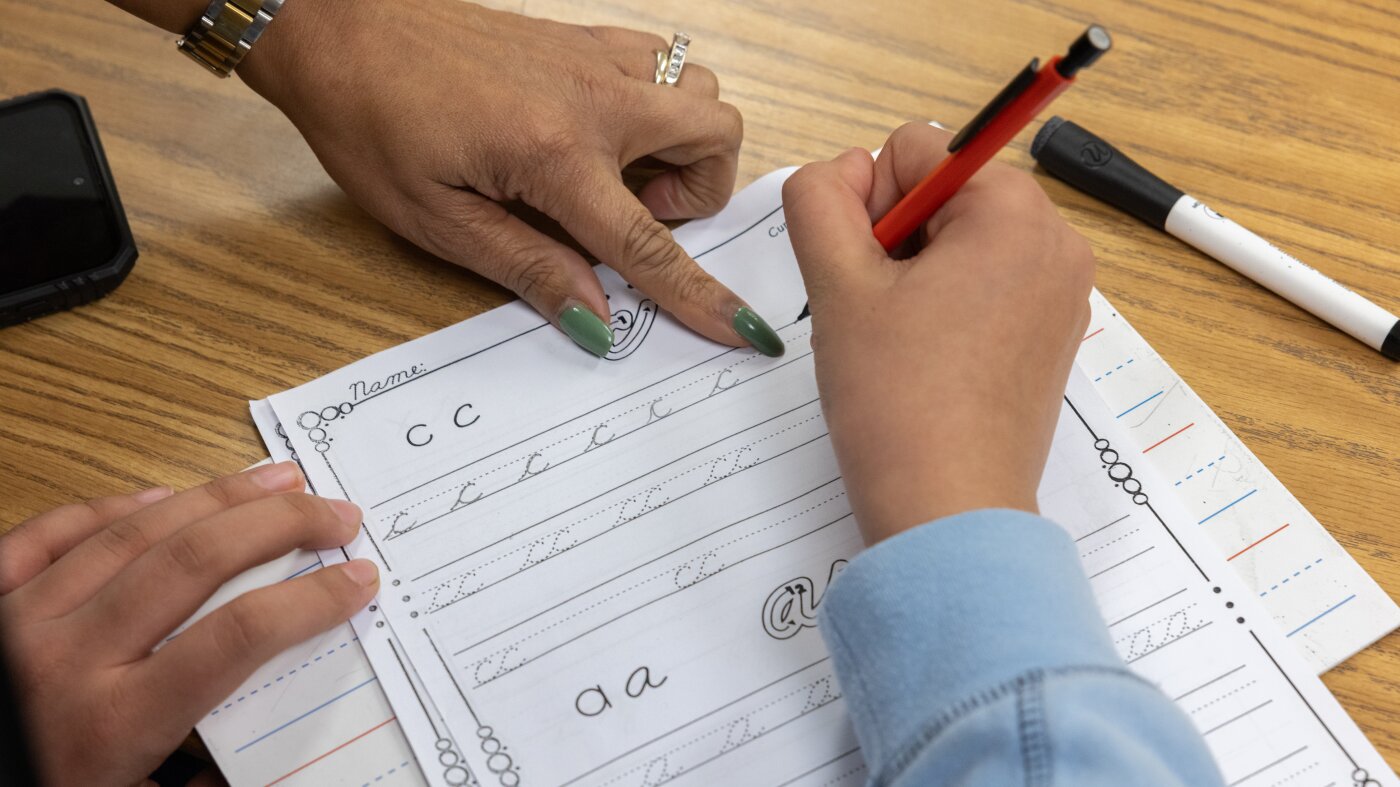
In a world dominated by keyboards and screens, an old-fashioned skill is making a surprising comeback in classrooms: cursive writing. This resurgence is not just a trend but a movement, as seen at Holmes Middle School in Alexandria, Virginia, where students eagerly join the after-school cursive club.
One of the enthusiastic members is 12-year-old Sandi Chandee, who dreams of a career in medicine. Sandi takes pride in her ability to write pneumonoultramicroscopicsilicovolcanoconiosis, a lengthy medical term, in elegant cursive. “When I become a doctor, I want to have a perfect signature,” she says, adding a heart above the ‘i’ in her name.
Her classmate Halle O’Brien shares this passion, stating simply, “I prefer writing in cursive.” Together, they form part of a growing movement that sees cursive as more than just an art form. According to NPR, more than two dozen states have reintroduced cursive instruction into their curricula after its removal from the 2010 Common Core standards.
From Classroom Necessity to Creative Expression
Teacher Sherisse Kenerson, who started the Holmes Middle School cursive club, was initially driven by necessity. Her students struggled to read her cursive handwriting on the board, so she decided to teach the skill. “I realized they didn’t know how to write or read in cursive,” Kenerson recalls.
The club has gained unexpected attention, with Kenerson receiving fan mail from as far away as Idaho and Florida. “I’m flabbergasted,” she admits. “I’m just going along with the ride.”
Despite its newfound popularity, teaching cursive remains a topic of debate. Mark Warschauer, a professor of education at the University of California, Irvine, argues that cursive offers no special cognitive benefits over print handwriting. “I have seen no evidence that cursive brings any particular cognitive or learning benefit beyond that brought by hand printing,” he told NPR.
Shawn Datchuk, a professor of special education at the University of Iowa, suggests a balanced approach. “As a country, we likely need to help our students become multi-modal,” he explains, advocating for teaching multiple forms of writing.
Cursive’s Place in Modern Education
While some educators question the value of cursive, others see benefits. Kenerson notes anecdotal evidence suggesting cursive aids students with dyslexia, and California Assemblymember Sharon Quirk-Silva reports positive feedback since her 2023 cursive mandate.
Meanwhile, students like Antonio Benavides have found personal growth through the club. Initially skeptical, Antonio now appreciates the skill, saying, “Yeah, I like it.” He enjoys the tactile experience of writing, adding, “The sound of a pencil when it’s silent is just so nice.”
Despite differing opinions, cursive’s allure remains strong. Steve Graham, a Regents Professor at Arizona State University, points out that reports of cursive’s demise have been exaggerated. “Despite the media attention, cursive never really went anywhere,” he asserts.
For students like Conrad Thompson, who takes pride in her ability to read historical documents in cursive, the skill offers a sense of accomplishment. “Hopefully, one day, me and my family will get to go see it in person,” she says, referring to the Declaration of Independence.
As Sandi and Halle eagerly plan to return to the club next week, the cursive revival at Holmes Middle School continues to thrive.
This article was originally written by www.npr.org