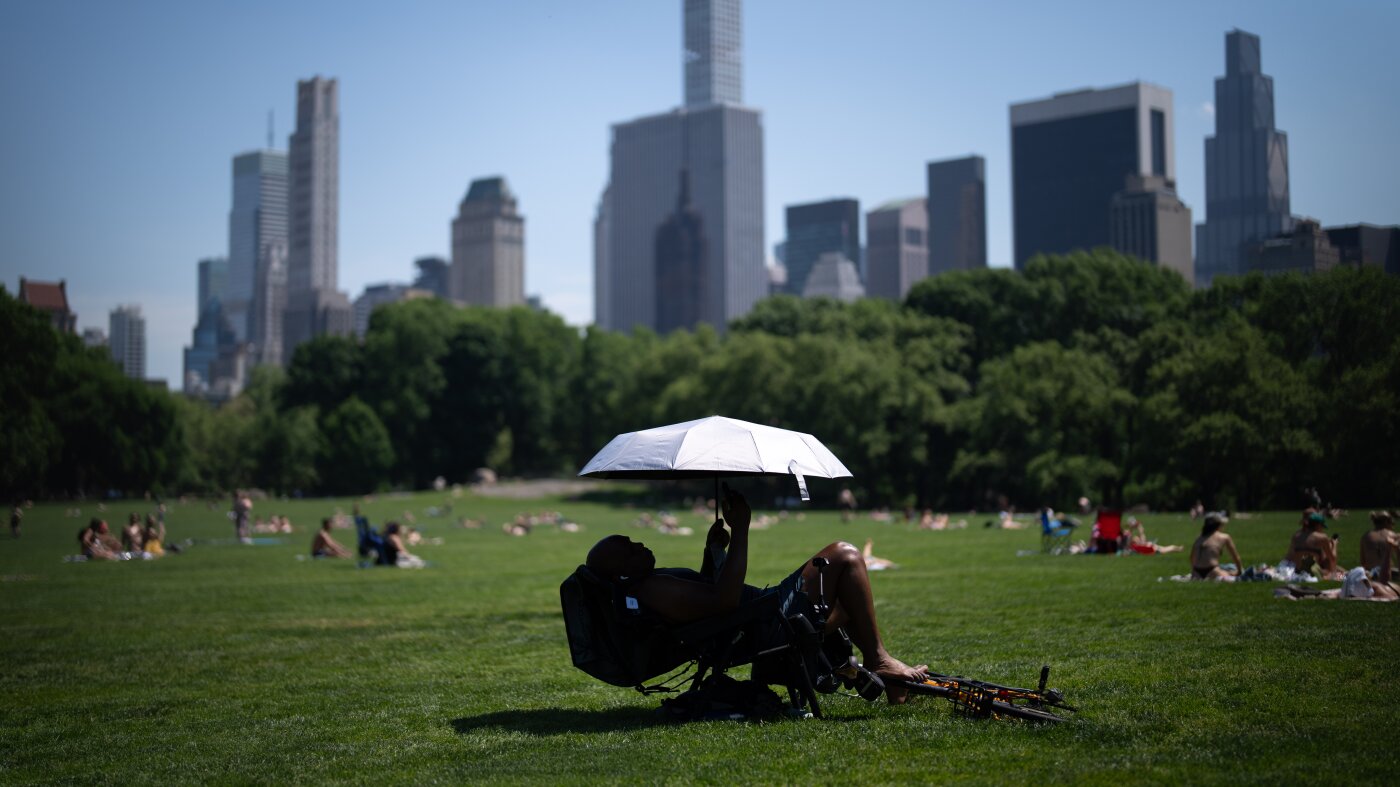
Scorching Heat Set to Engulf Most U.S. States Over July 4 Weekend
Forecasters are warning of a widespread heatwave that will cover much of the United States through the July 4 holiday weekend. The National Weather Service (NWS) has indicated that “dangerous to record setting heat will expand across the eastern two-thirds” of the nation.
This intense heat, particularly threatening to the elderly and those with respiratory conditions, will impact regions from Ohio to parts of North Carolina and Washington, D.C. The NWS warns that heat indices could soar to between 100 and 110 degrees due to high humidity levels.
Regions Under Heat Warnings
Extreme heat warnings have been issued for parts of Iowa, Missouri, and Kansas. The phenomenon responsible for this heatwave is known as a heat dome, where a hot air mass becomes trapped under a “lid” above the Earth’s surface, leading to prolonged high temperatures.
NWS forecaster Bryan Putnam emphasized that the combination of high temperatures and humidity will push heat indices well into the 100s. “You get temperatures in the 90s to low 100s, that’s obviously pretty hot. But you combine that with the humidity, those heat indices will go well into the 100s and that’s the temperature that it’s going to feel like,” he explained to NPR.
Heatwave Beyond July 4
Even after the holiday weekend, the risks associated with extreme heat are likely to persist, especially in the Western U.S. Daytime temperatures might feel like 100 to 105 degrees, with limited relief during the night.
Putnam advised caution during outdoor activities for the July 4 celebrations, including fireworks displays. “Your temperatures might stay in the 80s and the 90s in the heat in the evening, as well as the fact is with the humidity, that’s going to keep those heat indices high as well,” he warned.
Prepare and Limit Time Outdoors, Officials Warn
Authorities are urging residents in affected areas to prepare for the upcoming days of extreme heat. The Missouri State Emergency Management Agency advised via a social media post to “plan accordingly and limit prolonged outdoor exposure if possible,” and to “take immediate action” if signs of heat-related illness appear.
The Centers for Disease Control and Prevention highlights various heat-related illnesses, such as heat exhaustion, heat rash, and heat stroke, which can manifest through symptoms like nausea, headaches, and dizziness. New York City Health Commissioner Alister Martin described heat strokes as “fast, deadly, and almost always preventable” and urged the public to stay hydrated, use air conditioning, and check on neighbors.
This article was originally written by www.npr.org