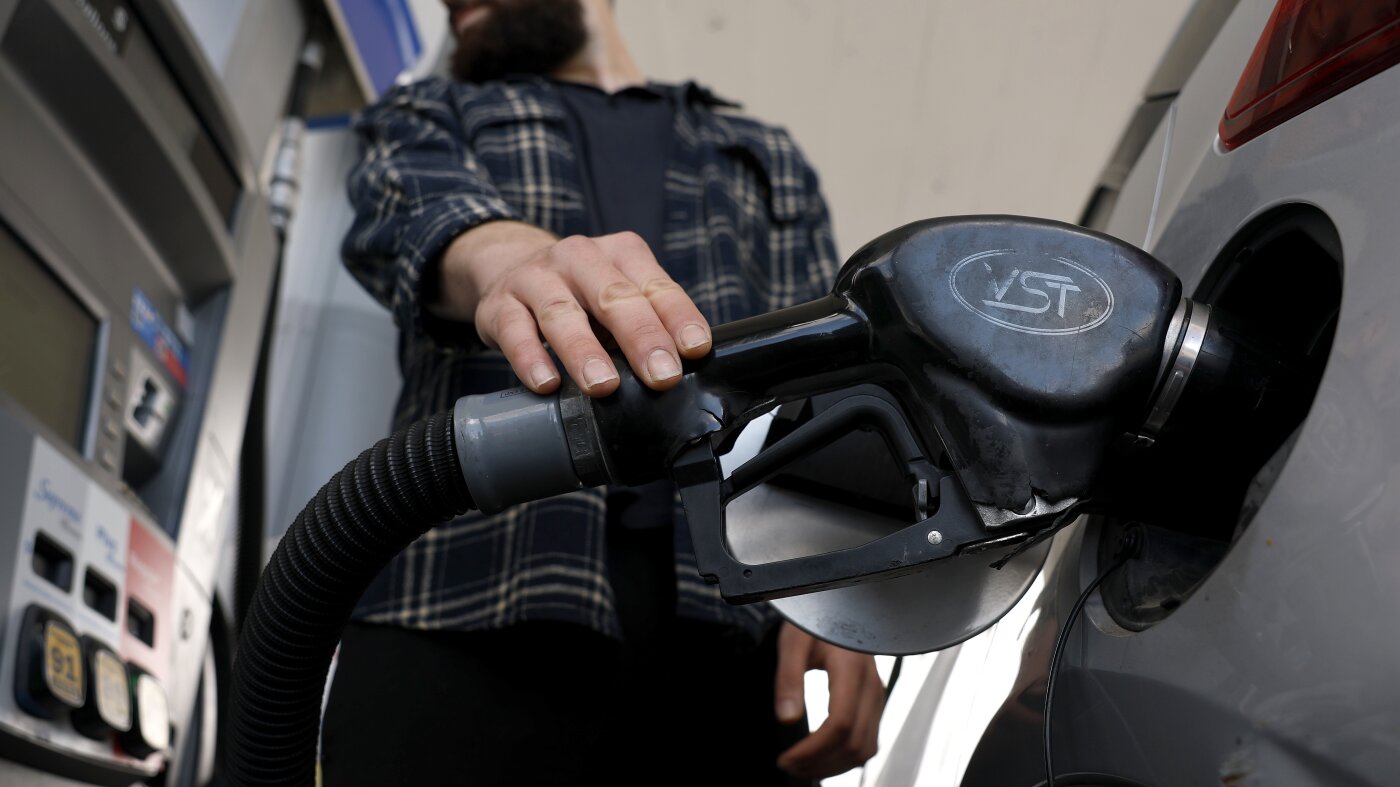
Surging Gas Prices Hit a Four-Year High as Holiday Travel Looms
As Americans prepare for one of the year’s busiest travel weekends, gasoline prices have reached a four-year high, with the national average at $4.55 per gallon, according to AAA. Despite the increase, a record 45 million people are expected to travel this weekend, undeterred by the rising costs of gasoline, diesel, and jet fuel.
The ongoing war in Iran has contributed to elevated gasoline prices, with little sign of relief. The situation has sparked voter frustration and tightened household budgets as reported by polls.
In California, where gasoline prices have surpassed $6 a gallon, Governor Gavin Newsom has advised against patronizing Chevron stations, highlighting a longstanding feud between the state and the oil giant. Chevron, which relocated its headquarters out of California in 2024 due to regulatory issues, is now sourcing oil from an offshore pipeline that California has attempted to shut down. Chevron has responded with placards blaming state policies for high prices, while Newsom suggests Californians seek cheaper options at unbranded gas stations.
The rising prices have not deterred driving habits, according to Arity, a company that tracks driving behavior. However, to combat high fuel costs, experts suggest driving more efficiently through smooth acceleration and braking.
Exploring Alternatives: The Electric Vehicle Option
With gasoline prices climbing, some drivers are considering electric vehicles (EVs) as a cost-saving measure. While sales data for new EVs has been sluggish due to the end of a $7,500 federal tax credit, interest in used EVs appears to be on the rise. CarGurus and Cox Automotive have noted increased demand and strong prices for used EVs, potentially influenced by higher gas prices. However, data from iSeeCars.com doesn’t show a significant shift in used-EV sales.
Janelle London from Coltura advocates for EVs, noting significant savings for drivers covering substantial annual mileage. “Across the entire U.S., an average driver doing, say, 15,000 miles a year already is going to save $1,800 a year by switching to an electric car,” London states. Coltura offers an online tool to help calculate potential savings.
Regional variations in electricity and gasoline prices affect savings, with Yale Climate Connections providing a map comparing the costs. For instance, in North Dakota, driving an EV is akin to paying under a dollar per gallon, while in California, it’s closer to $2.70 per gallon.
Beyond Costs: Other Considerations for Going Electric
While cost savings are a significant factor, other considerations include maintenance, insurance, and the environmental benefits of EVs. Charging infrastructure is also crucial, especially for those who can charge at home. The Environmental Protection Agency offers a calculator to help determine charging needs.
For those who drive infrequently, options like e-bikes could provide a viable alternative. Jerick White, a Houston resident, swapped his car for an e-bike, citing savings on gasoline and maintenance as motivations. “It’s very enjoyable,” he says about biking, highlighting additional benefits like avoiding traffic.
High gas prices are prompting some to re-evaluate their driving habits. Julie and Vince Rossi, who live full-time in an RV, have adjusted their travel plans to accommodate increased diesel costs by seeking free attractions to offset their fuel expenses. “If we want to continue on this lifestyle, we either look for the lowest prices or we need to cut spending somewhere else,” Julie Rossi explains.
This article was originally written by www.npr.org