Controversial Aviation Safety Bill Fails in House After Pentagon Withdraws Support
In a tight vote, the House of Representatives has dismissed an aviation safety proposal linked to a tragic midair collision near Washington, D.C. This decision comes shortly after the Pentagon unexpectedly pulled its backing for the bill, which had previously gained bipartisan endorsement.
The ROTOR Act, a legislative initiative designed to enhance aviation safety, proposed a broader implementation of ADS-B technology—a system that communicates an aircraft’s position to others. Additionally, it sought to tighten exemptions for military helicopters. Despite passing the Senate unanimously in December, the House vote concluded with 264 in favor and 133 against, falling short of the two-thirds majority required for approval under current rules.
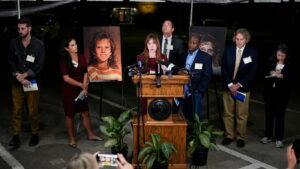
Initially, the ROTOR Act had garnered support from various stakeholders, including family members of the crash victims who had journeyed to Capitol Hill for the crucial vote. The National Transportation Safety Board (NTSB) has argued that the ADS-B system could have prevented the fatal crash last year involving a U.S. Army Black Hawk helicopter and a commercial jet, an incident that claimed 67 lives.
Jennifer Homendy, NTSB chair, expressed frustration on social media, stating, “The ROTOR Act would’ve saved lives. How many more people need to die before we act?” Her comments underscore the urgency felt by supporters of the bill.
Despite initial endorsement, the Department of Defense expressed concerns. Pentagon spokesman Sean Parnell cited potential “unresolved budgetary burdens and operational security risks” as reasons for withdrawing support, though specifics were not provided.
The bill faced significant opposition from key Republican figures within the House. Mike Rogers, chairman of the House Armed Services Committee, criticized the bill, stating, “This bill will undermine our national security.” He highlighted concerns about the potential exposure of sensitive military operations.
Similarly, Sam Graves, head of the House Transportation and Infrastructure Committee, labeled the ROTOR Act as a “burdensome” mandate, suggesting it could create difficulties for some pilots. Graves, along with Rogers, advocated for an alternative legislative proposal, the ALERT Act, which remains unsupported by the NTSB and aviation industry groups.
Despite the setback, proponents of the ROTOR Act, including Texas Senator Ted Cruz, vow to continue their efforts. Cruz, a co-author of the bill, remarked, “Today’s result was just a temporary delay. We will succeed, and [the] ROTOR Act will become the law of the land.” Families of the crash victims also issued a statement urging House leadership to reconsider the bill, emphasizing that the majority supported it, albeit not strongly enough to pass.
For more details on the midair collision, click here. Additional information about the ROTOR Act can be found here.
This article was originally written by www.npr.org