
Chaos at Miami Immigration Court as Mega Master Hearings Intensify
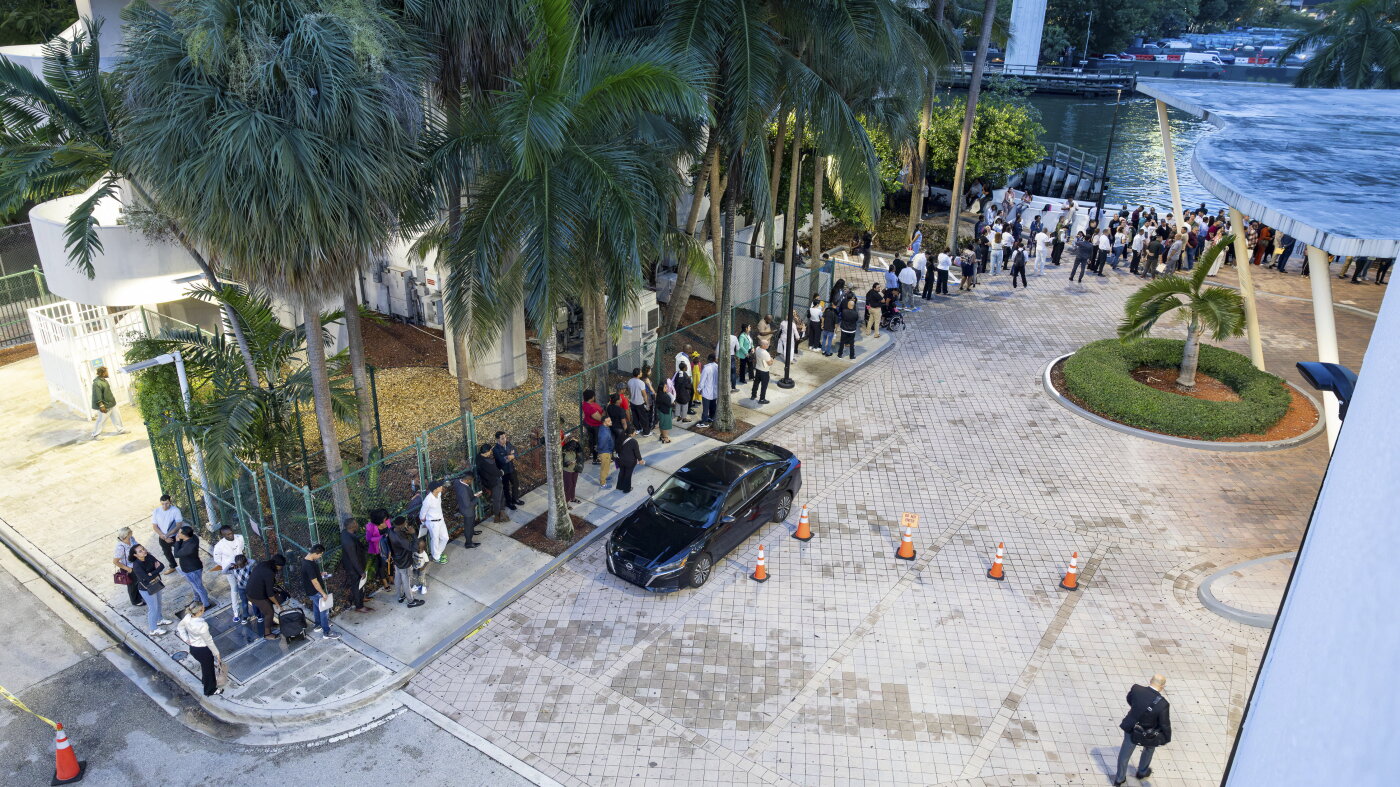
In the humid city of Miami, a daunting line of hopefuls stretches for blocks outside the immigration court. This is not an isolated scene but a direct consequence of an aggressive new strategy by the Trump administration aimed at expediting deportations.
Among those waiting is Yerandy Gonzalez, who stands in disbelief at the sheer number of people. Lighting a cigarette, he remarks in Spanish, “This is crazy, man.” Similarly, Avene Jeanite, a 52-year-old Haitian, reflects on how the process has transformed since his last visit, when access was immediate. “Today is completely different,” he notes.
The chaos is attributed to a shift towards “mega master” calendar hearings, a tactic initiated by the Trump administration. Previously, judges handled around 36 cases a day, but now they face dockets exceeding 100 cases, often handling multiple cases simultaneously.
Officials claim this approach addresses the extensive backlog; critics, however, argue it unfairly accelerates deportations. David Wilson, vice chair of the American Immigration Lawyers Association’s court committee, describes it as both “unfair” and “effective,” underlining the confusion it causes, making timely communication and legal representation challenging, which leads to higher no-show rates.
Statistics from the legal tech platform bklg reveal a spike in in-absentia deportation orders. July saw over 54,000 immigrants deported for missing hearings, a 60% increase over recent months. Miami’s court alone witnessed a 108% rise from May to July.
Overloaded Dockets and Accelerated Timelines
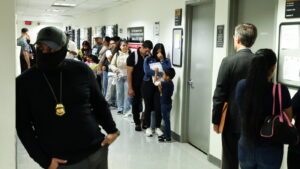
The scenario inside courtroom 24 exemplifies the chaos. NPR observed Judge Xavier Racine address approximately 30 people at once, quickly assigning new hearing dates. This rapid scheduling is partly driven by the administration’s surge in immigration arrests, rescheduled court dates from years ahead, and the prioritization of previously low-priority cases.
Yeriné, a concerned Venezuelan mother, had her 2027 appointment moved to this week. Worried about the implications of these mass hearings, she observed the lengthy queues with apprehension, fearing that many might miss their hearings.
Billie Botch, an observer with the American Friends Service Committee, highlighted operational strains as individuals endure hours of waiting, often resulting in missed appointments. “You can’t deny the correlation,” Botch stated, pointing to the inevitable increase in removal orders when resources are stretched thin.
This article was originally written by www.npr.org



Comments are closed.