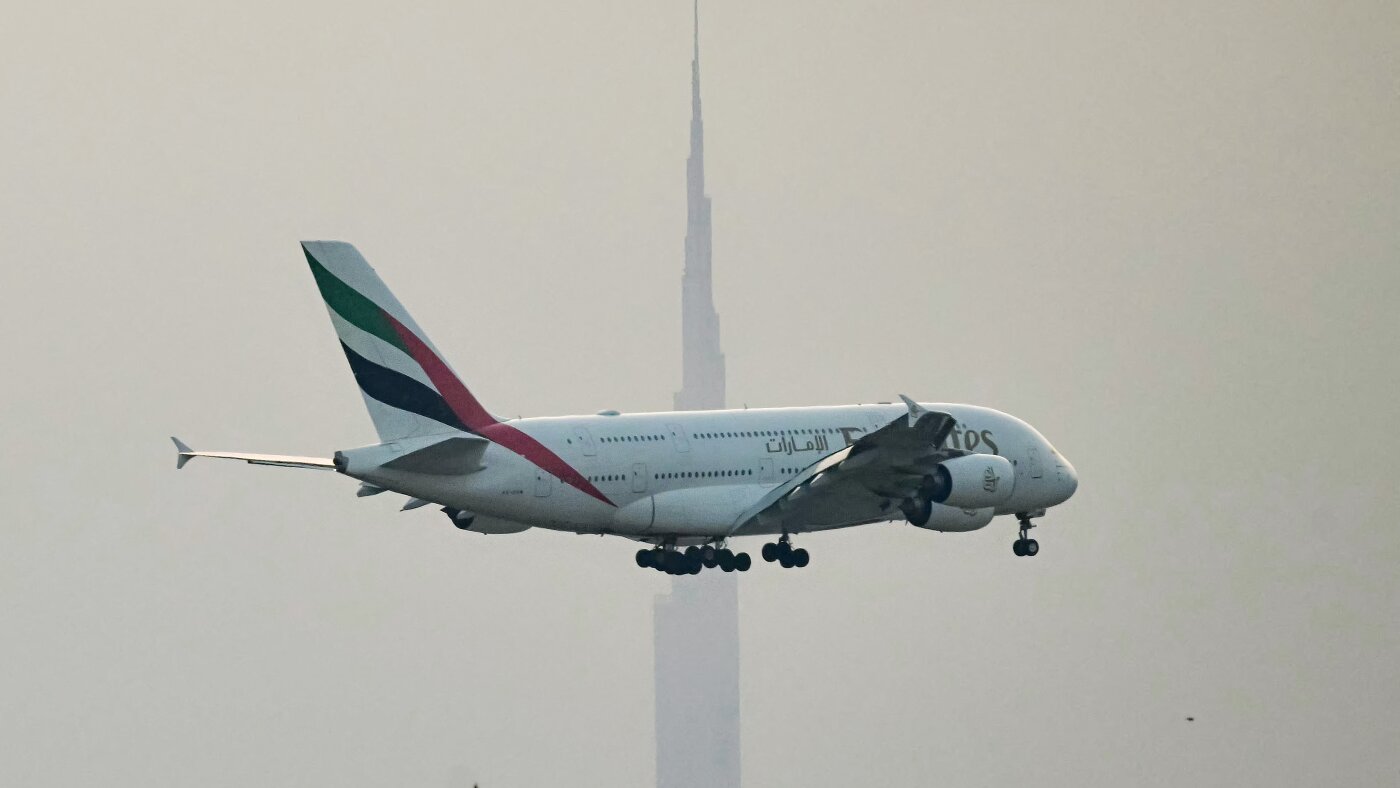

The U.S. and other nations have agreed to tap into oil reserves, but the move might not do much to bring jet fuel prices down rapidly, an expert tells NPR. It’s one way violence in the Middle East can affect flights around the world. Here, an Emirates airliner prepares to land at Dubai’s main airport on Sunday. AFP via Getty Imageshide caption
toggle caption
AFP via Getty Images
The recent conflict in Iran has sent ripples through the aviation sector, with impacts ranging from canceled flights to increased jet fuel expenses. Travelers contemplating a trip in the upcoming months may wonder whether to secure tickets immediately or delay purchases.
“You should go ahead and book,” recommends Sean Cudahy, an aviation reporter at The Points Guy travel and personal finance website.
The typical advice for international travel is to book well in advance, but given the current situation, Cudahy advises even domestic travelers to consider booking sooner rather than later.
The ongoing turmoil in the Middle East is not only disrupting thousands of travel plans but is also influencing global ticket prices and flight schedules.
Airlines warn that ticket prices will rise with fuel costs
The conflict’s effect on the aviation industry was immediate, with more than 46,000 flights canceled in and out of the Middle East from February 28 to March 11, reports Cirium, an aviation analytics firm.
This disruption includes major airports like Dubai International, Doha, and Abu Dhabi, which are significant hubs for global travel, according to Airports Council International.
Airlines worldwide are experiencing a hike in jet fuel costs, which rose from $2.11 to $3.40 per gallon from the start of the year to March 10, as per the Argus U.S. Jet Fuel Index.
The increase followed near cessation of tanker traffic through the Strait of Hormuz, which Iran closed, affecting 20% of the world’s oil and liquified natural gas supply, according to Rick Joswick from S&P Global.
Jet fuel costs peaked at nearly $4 per gallon during the first week of the conflict. United Airlines CEO Scott Kirby indicated that airfare increases due to higher fuel costs would “probably start quick,” he said.
Airlines might choose to reflect these costs in ticket prices broadly or selectively increase premium fares, according to Cudahy.
According to Reuters, numerous airlines have already confirmed plans to raise fares to offset these costs. Japan Airlines, for instance, maintains a fuel surcharge schedule corresponding to cost fluctuations.
“I do think that this is ultimately going to lead to higher fares for everyone,” Cudahy says. “The only question now is how significant and how long does it last?”

Air travelers stranded by the Iran conflict are greeted in Athens, Greece, after arriving on a charter flight from Dubai on Saturday. Giannis Antwnoglou/SOOC/AFP via Getty Imageshide caption
toggle caption
Giannis Antwnoglou/SOOC/AFP via Getty Images
Crisis parallels earlier global disruptions
The challenges in securing adequate aviation fuel supplies have driven up prices, as noted by Joswick.
“It’s not irrational. It’s not some trader bidding up prices,” he explains. Comparing it to the COVID-19 pandemic, he adds, “The consumption of toilet paper didn’t change. But you notice that all of the supermarkets ran out of toilet paper, right? Everyone wants to be sure that they have coverage of a critical need.”
Both Cudahy and Joswick liken the ripple effects of the Iran conflict to the disruptions caused by Russia’s 2022 invasion of Ukraine, which also led to increased flight disruptions and fuel prices. As long as the Strait of Hormuz remains closed, Joswick anticipates continued price hikes.
“If that were to persist, this would be like a 1979 kind of [oil] crisis,” he says. “Anything over a month, and you’re seeing a substantial long-term price increase until the flows are restored.”
In response, the U.S. and other major economies have decided to utilize strategic oil reserves, as announced on Wednesday. However, Joswick cautions that this measure might not significantly reduce jet fuel prices due to logistical challenges and the nature of the reserves, which focus on crude oil rather than refined products.
Tips for buying a plane ticket right now
For those considering booking flights, Cudahy offers some advice.
Avoid purchasing non-changeable, basic economy tickets, he suggests.
Instead, consider full-fare economy tickets: “If the price does eventually drop, you can then go back and change it and capture the lower price.”
Using airline miles is another strategy, as these bookings can usually be canceled with a full refund of miles if prices decline.
Comparison tools like Google Flights can be used to monitor price changes, and travelers should understand cancellation policies when booking through third-party sites.
Given the potential for further conflict, Cudahy advises avoiding hubs near Iran for the foreseeable future.
However, he does not suggest delaying ticket purchases.
“In the same way that we’re seeing relatively long lines at gas stations with folks trying to get their tanks filled up before the price goes up even more than it already has, I would be thinking the same way when it comes to airfare right now,” he says.
While individuals might drive extra miles for cheaper gas, airlines and airports lack such flexibility when purchasing jet fuel.
“Prices are always set on the margin,” Joswick says. “That last airport that needs to buy jet fuel, they will pay whatever it takes to get that. And that price then becomes the standard for the whole industry.”
This article was originally written by www.npr.org