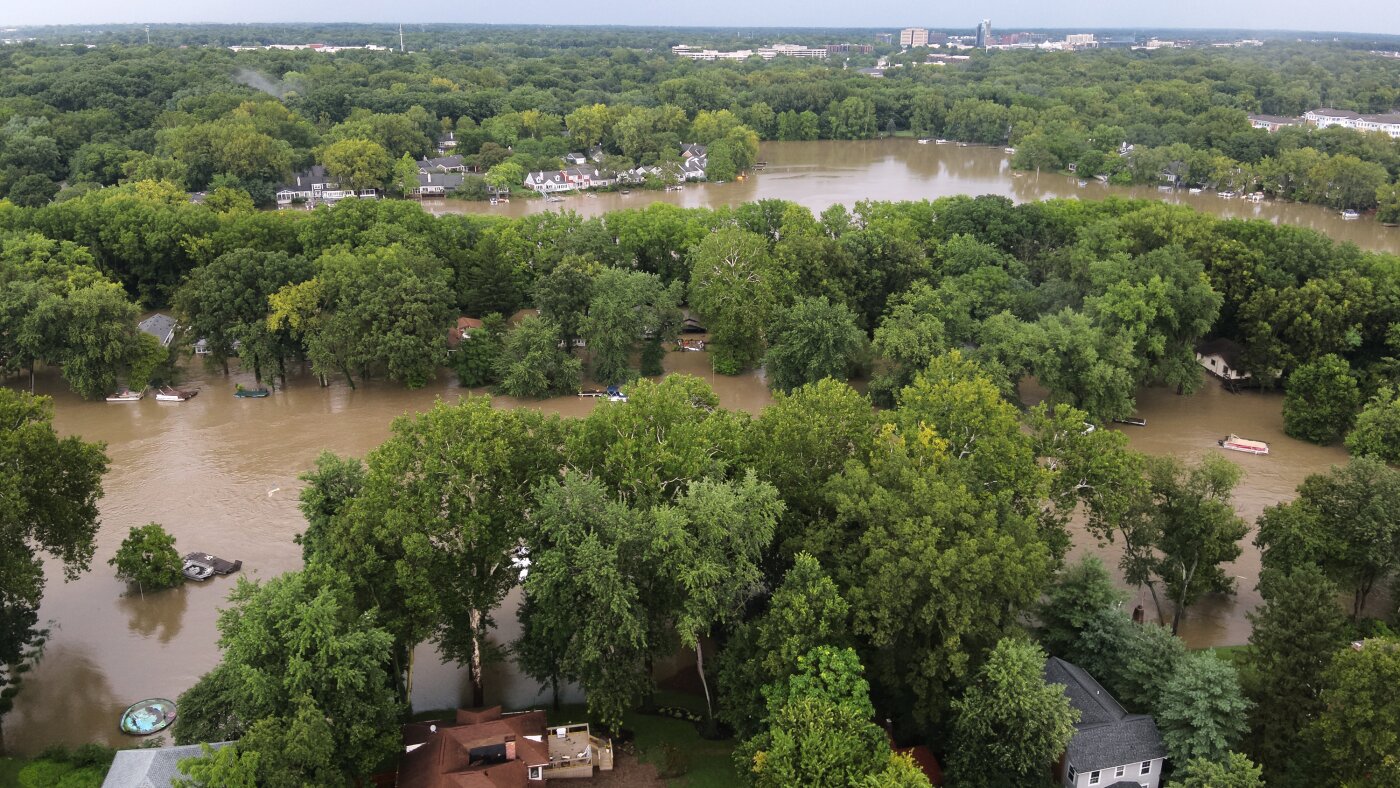
Midwest Faces Historic Flooding with More Rain in Forecast
Thunderstorms have unleashed severe flooding across the Midwest, with the National Weather Service (NWS) warning of more heavy rain expected through the weekend. This has led to significant disruptions, fatalities, and power outages, impacting thousands across the region.
The NWS forecasts continued storms over the Ohio Valley, Midwest, and central Appalachians, exacerbating conditions in areas already struggling with receding floodwaters. The toll so far includes at least three deaths and over 150,000 people without electricity as of Saturday afternoon.
Indiana and Ohio are among the most affected, with some regions experiencing over 11 inches of rain in the last week. Notably, the White River in Anderson, Indiana, surged to a record 24.9 feet, surpassing a century-old flood mark.
Flash flood and flood warnings remain active across central Illinois and Indiana, with flood watches issued from Iowa and Missouri extending to central West Virginia.
Indiana Governor Mike Braun has declared a Statewide Disaster Emergency, mobilizing state resources and seeking a presidential emergency declaration for federal support. “I will do everything in my power to protect Hoosier lives and livelihoods as we respond to this historic severe weather,” he emphasized.
In addition to heavy rain, Indiana has faced tornadoes and a derecho in recent days, compounding the challenges for residents and authorities alike.
In New Castle, Indiana, Cyndee Gillmore’s Cornerstone Campground and Retreat Center suffered severe flooding, with water levels reaching five feet, damaging facilities and mobile homes. “Everybody is pitching in and the community is supporting one another,” Gillmore said, highlighting the collective resilience. However, concerns about recovery remain due to the lack of flood insurance coverage.
Many affected homeowners, like Gillmore, face substantial financial hardship as most lack flood insurance, which is primarily managed by FEMA and based on outdated risk maps. These maps often fail to account for rainfall-induced flooding, leaving many unsuspecting of their vulnerability.
An NPR investigation and findings by First Street suggest millions live in flood-prone areas not identified by FEMA, leading to inadequate insurance coverage.
As weather conditions persist, the National Oceanic and Atmospheric Administration anticipates varying degrees of flooding. Recent data recorded nearly 10 inches of rain at Washington Municipal Airport in Iowa and significant rainfall in Ohio and Kentucky, heightening the risk for downstream communities.
This article was originally written by www.npr.org