NASA Prepares for Pivotal Artemis III Mission with International Crew Announcement
NASA is gearing up for a significant milestone in its Artemis mission series, revealing the crew for the anticipated Artemis III mission. Scheduled to launch as early as next year, this mission is a crucial precursor to future human landings on the moon.

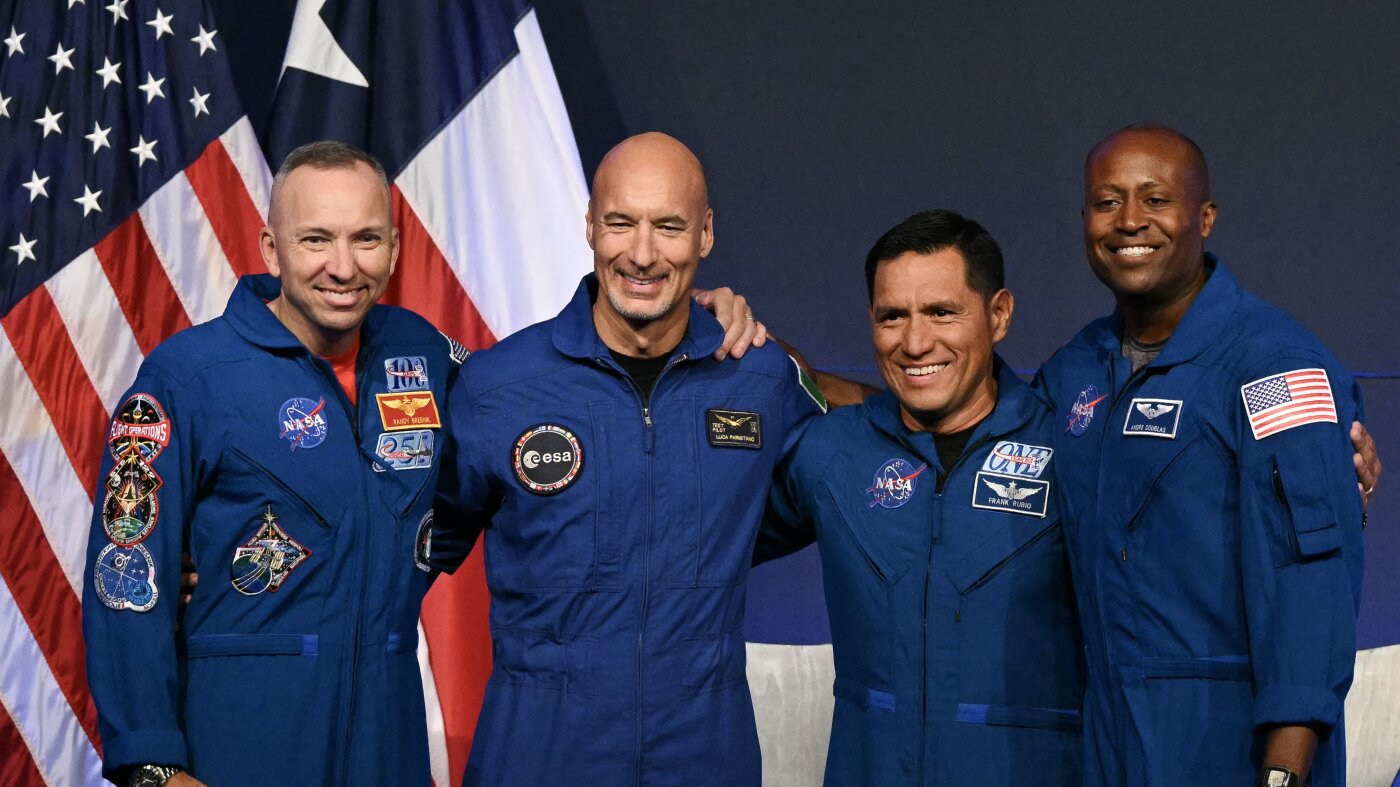
NASA introduced the four astronauts scheduled to fly on next year’s Artemis III mission. (From left to right) NASA commander Randy Bresnik, European Space Agency pilot Luca Parmitano, NASA mission specialists Frank Rubio and Andre Douglas. Ronaldo Schemidt/AFP via Getty Images
The crew of four includes NASA commander Randy Bresnik, European Space Agency pilot Luca Parmitano, and NASA mission specialists Frank Rubio and Andre Douglas. Bresnik, a seasoned astronaut with two spaceflights under his belt, will lead the mission. Parmitano, an Italian astronaut, has also flown twice to space, with one mission involving a near-disastrous spacewalk incident.
Artemis III Mission Details
The Artemis III mission will primarily focus on low-Earth orbit activities, testing critical technologies for future lunar missions. The Orion spacecraft will showcase its docking capabilities with two lunar landers developed by SpaceX and Blue Origin, both key players in the mission’s success.
Frank Rubio, a former U.S. Army member and experienced space traveler, recently set the record for the longest spaceflight by an American at 371 days. This mission marks the first space journey for Andre Douglas, a systems engineer and Coast Guard reserve officer selected as a NASA astronaut in 2021.
At a press event, Douglas expressed enthusiasm for the mission, stating, “This mission is going to be fantastic. What an excellent crew. Got Artemis! Go NASA!”
Testing Lunar Landing Technologies
Artemis III is pivotal in NASA’s plan to return humans to the moon, with lunar landers designed by SpaceX and Blue Origin. The mission will test the Orion capsule’s ability to dock with these landers in low-Earth orbit, gathering essential data for future lunar missions.
Jeremy Parsons of NASA highlighted the importance of these tests, saying, “This gives our teams key information on systems the lunar lander crew will depend on in an environment close to home.”
The mission’s sequence includes the launch of Blue Origin’s Blue Moon lander, followed by the crewed Orion launch. The crew will rendezvous and dock with Blue Moon for two days, testing its systems before disconnecting. SpaceX’s Starship will then be launched for further docking tests with the Orion spacecraft.

(From left to right) Astronauts Randy Bresnik, Luca Parmitano of Italy and the European Space Agency, Frank Rubio and Andre Douglas stand together during the conclusion of the Artemis III crew reveal. Brandon Bell/Getty Images
Challenges and Path Forward
NASA aims to launch this mission by the end of next year. However, a recent accident at Blue Origin’s launch site in Florida poses uncertainties. The New Glenn rocket explosion has raised questions, though Blue Origin remains confident in meeting the timeline for Artemis III.
SpaceX is also progressing with its Starship lander, yet to achieve orbital launch. As both companies advance their technologies, the Artemis III crew is collaborating with Artemis II astronauts to ensure mission readiness. “The most important Artemis mission will always be the next Artemis mission,” stated commander Randy Bresnik.
The Artemis II crew passed a symbolic baton to the new crew, marking the ongoing development toward NASA’s lunar goals. “We’ve been carrying these batons around for way too long,” said Artemis II commander Reid Wiseman, as he handed the baton to the Artemis III team.
This article was originally written by www.npr.org