Immigrant Arrests Spotlight Discrepancies in Federal Reporting
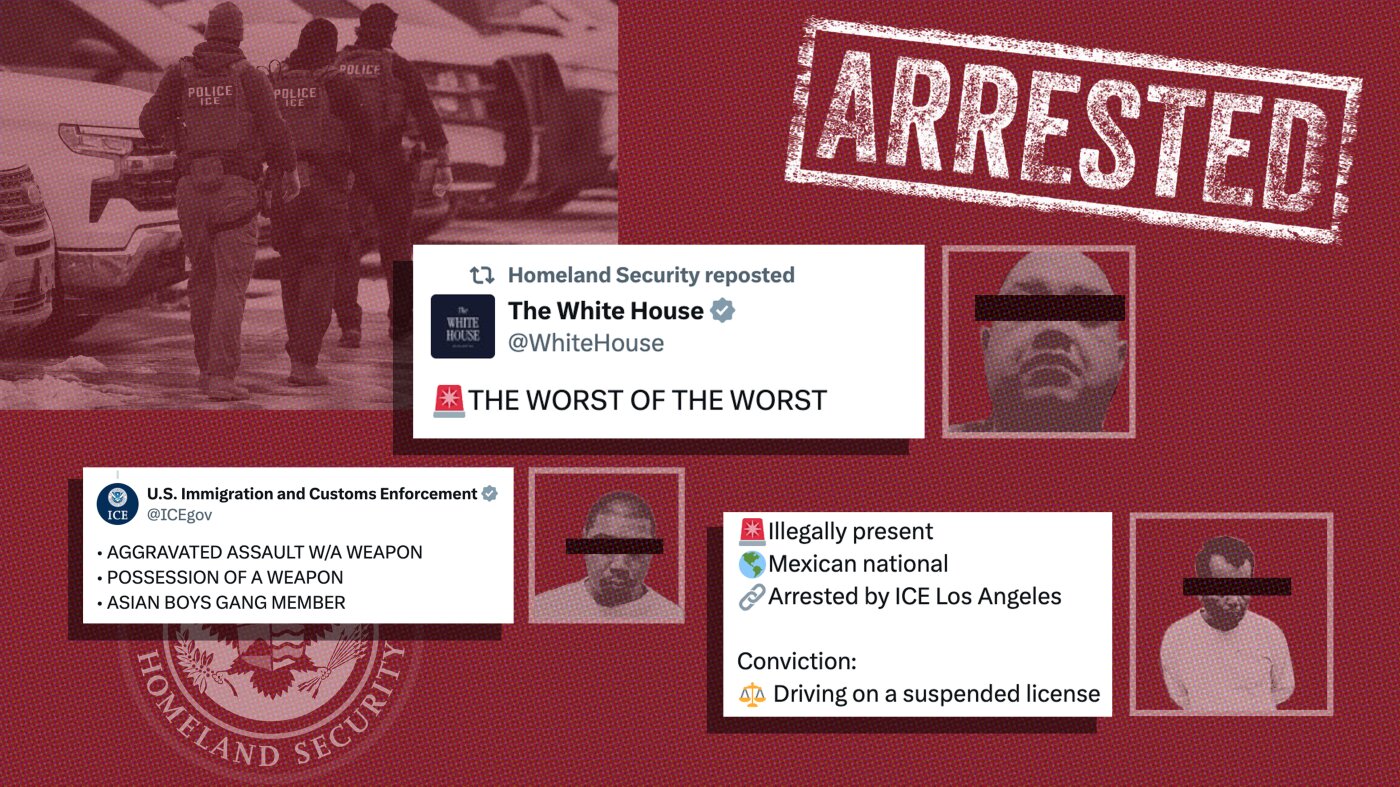
In a striking incident that has drawn attention to potential inaccuracies in federal reporting, At “Ricky” Chandee’s case illustrates the complexities and challenges of the U.S. immigration system. Chandee was labeled the “WORST OF WORST” by a White House social media post, despite the post containing incorrect information about his identity and criminal history.
Chandee, a child refugee from Laos, was mistakenly identified in a White House post that incorrectly attributed multiple felony convictions to him. In reality, he only had one conviction for second-degree assault from 1993, when he was 18. The photograph used in the post was also of another individual.
Life After Conviction
Despite being ordered for deportation, Chandee was allowed to stay in the U.S. under the condition of regular check-ins with immigration authorities, a condition he has consistently met for over three decades without further criminal incidents. Now an engineering technician, Chandee has built a life in Minneapolis, working for the city for 26 years, raising a family, and contributing to his community.
His dedication to his job and family is echoed by colleagues like Tim Sexton, Director of Public Works in Minneapolis, who expressed confusion over Chandee’s recent detention and deportation order, questioning its benefit to society.
Wider Implications
The case is not isolated. The White House, in conjunction with the Department of Homeland Security (DHS) and U.S. Immigration and Customs Enforcement (ICE), has been actively posting about detained individuals, often portraying them as dangerous criminals. However, NPR’s analysis reveals that more than 70% of those detained lack any criminal record, according to ICE data.
In Minnesota alone, NPR examined 130 cases publicized by federal agencies, finding that many involved individuals with outdated convictions or minor offenses. Only a fraction involved recent violent crimes, contrary to the impression given by federal social media posts.
Misrepresentation and Reaction
Experts like Leo Chavez, an anthropology professor, argue that these posts serve to incite emotional responses by showcasing images of nonwhite individuals alongside criminal accusations, regardless of accuracy. This tactic, Chavez notes, is designed to influence public perception and support for stringent immigration policies.
Despite DHS’s acknowledgment of some inaccuracies on their website, these posts continue to circulate, potentially reinforcing harmful stereotypes about immigrants. Juliet Stumpf, a law professor, likens the strategy to historical campaigns that demonized groups to justify harsh policies.
Challenges in Verification
Efforts to verify the claims made in these posts are complicated by incomplete information. NPR’s investigation found that in many cases, public records do not corroborate the federal narrative of criminal activity. In some cases, individuals highlighted by ICE were found to have no criminal history at all.
Local authorities, such as the Minnesota Department of Corrections, have pushed back against federal claims, citing instances where deportation narratives misrepresented state actions and the circumstances surrounding detentions.
Continued Controversies
The ongoing dissemination of these posts raises questions about their impact on public opinion and policy. While DHS maintains that their focus is on public safety, critics argue that the approach distorts reality and unfairly targets immigrant communities. The discourse surrounding Chandee’s case and others like it continues to challenge the transparency and ethics of immigration enforcement practices.
This article was originally written by www.npr.org