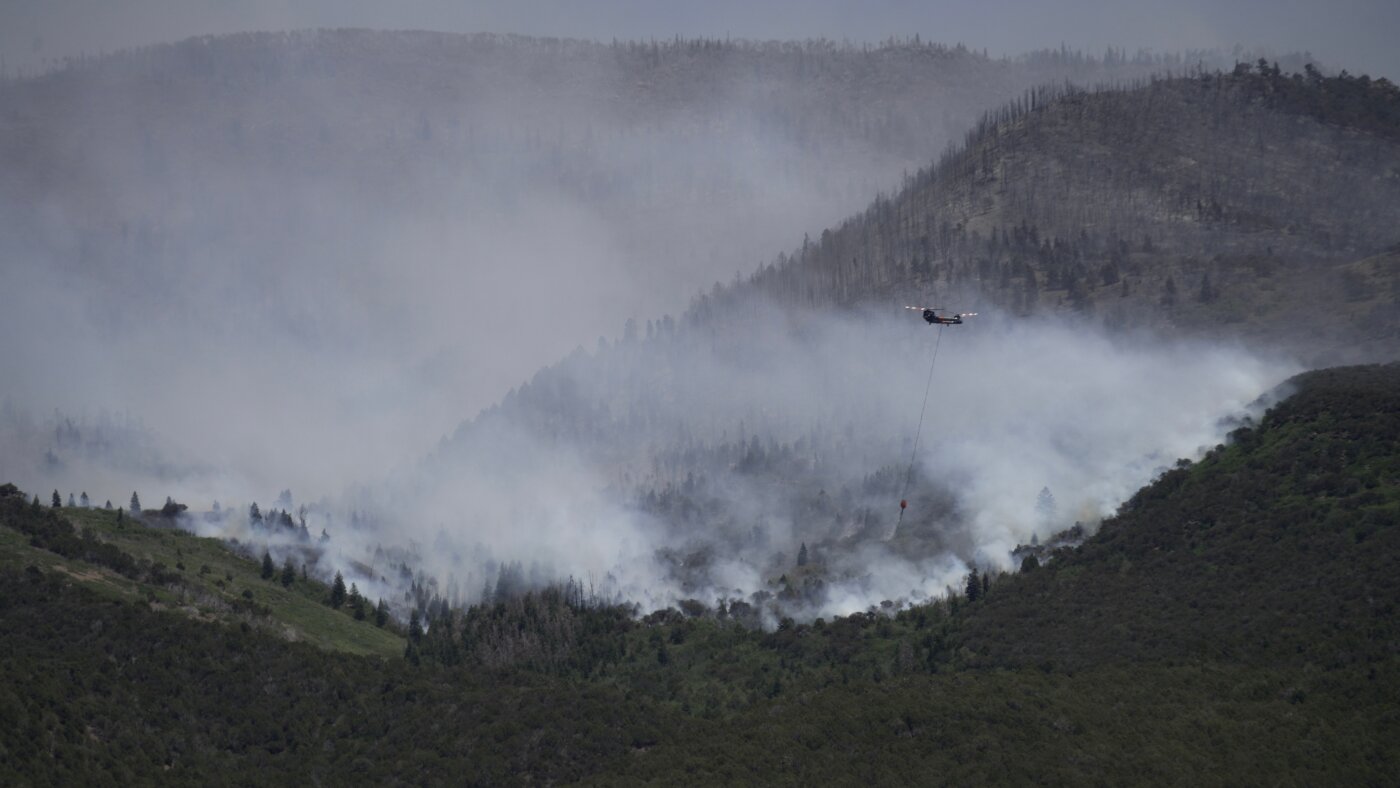
Wildfires in the Western U.S. Lead to Tragic Losses and Widespread Destruction
As extreme weather conditions persist in the Western United States, firefighters are facing unprecedented challenges. Tragically, three firefighters lost their lives and two others were injured while combating fires on the Colorado-Utah border, as confirmed by the U.S. Wildland Fire Service. These individuals were part of an interagency team responding to the Knowles and Gore fires.
The U.S. Wildland Fire Service expressed its sorrow and solidarity with the USDA Forest Service, stating, “Their bravery, dedication, and sacrifice will never be forgotten.” Further details from the Department of the Interior described the incident as a “burnover,” a situation where firefighters are overtaken by rapidly advancing flames without a safe escape route. The two surviving firefighters are currently receiving treatment for burn injuries.
Intensifying Fires Across Multiple States
Increasingly severe fires in Utah, Colorado, and Arizona are being fueled by low humidity, high temperatures, and strong winds. These conditions have led to extreme fire behaviors, prompting emergency declarations in both Utah and Colorado.
The most significant fire currently is the Cottonwood Fire in Utah’s Beaver County, which has expanded over 144 square miles and is yet to be contained. Damage from this fire includes the destruction of the Eagle Point ski resort and numerous summer cabins, with assessments still ongoing. As conditions worsened, residents in Marysvale, Junction, and Circleville were advised to prepare for evacuation.
Another growing threat is the Snyder Fire, which spans over 28,000 acres. It originated as the Snyder Mesa Fire in Utah’s Grand County and later merged with other fires in Colorado.
Alyssa Mason, a spokesperson for the Cottonwood Fire, highlighted the difficult conditions, mentioning, “single-digit humidity and wind gusts of around 45 miles per hour,” as reported by NPR.
Challenging Conditions and a Call for Action
The challenging terrain has hindered firefighting efforts, with steep cliffs and canyons complicating the deployment of heavy equipment. Firefighting aircraft were grounded on multiple occasions due to the severe conditions.
In a social media update, Utah Governor Spencer Cox described the critical situation and praised the efforts of rescue teams, urging for prayers and rain. The National Weather Service in Salt Lake City issued a “particularly dangerous situation” red flag warning, emphasizing the severe risk posed by the weather conditions.
Environmental Factors and State Responses
The root causes of this extreme fire behavior trace back to months of adverse environmental conditions. Utah’s recent winter was the warmest on record, with significantly low snowpack, leading to dry soils and vegetation. The broader region, including Nevada and Colorado, has been suffering from drought following an unusually dry winter.
In response to the escalating situation, Utah and Colorado governors have declared states of emergency. Utah’s Governor Cox has imposed restrictions on fireworks ahead of Independence Day, while Colorado’s Governor Jared Polis has authorized the National Guard’s involvement in firefighting efforts.
The National Interagency Fire Center reports that nearly 3 million acres have burned nationwide this year, surpassing the 10-year average rate. Across the country, firefighting teams continue to battle numerous blazes, with red flag warnings extending from California to New Mexico.
This article was originally written by www.npr.org