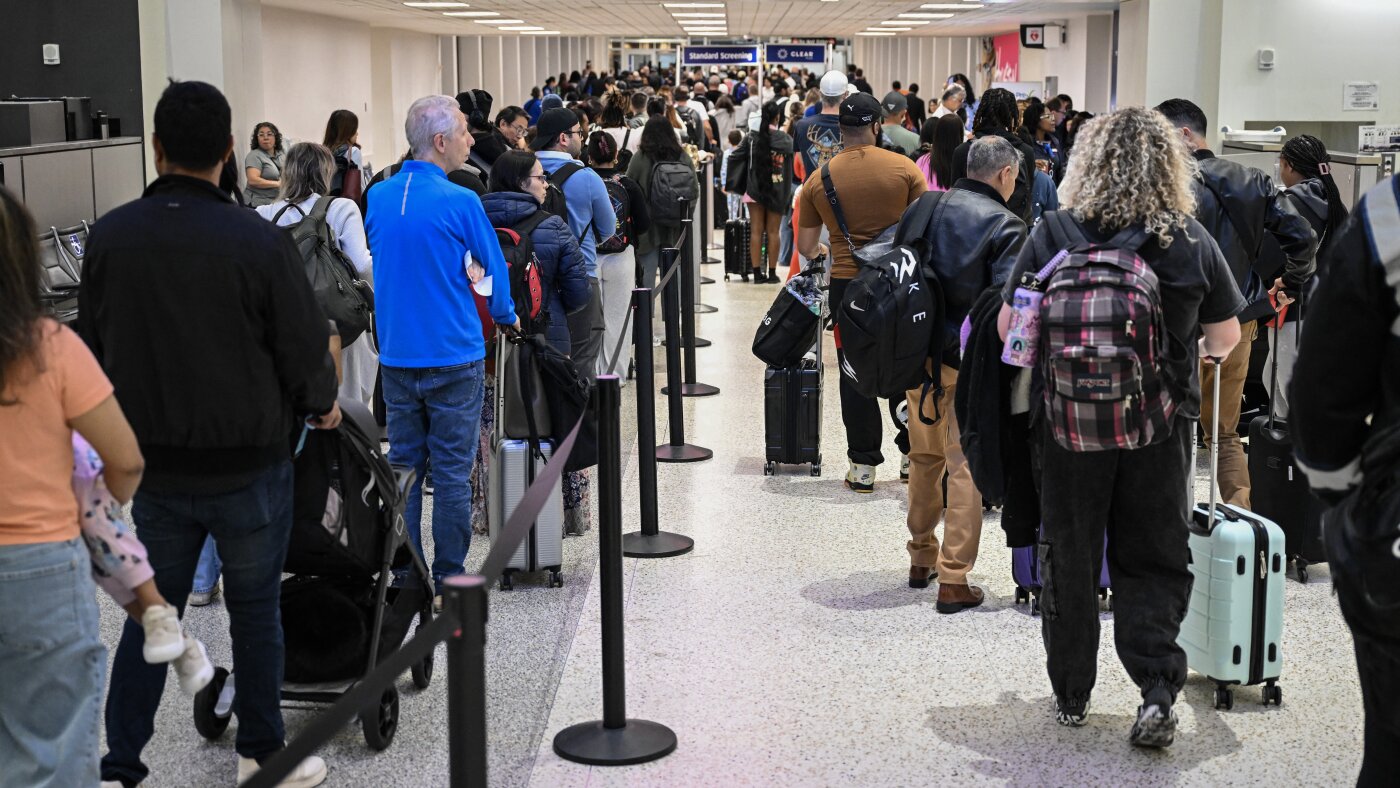
Spring Break Travelers Battle Long Airport Lines Amid Government Shutdown
As spring break unfolds across the United States, travelers are encountering significant delays at airports due to a partial government shutdown affecting the Department of Homeland Security. This situation arises from Congressional Democrats’ decision not to fund the department, aiming to prompt changes in federal immigration enforcement policies.
Airports in major cities like Houston and Atlanta are experiencing wait times of up to two hours. In New Orleans, travelers are advised to arrive three hours early, while some checkpoints in Philadelphia have been shut down due to staffing shortages.
President Trump has threatened to deploy Immigration and Customs Enforcement (ICE) agents to assist with airport security if Congress does not fund the DHS. “I will move our brilliant and patriotic ICE Agents to the Airports where they will do Security like no one has ever seen before,” Trump stated on Truth Social.
Why are wait times so long?
The unpredictability of wait times is attributed to severe staffing shortages within the Transportation Security Administration (TSA). With about 50,000 TSA staffers working without pay since February 14, over 300 officers have left their positions. Many have called in sick, especially in Houston, Atlanta, and New Orleans.
This staffing crisis coincides with severe weather conditions and the onset of spring break, further complicating travel plans for millions. Airlines for America projects 171 million passengers will travel during March and April, a record high.
What do officials say?
Transportation Secretary Sean Duffy warned that the situation could worsen if the shutdown persists. “If a deal isn’t cut, you’re going to see what’s happening today look like child’s play,” Duffy told CNN.
The U.K. Foreign Office has also advised travelers about potential disruptions at U.S. airports, suggesting they check with travel providers for updates.
Entrepreneur Elon Musk has offered to cover TSA salaries during the shutdown, though U.S. law typically prohibits government workers from receiving outside compensation.
Even with disruptions, travel demand is still high
Despite these challenges, the desire to travel remains strong. United Airlines plans to reduce flights due to rising fuel costs, influenced by the ongoing conflict in Iran. However, travel expert Clint Henderson noted, “The appetite for travel is insatiable.”
How can travelers prepare?
Travel experts advise preparing for uncertainty. Here are some tips:
1. Know before you go: Check airport websites for estimated wait times.
2. Budget extra time: Arrive earlier than usual to accommodate unexpected delays.
3. Consider biometric screening: Programs like TSA PreCheck and Global Entry can expedite security checks.
4. Make a plan B: Have backup travel plans and know alternative routes and airlines.
If your flight is canceled, the Department of Transportation states you are entitled to a refund.
This article was originally written by www.npr.org