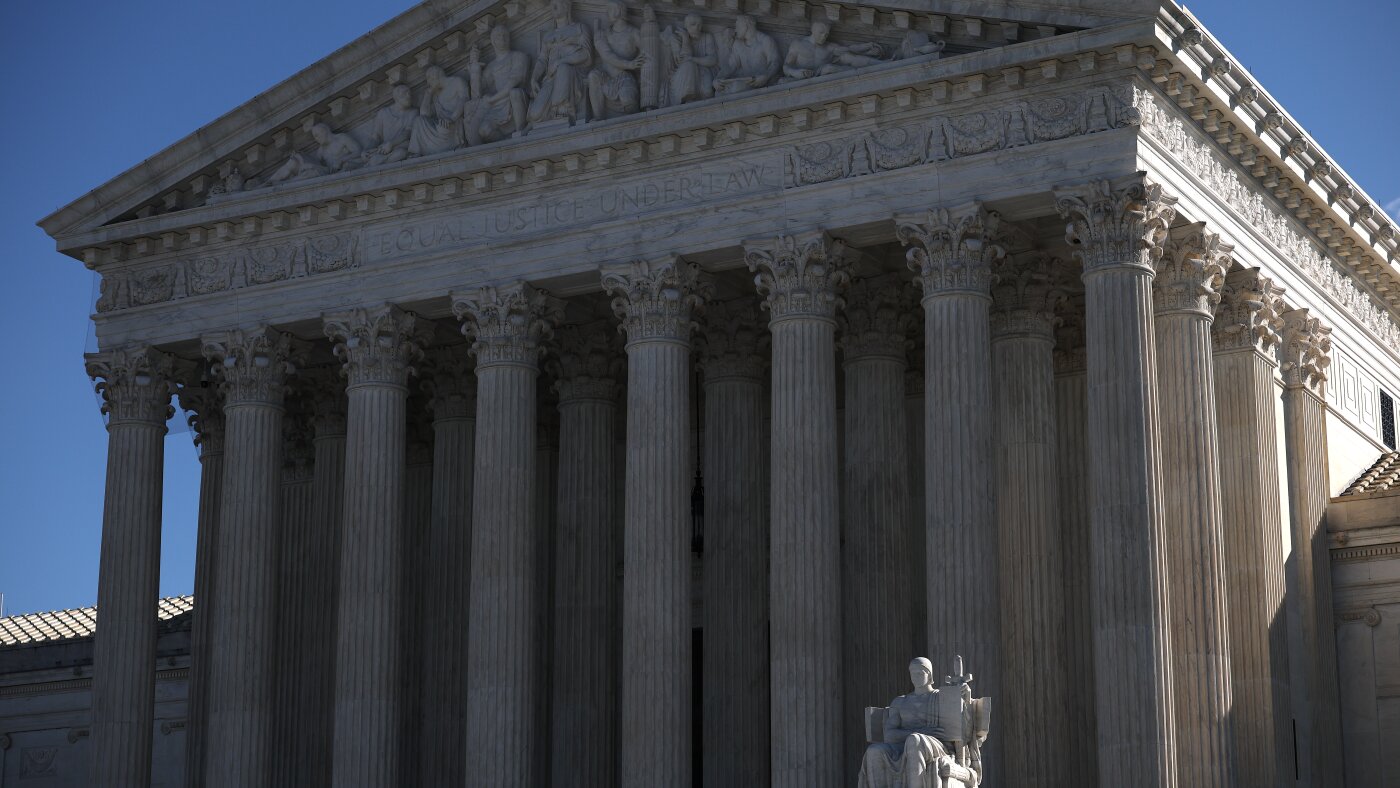
Supreme Court Steps into New York’s Redistricting Controversy
In a surprising move on Monday, the Supreme Court intervened in New York’s redistricting efforts, halting a lower court’s decision that could have transformed a Republican congressional seat into a Democratic one. This intervention concerns the reconfiguration of New York’s 11th congressional district, which encompasses Staten Island and a portion of Brooklyn.
The district is currently under Republican control, but a state Supreme Court judge recently ruled that the existing district boundaries undermine the influence of Black and Latino voters, thereby violating the state constitution. Following this ruling, Republican Representative Nicole Malliotakis and the Republican co-chair of the state Board of Elections quickly appealed to the U.S. Supreme Court, arguing that the redistricting is an unconstitutional “racial gerrymander.” The congressional election cycle in New York was slated to begin on February 24.
Previously, the Trump administration has shown support for Republican stances in similar redistricting conflicts, such as those in Texas and California. However, voters and the State of New York contend that it’s premature for the Supreme Court to intervene, as New York’s highest state court has yet to issue a final ruling. They argue that Supreme Court involvement at this stage could encourage premature appeals in future cases.
The majority of the court did not provide a detailed explanation for their decision to intervene, stating only the duration of the stay, which will persist until the case progresses through the New York State appeals courts. If a losing party petitions and the court agrees to hear the challenge, the stay could extend until a final decision is rendered.
Justices Sonia Sotomayor, Elena Kagan, and Ketanji Brown Jackson dissented, cautioning that allowing nonfinal decisions from state trial courts to be brought before the Supreme Court could set a precedent for more election-law disputes to reach the high court. Sotomayor voiced concerns that this decision could place the Supreme Court at the center of election-law disputes nationwide, especially as states redraw their congressional maps in preparation for the 2026 election.
The Supreme Court’s involvement in this New York case deviates from its recent hands-off approach in midterm redistricting cases in Texas and California, where it allowed newly drawn maps to remain in effect. The trend of seeking Supreme Court intervention in redistricting matters has been on the rise this term. In recent months, the court permitted California to use a voter-approved, Democratic-favored map, while also allowing a GOP-friendly plan in Texas to proceed. These redistricting efforts are expected to counterbalance each other.
Meanwhile, the Supreme Court has yet to deliver a verdict on a challenge to Louisiana’s voting map, drawn to establish a second majority-Black district following the decennial census. After initially supporting the new map, Louisiana has since shifted its position to oppose it, advocating for a return to a plan with only one majority-minority district. The Supreme Court’s handling of this case spans two terms, with the justices deferring a resolution last term and calling for additional arguments this term.
The court’s conservative majority may continue to challenge the parameters set by the 1965 Voting Rights Act, as indicated by the tone of recent arguments. Whether the Supreme Court will ultimately side with Louisiana’s revised stance remains uncertain.
This article was originally written by www.npr.org