
Thalidomide’s Hidden Legacy: A Call for Recognition of U.S. Survivors
In the early 1960s, an unanticipated tragedy unfolded in the United States, with roots across the Atlantic. The story of thalidomide, a sedative linked to severe birth defects, remains a cautionary tale of pharmaceutical oversight, yet its full implications are only now being acknowledged by those affected.

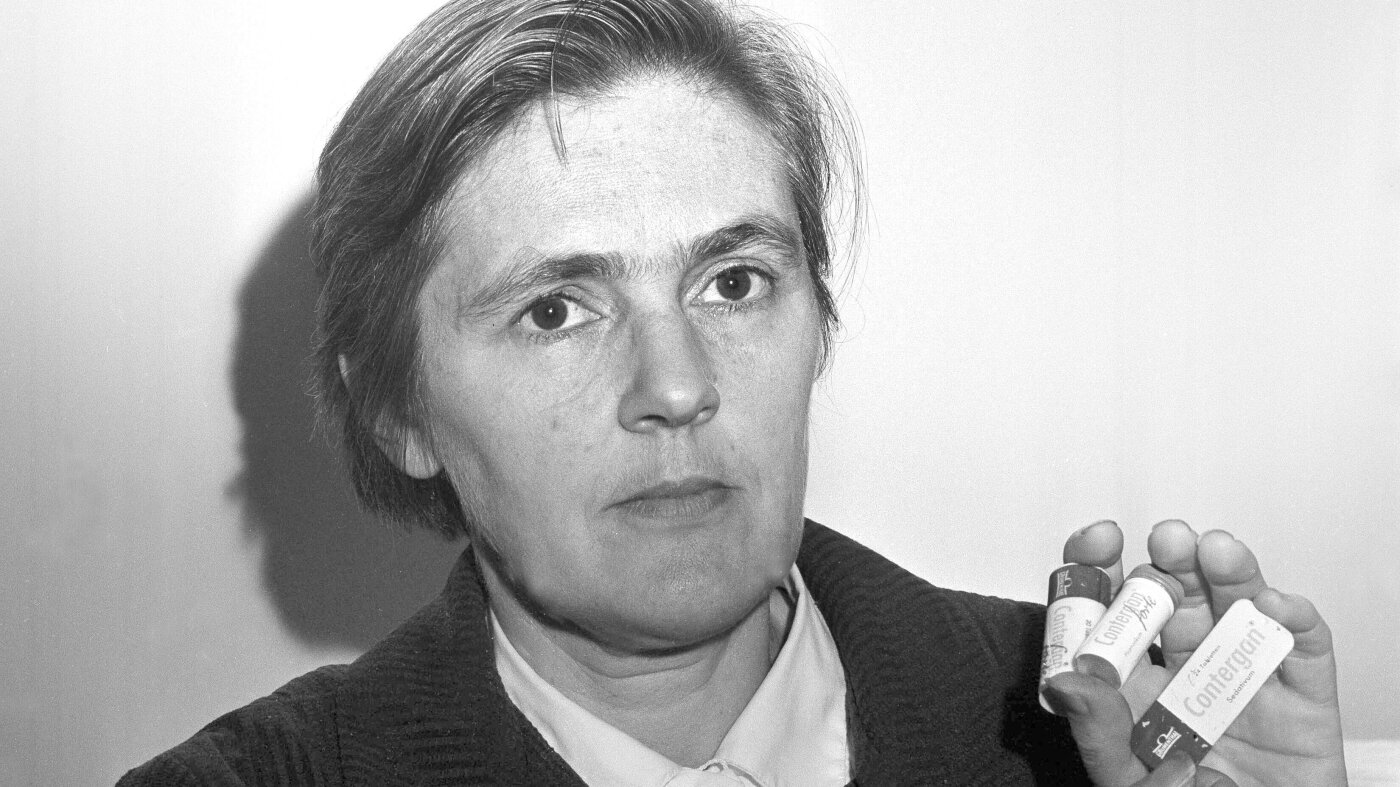
Dr. Frances Oldham Kelsey, then-pharmacologist at the FDA, holds packages of Contergan, the German name for thalidomide, Oct. 15, 1962. Photo by William J. Smith/AP.
Thalidomide, a German-made drug, was expected to become readily available in the U.S. following its application for approval by the William S. Merrell pharmaceutical company in late 1960. However, thanks to the diligent work of Dr. Frances Oldham Kelsey at the FDA, the drug was kept off the market, averting a potential public health crisis.
President John F. Kennedy lauded Kelsey for averting “this terrible human tragedy,” though this statement did not entirely reflect the reality in the U.S.
Despite not being officially approved, thalidomide found its way into the hands of American doctors, and consequently, its effects were felt by numerous families. Thousands of doses were distributed as part of unregulated trials, affecting many pregnant women whose children suffered from severe deformities.
“We go to doctors today who say it didn’t happen here in the United States. Oh yeah, it did,” said Gwen Riechmann, a survivor born with phocomelia, a condition characterized by shortened limbs.
The widespread distribution of thalidomide without proper oversight was later criticized by FDA historians, who noted the large quantities that could not be traced. “When you have a problematical product, you trace back to where it’s been distributed,” said John Swann, a retired FDA historian.
Despite the obvious health impacts, many affected individuals were never informed of their exposure to thalidomide. The drug’s impact was significantly underestimated in the U.S., with estimates suggesting there might be around a hundred survivors.
In 2018, survivors like Riechmann established the USA Thalidomide Survivors group, advocating for official recognition and financial support from the government. “The U.S. is the only country that has not provided any kind of support or even recognition that they have thalidomide survivors,” Riechmann noted.
As members of the group age and face increasing health challenges, they continue to push for acknowledgment and assistance, seeking justice and support for the overlooked victims of this medical oversight.
This article was originally written by www.npr.org
Comments are closed.