Upcoming Solar Eclipse Offers a Celestial Spectacle Across Europe and the U.S.
A celestial event is set to captivate skywatchers in Europe and parts of the United States this Wednesday. The anticipated solar eclipse promises a rare opportunity to witness the moon’s dance across the sun, providing both total and partial eclipse experiences in different regions.
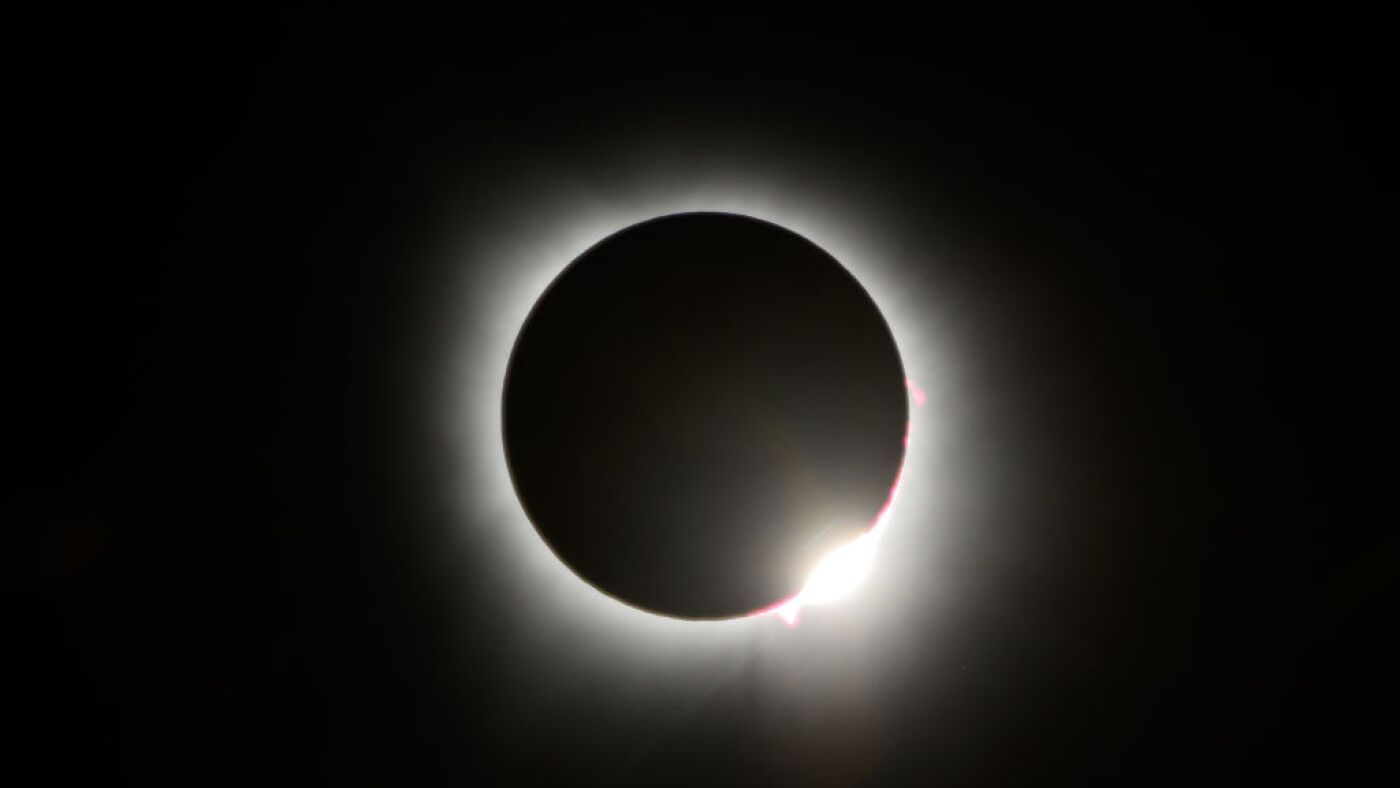
According to astronomers, residents of Iceland, Greenland, northern Russia, Spain, and a segment of Portugal will have the chance to view a total solar eclipse. This occurs when the moon completely obscures the sun’s face as it passes between the Earth and the Sun. Meanwhile, NASA reports that northern areas of the United States, from Alaska stretching to North Carolina, will experience a partial eclipse.
During a partial eclipse, the alignment of the sun, moon, and Earth is not perfect, resulting in the sun appearing as a crescent. In Washington, D.C., this phenomenon is expected to commence at approximately 1:17 p.m. ET, with about 4% of the sun’s surface covered, as noted by NASA. In Reykjavík, Iceland, the total eclipse will begin at 5:48 p.m. local time. In León, Spain, totality will start at 8:28 p.m., lasting for two minutes. This event marks the first time since 1905 that a solar eclipse will be visible from mainland Spain, highlighted by the European Space Agency.
For those intending to observe the eclipse, using proper eye protection is crucial. Eclipse glasses or handheld viewers equipped with special filters are necessary to prevent eye damage. Ordinary sunglasses are inadequate for this purpose, as even a brief glance at the sun can lead to severe eye injuries, including burns and potential permanent vision loss, according to the American Academy of Ophthalmology.
This event presents not only a visual spectacle but also an opportunity for scientific research. NASA plans to deploy scientific balloons and a high-altitude jet to study the effects of the temporary darkening of the sky on Earth’s atmosphere. “From our unique perspective on Earth during a total solar eclipse, scientists can study the Sun’s corona in a way we can’t from anywhere else in the solar system,” stated Kelly Korreck, eclipse program manager for NASA, in a statement.
Looking ahead, the next partial solar eclipse will be visible over parts of the U.S. on August 2, 2027, with totality observable in Spain, the Middle East, and portions of North Africa. A total solar eclipse will grace parts of the contiguous U.S. on August 23, 2044.
This article was originally written by www.npr.org