A New Era in Latin American Relations: The Shield of the Americas Summit
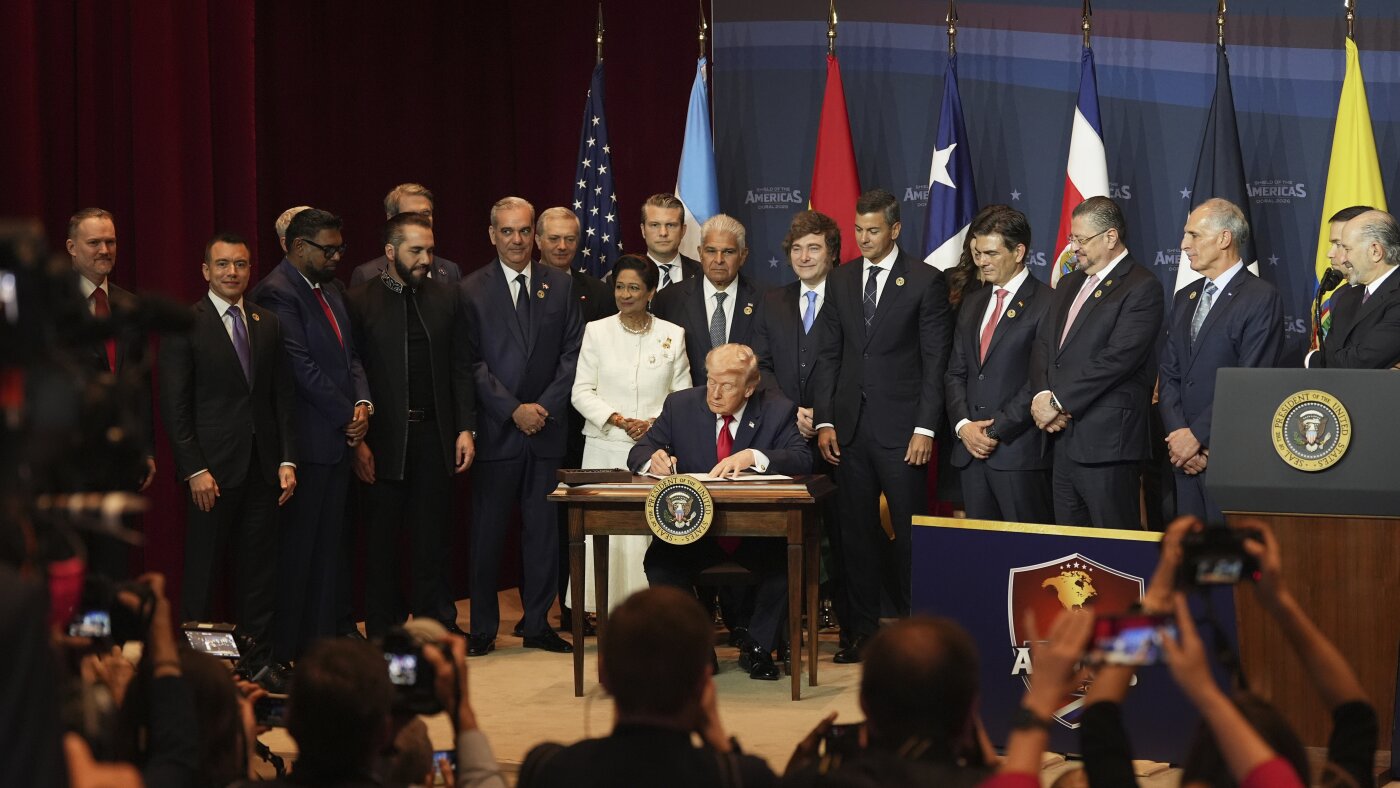
In a bold move to strengthen ties with Latin America, President Trump introduced the Shield of the Americas Summit, rallying leaders from across the region to join forces against criminal cartels. The summit, held at Trump National Doral Miami, saw the U.S. President pledging to address regional concerns, particularly those related to Cuba.
“Many of you have come today and they say, ‘I hope you can take care of Cuba.’ Because you have problems with Cuba, right?” Trump addressed the assembly of Latin American leaders. His promise to “take care of it” drew applause, highlighting the gathered leaders’ shared concerns.
Representatives from Argentina, Bolivia, Chile, Costa Rica, the Dominican Republic, Ecuador, El Salvador, Guyana, Honduras, Panama, Paraguay, and Trinidad and Tobago attended the summit. Their presence underscores a collective regional desire to address issues such as Cuba’s political situation.
Amid growing tensions with Cuba, many Cuban-Americans anticipate political change on the island. Meanwhile, the Trump administration has relaxed restrictions on Venezuelan oil, facilitating sales to Cuba, which is experiencing severe fuel shortages.
The January capture of Venezuela’s President Nicolás Maduro by the U.S. has fueled speculation about potential American involvement in Cuba’s political future. Trump’s foreign intervention policies are viewed by some as a sign that the U.S. might support efforts to replace Cuba’s leader, Miguel Díaz-Canel.
Praising the interim leadership of Venezuela, Trump spoke highly of acting-President Delcy Rodríguez’s cooperation. “She’s doing a great job because she’s working with us,” he remarked, emphasizing the benefits of collaboration with the United States.
U.S. involvement has reportedly improved Venezuela’s economic outlook through oil exports and upcoming mineral trades. Trump has touted this transition as a model for future regime changes.
This article was originally written by www.npr.org