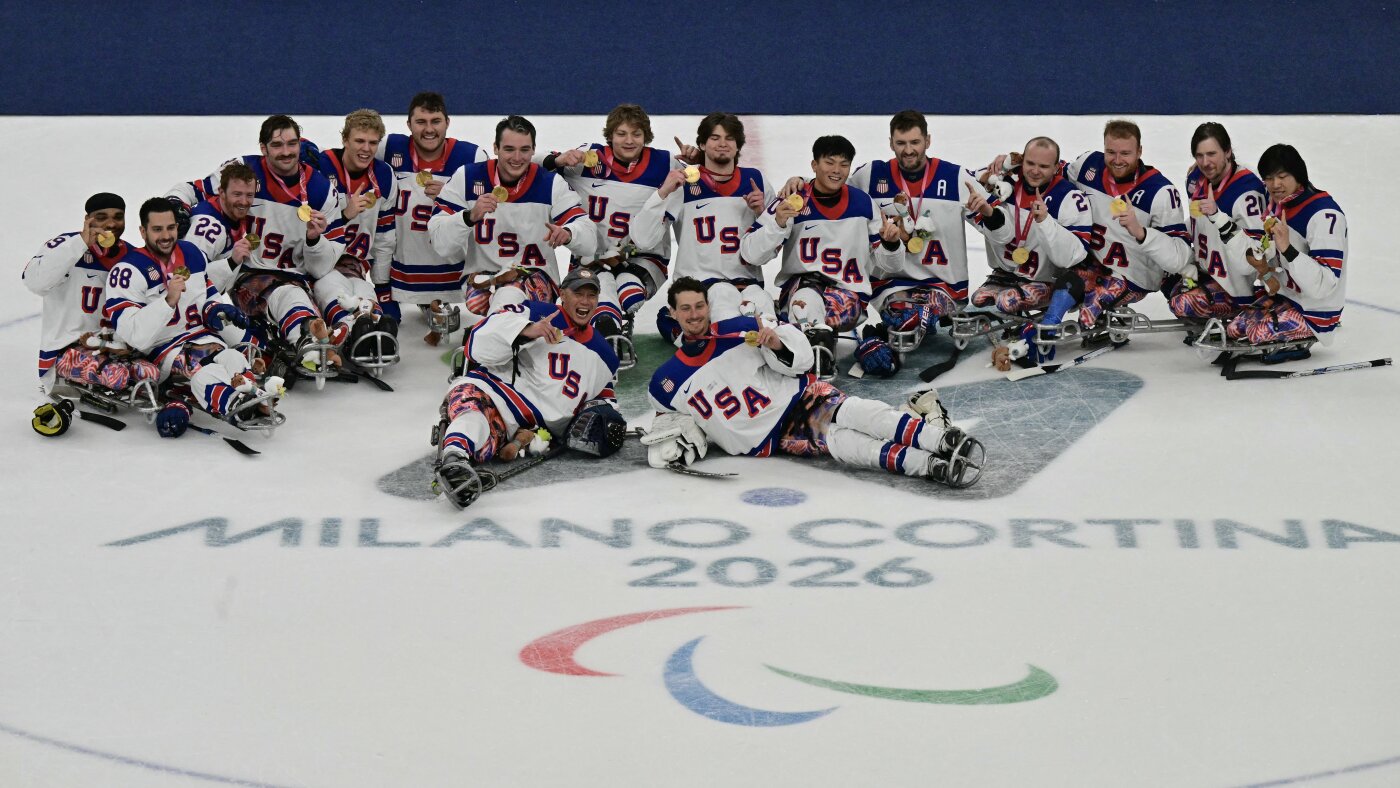
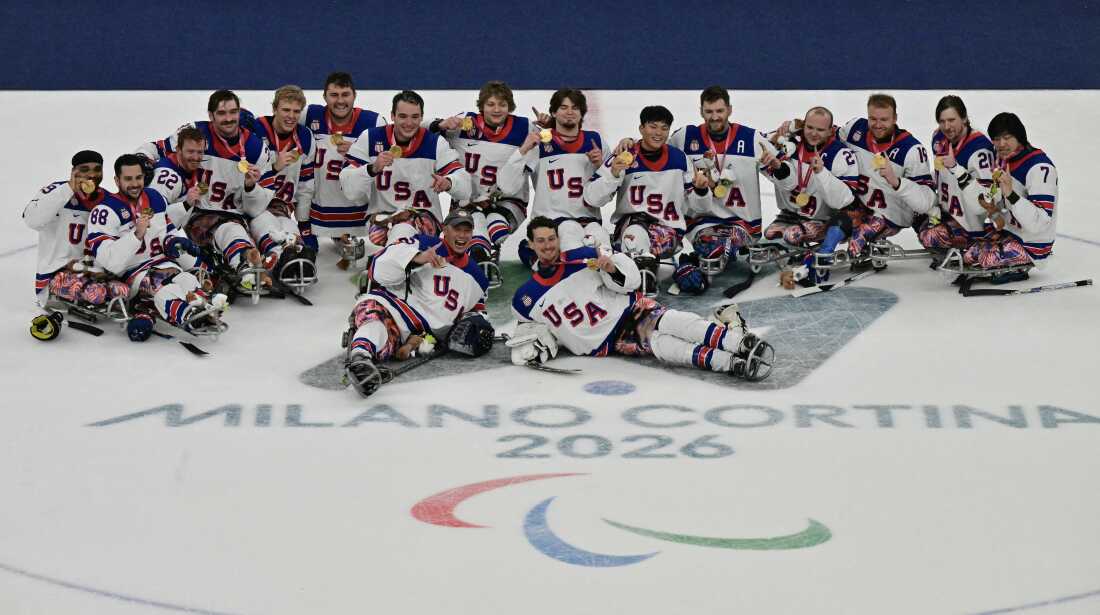
The U.S. men’s sled hockey team celebrates after winning its fifth straight Paralympics gold medal.
Stefano Rellandini/AFP via Getty Images
As the 2026 Winter Paralympics concluded in Cortina d’Ampezzo, Team USA celebrated numerous triumphs, ranking second in the overall medal tally. The highlights included the U.S. sled hockey team’s remarkable victory over Canada, securing their record fifth consecutive gold medal.
“You don’t ever start out and try to be the only five-time gold medalist in the sport,” said captain Josh Pauls, expressing the honor of leading the team to this historic achievement.
The closing ceremony featured performances and speeches, with American athletes Kendall Gretsch and Andrew Kurka proudly carrying the flag. Kurka, reflecting on his career, mentioned, “It’s been a career filled with ups and downs, but even the small victories count for me.”
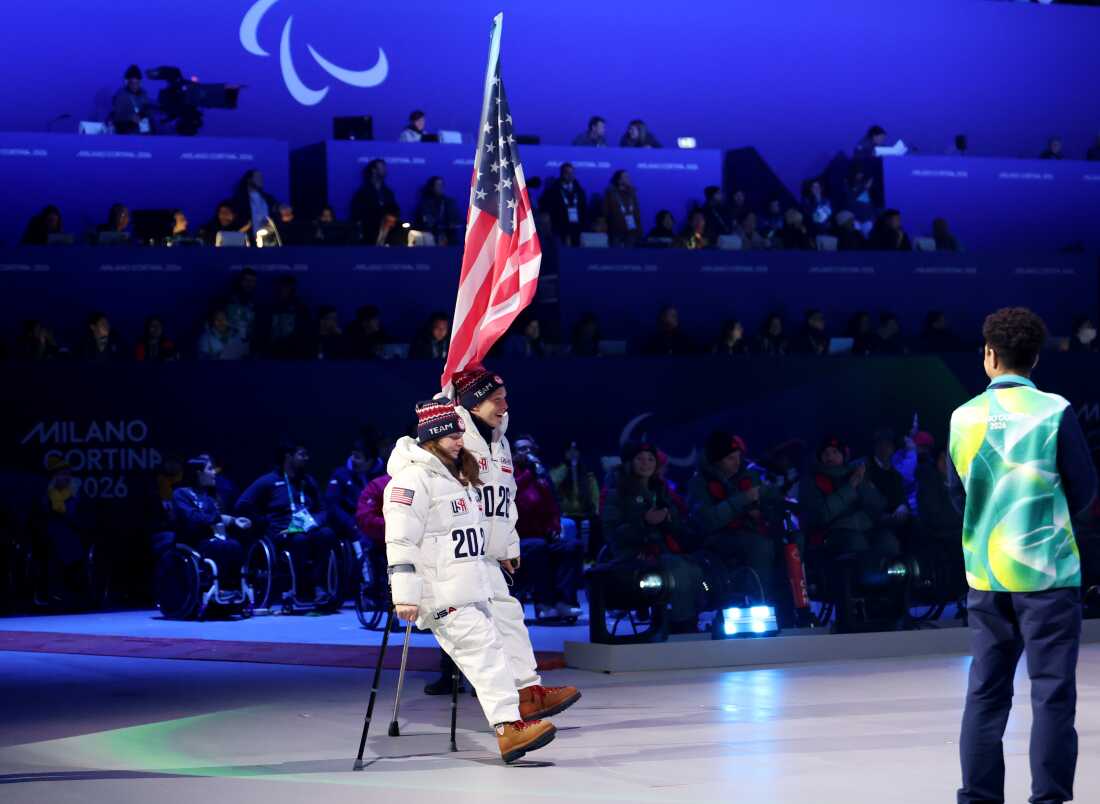
Andrew Kurka and Kendall Gretsch carry the U.S. flag during the closing ceremony.
Mattia Ozbot/Getty Images
International Paralympic Committee President Andrew Parsons praised the Games as a success, noting, “The biggest and most beautiful Winter Paralympics with more athletes, more nations, more women and more global broadcast and digital coverage than ever before.”
China topped the medal count with 44, while the U.S. secured 24 medals, 13 of which were gold. This marked an improvement from their fifth-place finish in 2022, with officials calling it their “strongest gold-medal showing in the last 20 years.”
Amid geopolitical tensions, Parsons emphasized the unifying power of sport, stating, “Paralympians, you rose above pressure, expectation and global tension to keep the focus where it belongs: on you and your sport.”
Team USA Highlights
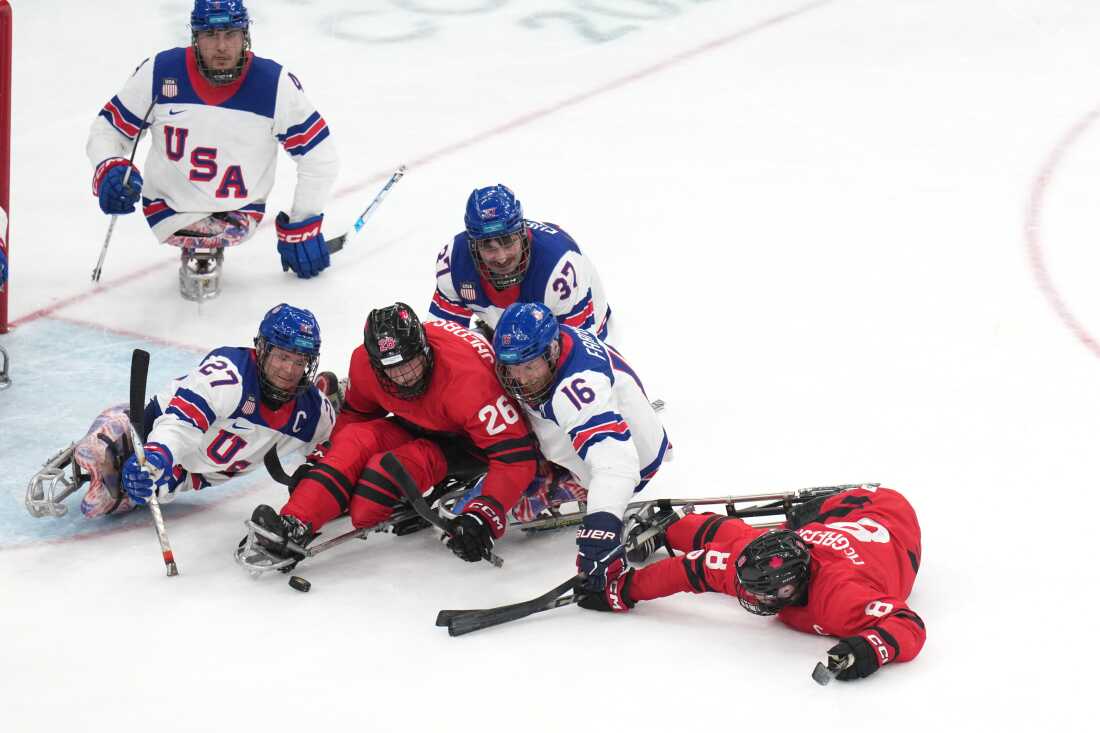
Team USA’s Declan Farmer, center, fights for the puck during the gold-medal match against Canada.
Antonio Calanni/AP
On the ice: The U.S. sled hockey team dominated the tournament, outscoring opponents 46-6 and defeating Canada 6-2 in the final, thanks to a hat trick from Jack Wallace, who was named “best defender.”
Declan Farmer, the top scorer and official MVP, became the all-time leading scorer in Paralympic sled hockey history at just 28 years old.
In wheelchair curling, Steve Emt and Laura Dwyer finished fourth in the new mixed doubles event, marking the U.S.’s best-ever Paralympic finish in the sport.
In Para Nordic Skiing: Oksana Masters, despite health challenges, won four golds and a bronze, increasing her career total to 24 medals. Jake Adicoff, with guides Reid Goble and Peter Wolter, set a new record with four golds in visually impaired skiing events.

Joshua Sweeney, Oksana Masters, Sydney Peterson, Jake Adicoff and his guide Reid Goble of Team USA participate in the medal ceremony.
Luke Hales/Getty Images Europe
“It’s incredibly scary to put a high goal out to the public,” said Adicoff, reflecting on his achievements. The mixed 4×2.5km relay team, featuring Adicoff, Masters, Josh Sweeney, and Sydney Peterson, retained their title.
In Alpine Skiing:

Andrew Kurka competes in the super-G leg of the para Alpine skiing men’s combined.
Maja Hitij/Getty Images
Andrew Kurka secured bronze in the men’s super-G sitting, adding to his previous medals. Meanwhile, Patrick Halgren won silver in the men’s super-G standing event, Team USA’s first since 1998.
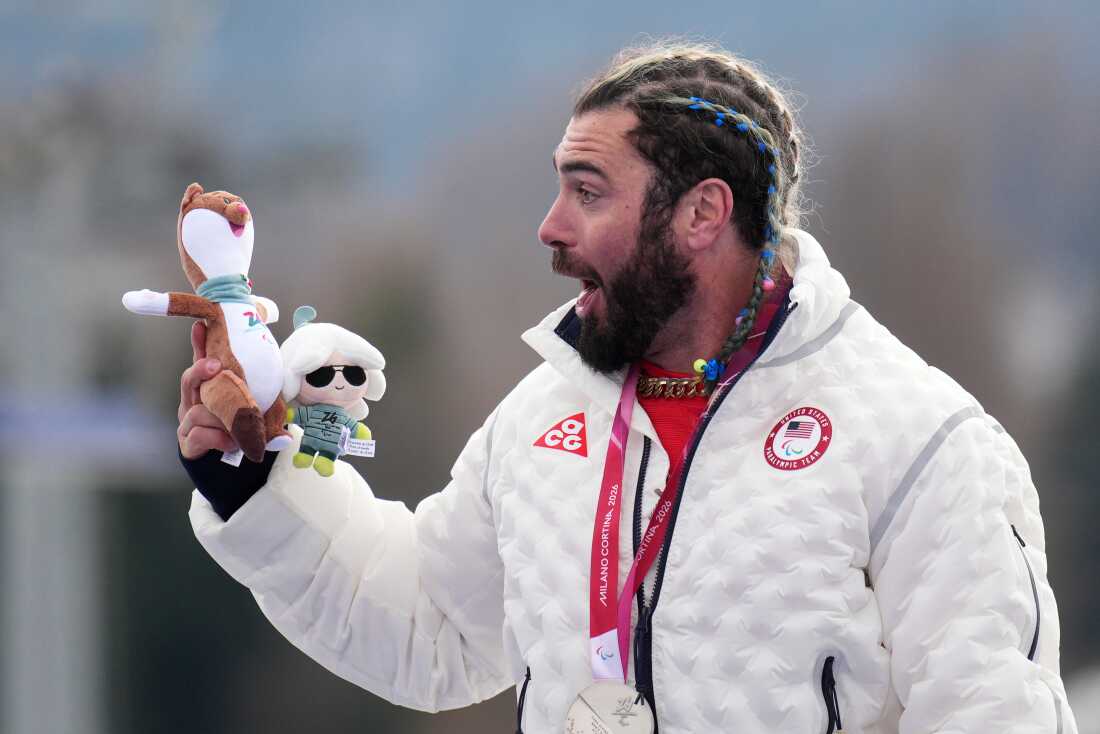
Patrick Halgren celebrates after winning a silver medal in the alpine skiing men’s super-G standing.
Emilio Morenatti/AP
Halgren dedicated his win to his late twin brother, Sven, and called it the “best day of my life until tomorrow.”
In Snowboarding: Brenna Huckaby, the most decorated Paralympic snowboarder, won bronze in banked slalom. First-time Paralympian Kate Delson took gold in banked slalom and silver in snowboard cross.

Kate Delson, center, and Brenna Huckaby, right, pose for a photo on the podium.
Maja Hitij/Getty Images
Noah Elliott repeated his 2018 victory with gold in banked slalom and added silver in snowboard cross. Mike Schultz, ending his Paralympic career, earned bronze in banked slalom and continues to support athletes with prosthetics through his business.
This article was originally written by www.npr.org