Japan’s Historic Political Shift: Takaichi’s Unprecedented Victory
In a landmark victory, Sanae Takaichi, Japan’s first female Prime Minister, has led the ruling Liberal Democratic Party (LDP) to its most significant electoral triumph in seven decades. This win has given Takaichi a strong mandate to pursue a political agenda that she acknowledges could be divisive.

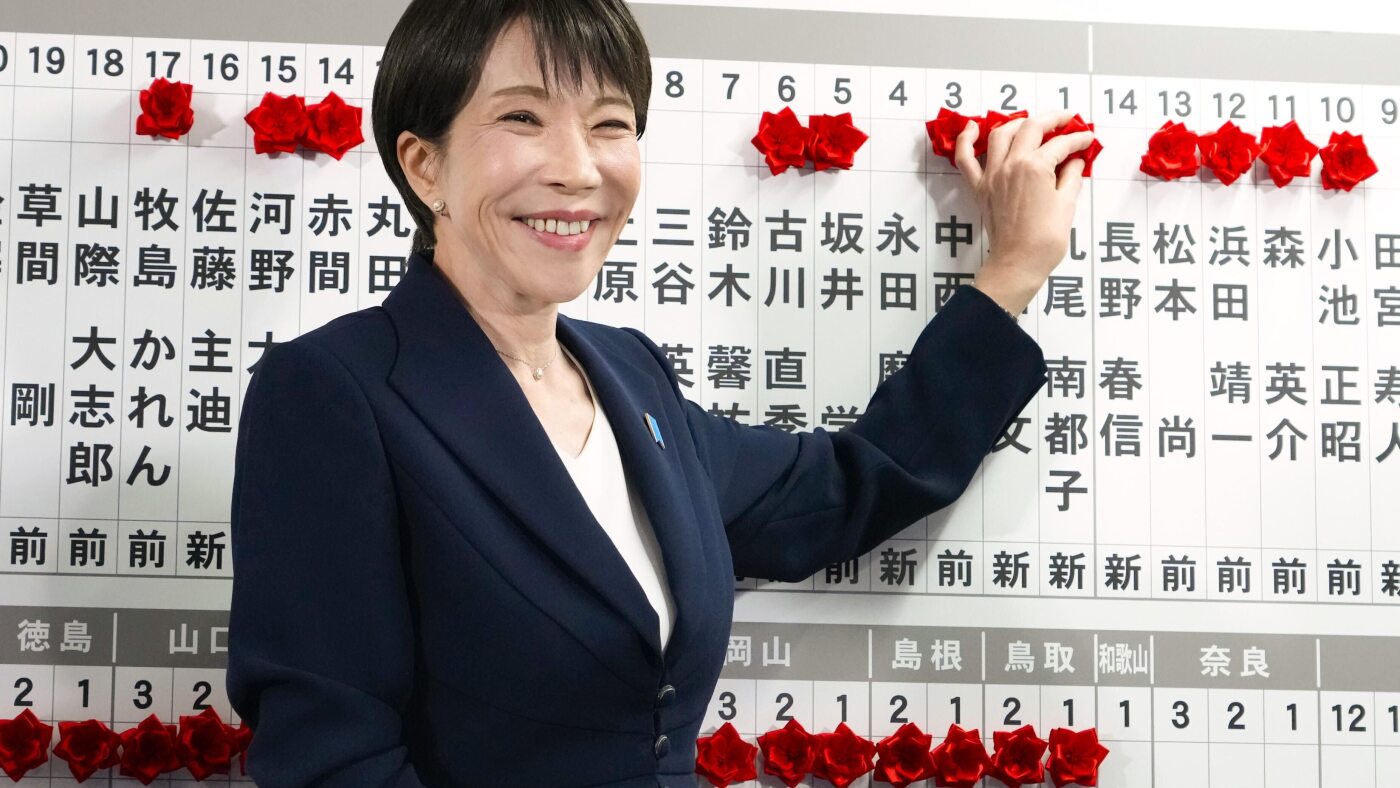
Sanae Takaichi, Japan’s prime minister and president of the ruling Liberal Democratic Party (LDP), marks the names of candidates who won lower house elections on Feb. 8, 2026, in Tokyo. Keisuke Hosojima/Kyodo News/AP
This victory was achieved through snap elections for the lower house of parliament, held under dire weather conditions with massive snowstorms affecting much of the country. Despite the challenges, Takaichi’s popularity helped the LDP secure a two-thirds majority, allowing it to potentially amend Japan’s pacifist constitution – an ambition the party has pursued since its inception.
Winning such a significant majority marks a post-war record for a single party in Japan, with 90% of the LDP’s candidates securing victory. Takaichi’s success is reminiscent of previous comebacks staged by charismatic Japanese leaders, such as her mentor, former Prime Minister Shinzo Abe.
The personalistic nature of Japanese politics plays a role in this outcome, according to Jeffrey Hornung from the RAND Corporation, who notes that “people always look to the leader, not so much the party.” The market responded positively to the election results, with the Nikkei stock index surging to a record high, while bond yields rose and the Yen initially fell before recovering.
Despite this victory, questions linger about how Takaichi plans to fund her ambitious policies, especially with Japan’s government debt exceeding 200% of GDP. Nevertheless, she seems confident in her ability to overcome resistance, stating at LDP headquarters, “We have advocated policies facing significant opposition, including a major shift in economic and fiscal policy, strengthening our security policy, and enhancing intelligence capabilities.”
Takaichi’s overwhelming win occurs amid a broader shift to the right in Japanese politics. Following her election as LDP president, the centrist Komeito Party exited the coalition, prompting the LDP to form a new alliance with the right-wing Japan Innovation Party. In the latest elections, the Centrist Reform Alliance, which Komeito joined, suffered significant losses, leading to the resignation of its leaders.
At a press conference, Takaichi reiterated her intent to revise Japan’s National Defense Strategy. While specifics remain unclear, she has previously suggested reevaluating Japan’s stance on nuclear weapons. Additionally, Takaichi aims to deepen the “free and open Indo-Pacific” vision championed by Shinzo Abe a decade ago.
The Japan-U.S. alliance remains central to Takaichi’s foreign policy, with plans to meet President Trump next month. As Trump prepares for a visit to China, Takaichi finds herself navigating a diplomatic stalemate with Beijing over her remarks regarding Taiwan.
The Trump administration has emphasized the need for allies to assume greater defense responsibilities, and Hornung suggests that Takaichi’s strong position in parliament may enable her to achieve these goals, noting, “She can’t say anymore, ‘well, I can’t do that because the opposition parties will turn it down.’ I mean, she has the numbers to pass policies and do things.”
Chie Kobayashi contributed to this report in Tokyo.