Carlisle Cathedral’s Historic Glasswork Voted Nation’s Favorite
(Photo: Association of English Cathedrals)
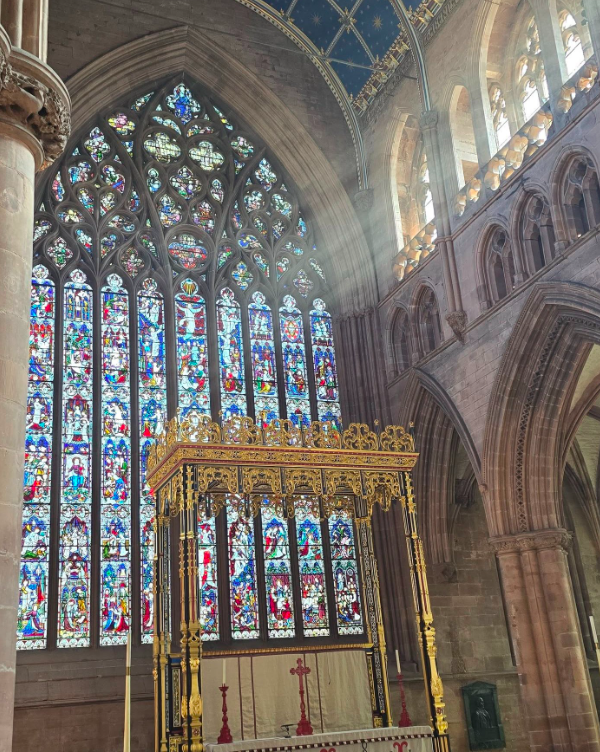
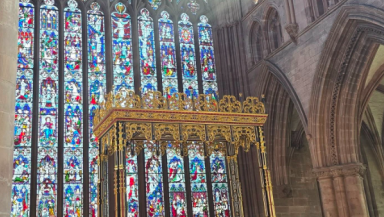
The Association of English Cathedrals has announced that Carlisle Cathedral’s Curvilinear East Window has been voted “The Nation’s Favourite Stained Glass Window”. This exquisite piece of craftsmanship showcases scenes from Jesus’ life and the last judgement, originating from the late 13th and 14th centuries.
Construction of these windows commenced in 1292, part of a larger effort to rebuild after a destructive fire. This project faced numerous setbacks, including Scottish raids and the catastrophic Black Death. In 1314, Edward Bruce, brother of Robert the Bruce, occupied the area following the Scottish triumph at Bannockburn, while the following year saw Robert the Bruce himself laying siege to Carlisle, though it ultimately failed.
The outbreak of the Black Death in 1349 further delayed progress, decimating about a third of Carlisle’s population. It wasn’t until 1359 that significant advancements were made, thanks in part to a donation of 40 shillings from local yeoman John de Salkeld, intended to “make a window anew in the chancel”. The upper section, crafted by Ivo de Raughton, dates to this period, illustrating the last judgement.
Unfortunately, the window’s lower parts were lost before the mid-18th century. In the 19th century, Hardman & Co. of Birmingham were tasked with reconstructing these sections in memory of the late Hugh Percy, Bishop of Carlisle, depicting scenes from the life of Jesus.
Britain’s oldest stained glass windows are thought to date back to the mid-12th century, commissioned after the murder of Thomas Becket. French Abbé Suger, who passed away in 1151, believed that light entering a church through stained glass symbolized God’s presence on Earth. His design of the Saint-Denis church as a “temple of light” marked a significant transition from Romanesque to Gothic architecture.
This article was originally written by www.christiantoday.com