(Photo: Alliance Defending Freedom)
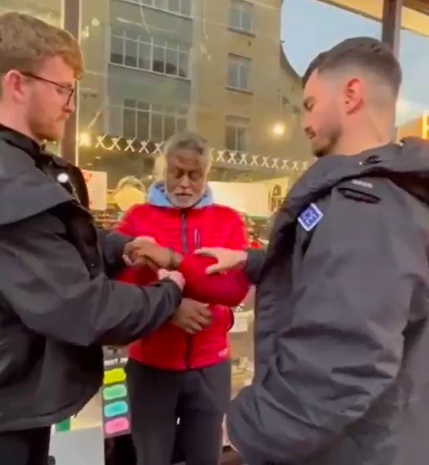
In a case that highlights the ongoing debate over free speech and public order, Pastor Dia Moodley is contemplating legal recourse following his arrest in Bristol. His detainment last November was prompted by his public remarks concerning Islam and transgender ideology while he was street preaching.
The arrest, executed by Avon and Somerset Police, was under the suspicion of inciting religious hatred as per the Public Order Act 1986. Pastor Moodley faced an eight-hour custody and received bail conditions that restricted him from entering the city center, effectively barring him from street preaching during the festive season.
These restrictions were eventually lifted, but not before Pastor Moodley was invited for a voluntary interview at his residence on January 8, where he was questioned by police officers.
With the backing of the Alliance Defending Freedom UK (ADF), Pastor Moodley is now evaluating his options regarding the police interview and awaits a decision on potential criminal charges.
ADF has defended his statements as “peaceful” and “lawful,” and Pastor Moodley himself described the arrest as a personal ordeal and an example of “two-tier policing.”
“I am a law-abiding citizen and it feels surreal that the police have criminalised me so harshly and repeatedly merely for peacefully expressing my Christian views in the public square,” he remarked. “Unfortunately, I believe that the police view me, a Christian pastor, as an easy target and are afraid of others being offended by my lawful speech. This is two-tier policing in action.”
This incident marks Pastor Moodley’s second arrest by the same police force, with a previous arrest occurring in March 2025 after a similar preaching event involving the Quran. According to ADF, during that event, he was assaulted and threatened by bystanders, yet no charges were filed against them.
Jeremiah Igunnubole, Legal Counsel for ADF International, expressed concerns over the broader implications of the case, suggesting that it reflects the use of public order laws as “de facto blasphemy laws” in the UK.
He highlighted the potential impact on free speech, especially as the government considers introducing a definition of ‘anti-Muslim hatred’, amidst opposition from various faith groups.
“The police must stop their two-tier approach of criminalising lawful speech. There has long been a pressing need for Parliament to pass legislation to ensure the right to freedom of expression is robustly protected in this country,” Igunnubole stated.
He added that Pastor Moodley’s situation underscores the urgency of clarifying laws to safeguard free speech, especially as the government finalizes its definition of ‘anti-Muslim hatred.’ “This misconstruction will be repeated unless clarity is provided to preserve the ability of citizens to peacefully comment, discuss and criticise in accordance with their core beliefs,” he concluded.
Avon and Somerset Police have been approached for their comments on the matter.
This article was originally written by www.christiantoday.com