Trump Criticizes Supreme Court’s Tariff Ruling, Vows to Persist with Economic Agenda
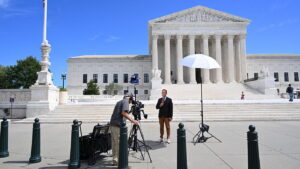
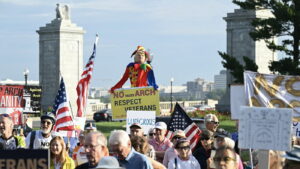
In a significant legal setback for President Trump, the Supreme Court has ruled against his broad application of tariffs, a decision he described as “deeply disappointing.” The ruling challenges one of Trump’s key economic strategies, but he remains determined to continue pursuing his goals.
Trump expressed his dissatisfaction with the justices, labeling those who opposed his tariffs as “fools” and “lapdogs.” He accused them of being motivated by liberal bias, despite the fact that three of the dissenting justices were appointed by Republican presidents, including two by Trump himself.
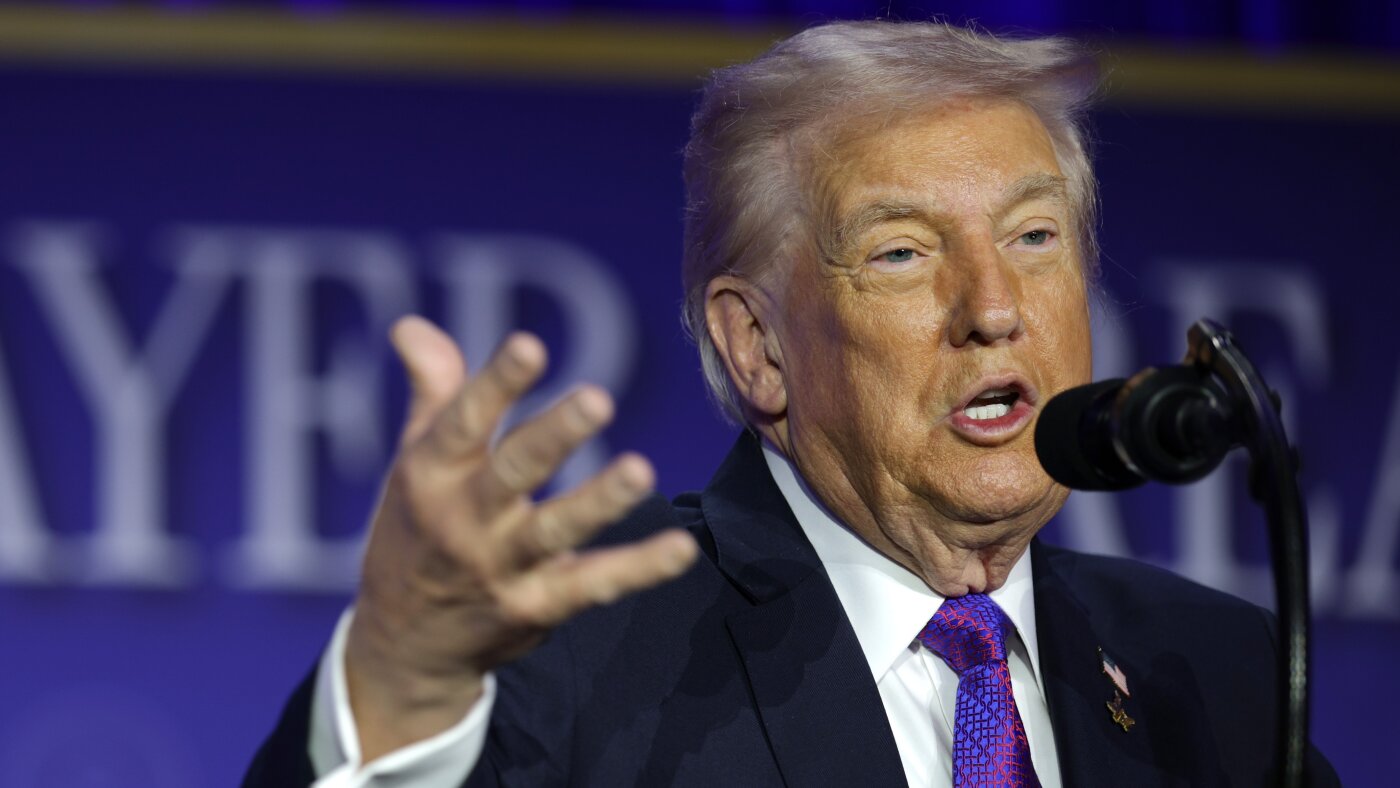
“I think it is deeply disappointing, and I’m ashamed of certain members of the court, absolutely ashamed for not having the courage to do what’s right for our country,” Trump stated.
The Supreme Court’s decision, rendered by a 6-to-3 majority, determined that the International Emergency Economic Powers Act does not grant the president authority to impose tariffs. This represents one of Trump’s most significant defeats at the court since his return to office and poses a challenge to his economic and foreign policy agenda.
Despite the ruling, Trump remains resolute in his commitment to tariffs, referring to them as his “favorite word in the dictionary.” He has credited tariffs with preventing wars and influencing global leaders to align with U.S. interests. While he highlighted the economic benefits, a Congressional Budget Office report indicated that U.S. consumers bear the brunt of tariff costs.
In response to the court’s decision, Trump suggested that it would bring more stability to the U.S. economy and announced his intent to explore alternative strategies. “Their decision’s incorrect,” he said, “but it doesn’t matter, because we have very powerful alternatives that have been approved by this decision.”
Trump referenced a dissent by Justice Brett Kavanaugh, which outlined potential legal avenues for imposing tariffs, such as the Trade Act of 1974 and the Tariff Act of 1930. He acknowledged that these processes might be more complex but offer stronger legal justification.
He also mentioned Section 122 of the Trade Act of 1974, which permits the president to impose tariffs to address trade deficits, though they are limited to 15% and require Congressional approval after 150 days.
“While I am sure that they did not mean to do so, the Supreme Court’s decision today made the president’s ability to both regulate trade and impose tariffs more powerful and more crystal clear, rather than less,” Trump commented.
Plan to sign an executive order to maintain certain tariffs under alternative authorities, Trump announced a “10% global tariff.” However, Congressional approval will be needed after 150 days, which could be challenging with upcoming elections.
Meanwhile, the business community faces uncertainty, and Republicans feel pressure from constituents over high costs. A recent NPR/Marist poll shows that 56% of Americans believe tariffs harm the U.S. economy.
Senate Republican leader Mitch McConnell praised the Supreme Court’s ruling, emphasizing the importance of Congress’s role in trade policy. “If the executive would like to enact trade policies that impact American producers and consumers, its path forward is crystal clear: Convince their representatives under Article I of the Constitution,” said McConnell.
Despite frustration with Congressional gridlock, Trump remains confident in his ability to unilaterally employ tariffs. “Foreign countries that have been ripping us off for years are ecstatic,” he remarked. “They are so happy and they’re dancing in the streets. But they won’t be dancing for long. That I can assure you.”