(Photo: Getty/iStock)
In an increasingly interconnected world, the diversity of religious beliefs offers a fascinating glimpse into the cultural fabric of nations. According to a comprehensive study by the Pew Research Center, Singapore tops the list as the most religiously diverse country globally, whereas the UK is noted for its lack of a dominant religious group.
The Pew Research Center’s report, part of their Global Religious Futures project, evaluated 201 nations and territories using a Religious Diversity Index (RDI). This index measures the representation of seven major religious categories: Christians, Muslims, Hindus, Buddhists, Jews, other religions, and the unaffiliated.
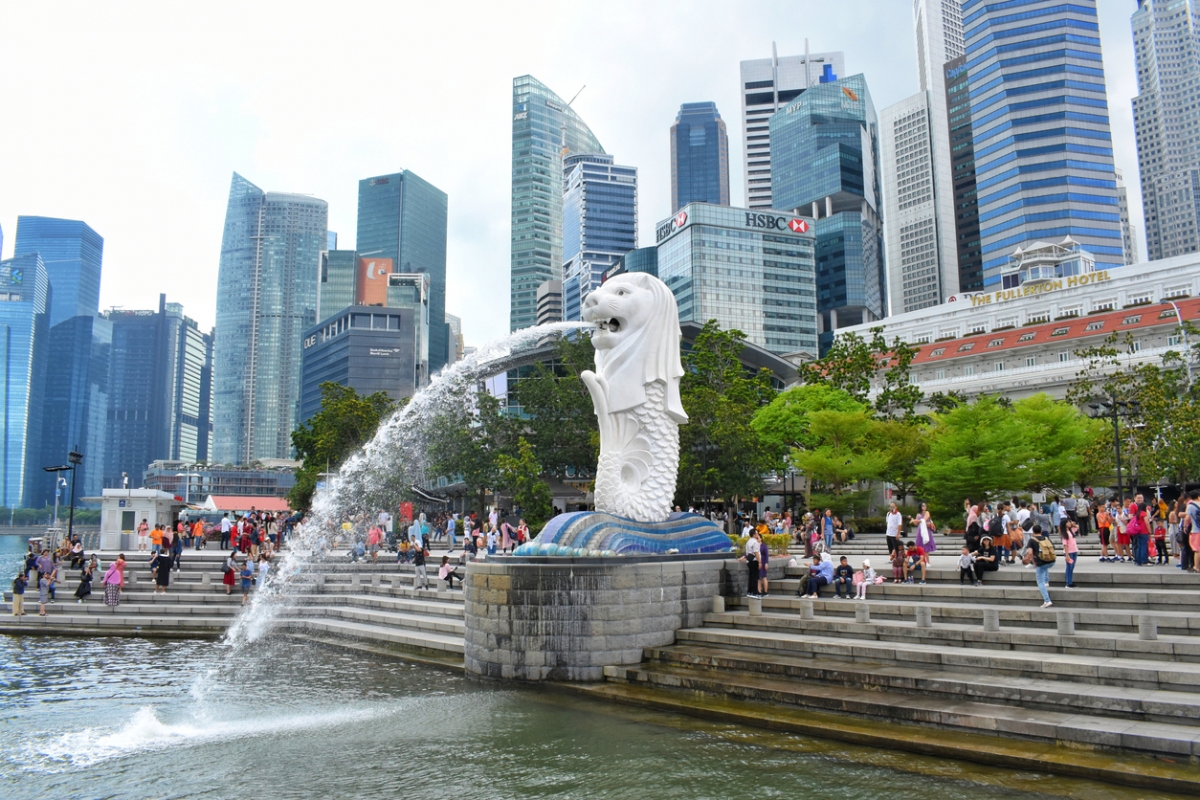
Singapore achieved a remarkable score of 9.3 out of 10, indicating a near-equal distribution of various religious groups. In Singapore, 31% of the population identifies as Buddhist, 20% have no religious affiliation, 19% are Christians, 16% are Muslims, 5% are Hindus, and 9% belong to other religions.
No nation reached the perfect score of 10 on the index.
Suriname secured the second spot globally and is the only Latin American nation in the top 10. In Suriname, Christians make up 53% of the population, followed by Hindus at 22%, Muslims at 13%, and the religiously unaffiliated at 8%.
Countries in the Asia-Pacific region and sub-Saharan Africa, such as Taiwan, South Korea, Mauritius, and Benin, also scored highly on the index.
France was the only European country to feature in the top 10, with Christians (46%) and the religiously unaffiliated (43%) being its two largest groups.
Conversely, Yemen, Afghanistan, and Somalia were among the least religiously diverse countries, with Muslims comprising over 99.8% of their populations.
Although the UK did not rank among the most religiously diverse countries, it was highlighted for being one of just seven nations worldwide where no single religious group holds a majority. The other nations include South Korea, France, Australia, Singapore, Mauritius, and Ivory Coast.
According to the latest UK Census data, Christians account for less than half of the population in England and Wales, with 46.2% identifying as Christian, down from 72% in 2001.
Additionally, 37.2% of the population reported having no religion, making the religiously unaffiliated the second-largest group.
The percentage of Muslims increased from 4.9% in 2011 to 6.5% in 2021.
Further Pew research indicated that approximately 40% of people in Britain raised as Christians no longer consider themselves part of the faith.
Among those who attended church during childhood, 58% now do not identify as Christian.
The trend reflects a broader movement of religious disaffiliation across Western Europe.
However, while institutional affiliation has seen a decline, both researchers and church leaders argue that expressions of faith in Britain are becoming more complex rather than disappearing altogether.
Some Christian traditions, including Pentecostal and Orthodox congregations, have experienced growth, driven by younger worshippers and immigrant communities.
The United States did not make the global top 10 for overall diversity, ranking 32nd. However, among the 10 most populous nations, each with at least 120 million people, the US ranked as the most religiously diverse.
In 2020, Christians comprised 64% of the US population, while around 30% identified as religiously unaffiliated.
Buddhists, Muslims, Jews, Hindus, and “other religions” collectively accounted for the remaining 6%, with each group making up roughly 1-2%.
Over the past decade, the US has grown more religiously diverse as the Christian majority has declined, and the number of religiously unaffiliated Americans has risen significantly.
Earlier findings by Pew researchers highlighted that more people leave religion than adopt one in adulthood, with Christianity experiencing the largest net losses.
Globally, Christianity continues to be the largest religious group with 2.3 billion adherents, though its share of the global population has decreased to 28.8%.
Conversely, the number of religiously unaffiliated individuals has grown to 1.9 billion, nearly a quarter of the world population, while Muslims, now numbering around 2 billion, are the fastest-growing major religious group.
Despite the focus on diversity, Pew’s analysis found that most countries remain religiously homogeneous.
In 194 of the 201 countries studied, at least half the population belongs to a single religious category. In 43 places, 95% or more of residents share the same religious identity. Only 49 countries have three or more religious groups each accounting for at least 5% of the population.
Regionally, the Asia-Pacific area was identified as the most religiously diverse (8.7), while the Middle East and North Africa ranked as the least diverse (3.1), dominated by Muslim populations.
Researchers found that most of the global population lives in countries with a moderate level of religious diversity. Only 1% reside in places classified as having a “very high” level of diversity, such as Singapore.
Worldwide, levels of religious diversity changed little between 2010 and 2020. However, approximately 24 countries experienced notable shifts, largely due to religious disaffiliation, particularly among Christians in Europe, North America, and Australasia.
In the Netherlands and New Zealand, the growth of the religiously unaffiliated has reshaped the balance between belief and non-belief.
In sub-Saharan Africa, Christianity continues to grow in absolute numbers, with the region now housing the highest proportion of the world’s Christians, surpassing Europe.
The findings illustrate a world where religious identity remains significant but increasingly fluid, especially in Western societies.
For the UK, the data underscores a historic transition from a nation with a clear Christian majority to one characterized by plurality.
This article was originally written by www.christiantoday.com