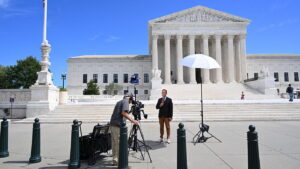
The Supreme Court’s recent decision to declare some of President Trump’s tariffs as illegal has sparked a flurry of political activity. This ruling could have significant repercussions both domestically and internationally, raising questions about the legality and impact of the president’s economic strategies.
President Trump has been known for rapidly shifting his tariff policies, and following the Supreme Court’s decision, he wasted no time in attempting to reassert his approach. On Friday, the Court ruled against Trump’s tariffs, citing constitutional and legal violations. Yet, the president quickly claimed authority under a different section of the Trade Act to impose a new global tariff of 10%, which he later adjusted to 15%.
As questions arise about the legality of Trump’s new tariff strategy, NPR’s senior political correspondent Mara Liasson provides insight into the potential political costs. According to Liasson, while Trump argues he can raise tariffs unilaterally, the new legal framework is more restrictive, requiring congressional approval after 150 days for some tariffs, while others necessitate extensive investigations.
Internationally, this decision could weaken Trump’s negotiating position with China ahead of his planned meeting with Xi Jinping in April. Domestically, the timing of the ruling intersects with the midterms, complicating political dynamics.
Republicans initially viewed the ruling as advantageous, potentially relieving them from defending Trump’s unpopular tariffs. However, Trump’s immediate move to impose new tariffs shifts the burden back onto Congress, where Republicans must decide whether to support Trump’s policy. This places them in a difficult position, especially since some voters believe the tariffs have contributed to increased costs.
Democrats, on the other hand, are seizing the opportunity to criticize Trump’s tariff policies. Several Democratic governors, including Illinois’ JB Pritzker and California’s Gavin Newsom, have called for the White House to return tariff revenues to their states, a request the administration says must be settled in court. House Minority Leader Hakeem Jeffries highlighted the impact on American consumers, stating, “The trade deficit has not been meaningfully closed… farmers and small business owners, companies as well as, perhaps most importantly, the American consumer, have been hurt, being forced to pay thousands of dollars more per year and additional expense when the affordability crisis right now is already crushing everyday Americans.”
As the State of the Union address approaches, all eyes will be on President Trump to see how he addresses the Supreme Court’s decision. NPR’s Mara Liasson notes that this event provides a significant platform for the president to communicate directly with the public. Observers are curious whether Trump will criticize the justices or focus on other pressing issues such as affordability, a topic he has struggled to address consistently.