In the icy expanse of the North Atlantic, Greenland—a land with a history of Christian influence spanning a millennium—has only had its complete Bible since 1900. This intriguing journey of faith and language reveals much about the resilience of spiritual and cultural identities.
Greenland’s Geography and Language
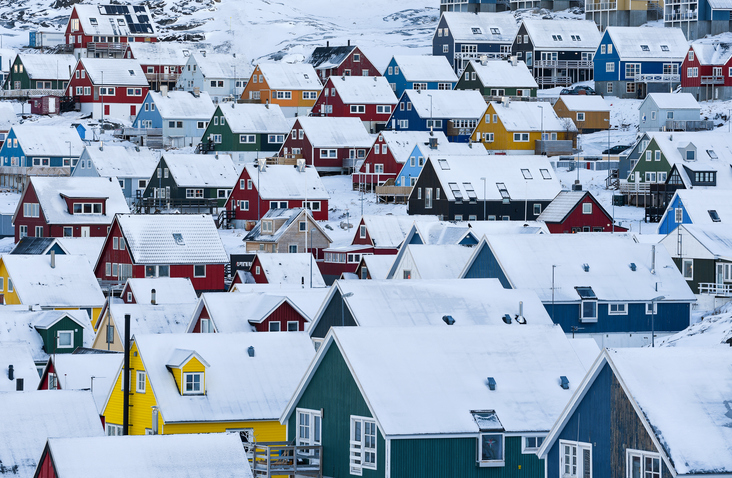
As the world’s largest island, Greenland is uniquely positioned between the Arctic Circle and the Atlantic Ocean, nestled between Canada and Iceland. The native tongue, Greenlandic or “Kalaallisut,” is an Inuit language that shares roots with languages spoken by Inuit populations across the Arctic, from Canada to Siberia.
The Arrival of Norse Settlers
In 986, the dramatic arrival of settlers from Iceland and Norway marked the beginning of Greenland’s recorded history. These settlers, often remembered as Vikings, were led by Erik the Red. They called their new land Greenland to attract more settlers and converted to Christianity around 1000 AD. Greenland’s connection to North America began here, with Norse explorers establishing what is likely the first Christian presence on the continent. A cathedral was erected in 1126, but over time, contact with their Norse kin dwindled.
The Quest of Hans Egede
Centuries later, the tale of Greenland’s lost Norse Christians captivated Hans Poulsen Egede, a Lutheran pastor from Norway. Driven by stories of their possible Catholic roots, Egede embarked on a mission to reconnect and convert them to Lutheranism. In 1711, he received royal approval to establish a mission in Greenland. By 1721, Egede, his family, and a group of colonists established the settlement of Godthåb, although they found no living Norse communities. Instead, Egede turned his efforts towards the Inuit, learning their language and translating religious texts into Greenlandic.
Poul Egede and Subsequent Translations
Hans Egede’s son, Poul, continued his father’s work, contributing significantly to the spread of Christianity among the Inuit. By 1766, the complete New Testament was available in Greenlandic. Poul’s efforts were complemented by Moravian missionaries who furthered the gospel across the island.
From Fabricius to Kleinschmidt
Throughout the 18th and 19th centuries, numerous efforts to translate the Bible into Greenlandic were undertaken. Otto Fabricius’s 1794 New Testament was lost to the Great Fire of Copenhagen but was eventually reprinted. The Moravian missionary Samuel Kleinschmidt, born in Greenland, played a pivotal role in translating the Bible, culminating in the first complete Greenlandic Bible—the “Kleinschmidt Bible”—in 1900.
Political Shifts and Language Reforms
Greenland’s political ties have shifted over the years, remaining under Danish rule even after Norway’s independence in 1814. Achieving home rule in 1979, Greenland later declared Greenlandic as its sole official language in 2009. Meanwhile, a major orthographic reform in 1973 facilitated the development of a new Bible translation, completed in 1999, which remains accessible online through the Danish Bible Society website.
Today, Christianity, predominantly Lutheranism, continues to be a significant aspect of Greenlandic identity, woven into the cultural and spiritual fabric of this unique island nation.
This article was originally written by www.christiantoday.com