Michigan Rep. Tom Barrett’s Campaign Donations Raise Questions Amid OBBB Legislation Debate
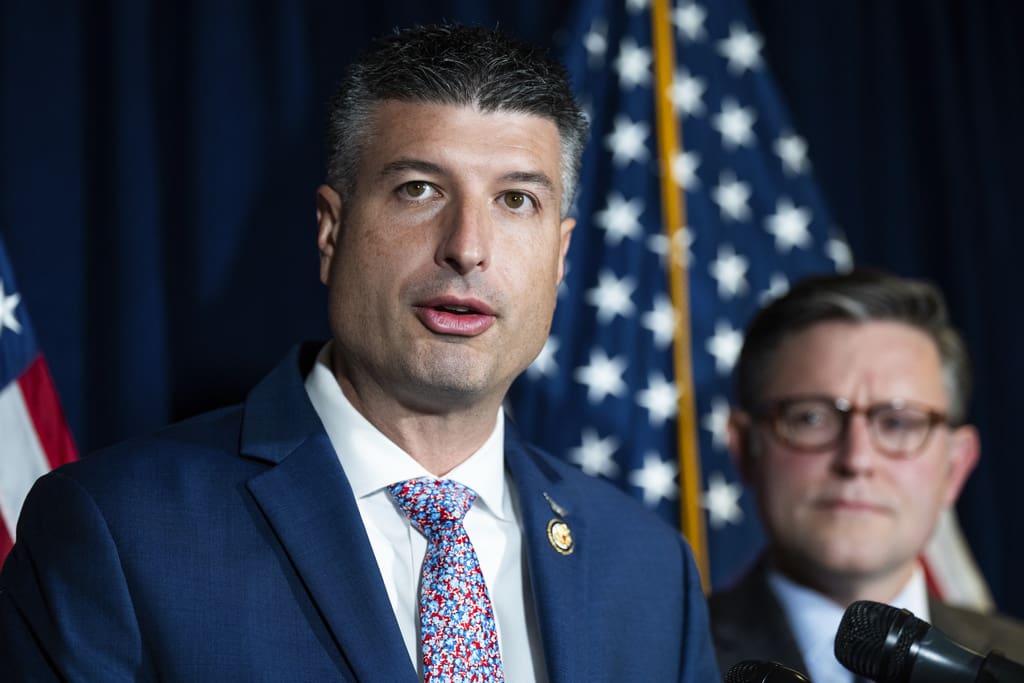
Amid the congressional discussions surrounding the One Big Beautiful Bill Act (OBBB), Michigan’s Representative Tom Barrett, a key political figure from the 7th District encompassing Lansing, has been under scrutiny due to substantial campaign contributions received from billionaires and corporations that have gained from the bill’s enactment.
Barrett, who is considered one of the most at-risk Republican members of the House in the upcoming elections, received nearly $50,000 from March to June 2025 from eight billionaires. Notable contributions included $7,000 each from MAGA supporters Richard Uhelin and Jeffrey Yass, and $7,000 from real estate heir Ross Perot Jr.
During the same timeframe, Barrett’s campaign accepted $17,500 from executives in the oil and gas sector, linked to companies like Chief Oil and Gas, Sable Periman, and Arrington Oil and Gas. Additionally, the PAC representing Koch, Inc., an energy manufacturer, contributed $2,000.
The OBBB provides tax cuts favoring large corporations and wealthy individuals, funded by scaling back Medicaid and other government programs. This has led to over 13,000 of Barrett’s constituents potentially losing their health coverage.
Despite these concerns, Barrett has labeled the legislation as a “significant win” and has expressed support in a WILX News interview, stating his pride in advocating for the bill’s benefits.
The law also reduces funding for clean energy projects initiated under the Biden administration, cutting tax incentives for solar and wind energy and facilitating increased oil and gas drilling activities in the U.S.
Mike Sommers, president of the American Petroleum Institute, anticipated the bill’s passage as a major victory for the industry, telling CNBC that the legislation could be “the most transformational” in terms of federal land and water access, aligning with the industry’s priorities.
The bill’s advantages to the oil industry may result in higher utility costs for American consumers. The OBBB has also set the stage for new AI data centers, potentially overburdening local power grids and further increasing energy expenses, as reported by PBS.
An Energy Innovation analysis predicts that by 2035, Michigan households could see their annual utility bills increase by $473 due to the OBBB.
Barrett has previously faced criticism for favoring special interests. During his tenure in the Michigan Senate from 2019 to 2023, he supported tax credits for car insurers, receiving $5,000 from the industry after his votes. In 2018, he backed a bill limiting paid leave and delaying minimum wage hikes, following which he received $197,000 from opposing PACs.
The Democratic candidate to challenge Barrett will be determined in the upcoming primary on August 4.
—
Read More Kitchen Table News