Advocacy Group Challenges Marriage Redefinition to Focus on Children’s Rights

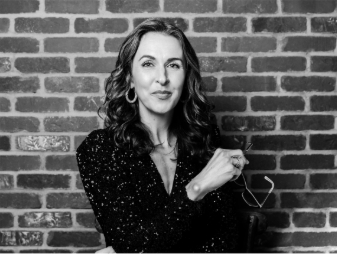
The redefinition of marriage laws in the United States is drawing scrutiny from Katy Faust, founder of Them Before Us, who has launched a campaign to refocus the debate on children’s rights and the role of parenthood. Speaking with Tony Rucinski from the Coalition for Marriage, Faust introduced the Greater Than Alliance as a pioneering movement aimed at reclaiming marriage with children in mind.
Faust argues that the legal acceptance of same-sex marriage has shifted societal perceptions of parenthood. “If you believe in gay marriage, mothers and fathers are optional in the life of a child,” she stated. Her stance is that supporting gay marriage policies contradicts the belief that children have a fundamental right to be raised by both their biological parents.
Emphasizing that the debate is not against individuals, Faust pointed out that it concerns the legal definitions of parenthood. During the interview, she reiterated that marriage should be seen as a social institution designed to connect children with their biological parents rather than an expression of adult desires.
Faust explained, “You can and should love your gay family and friends, but you have to reject the idea that marriage is a vehicle of adult validation. It is not. It is and always has been the tool that nearly every society throughout history has used to unite children to their mother and father so that they can have the best shot at being safe and loved, invested in, connected to, discover their identity and maximising their development.”
The Greater Than Alliance, a coalition of about 100 organizations and individuals, aims to challenge not only same-sex marriage but also the broader legal and cultural assumptions surrounding it.
Adoption and Parenthood: A Broader Discussion
Adoption emerged as a critical theme in Faust’s discussion. She contended that adoption should prioritize the child’s best interests rather than fulfilling adult desires for parenthood. “Adoption doesn’t exist for adults. This is not some vehicle to have a DEI win on the registry … You talk about it [adoption] as an industry. I talk about it as an institution, an institution that is centred around the best interest of the child,” Faust asserted.
Drawing from her experience as an adoptive mother, she emphasized the importance of maternal and paternal influences in a child’s life. She shared that one of her sons required both nurturing and firm boundaries, noting, “He needed one of each.”
The discussion expanded to include issues of parenthood, fertility law, and state authority. Faust questioned whether parenthood should be legally recognized or assigned by the state. She stated, “Parenthood should be observed, not assigned … If biology does not matter when it comes to parenthood, you render children as legal accessories. They are now objects to be assigned to any adult.”
Faust warned of the far-reaching consequences of detaching parenthood from biological ties, suggesting it could lead to significant changes in family structures, affecting adoption, surrogacy, and birth registration.
International Perspectives and Implications
The conversation also addressed the situation in the UK, where Faust believes a shift towards legal definitions of parenthood over biological ones has occurred. She suggested that efforts to “retake marriage” in the UK should focus on restoring what she calls the “natural contours of the family” in legal and public discourse.
Faust emphasized the need for language that acknowledges biological connections, stating, “We will say mothers and fathers, not guardians, not parents. We are going to say biology matters. We’re going to recognise that in our laws. We are going to say there’s something different about a procreative relationship versus a relationship that centres around adult identity. These things do different things for children.”
Despite the differences in legal frameworks between the US and the UK, Faust believes they share essential questions regarding children’s rights and family structures. “It all comes back to this child,” she concluded. “Where do they come from? To whom do they have a natural right? What are the conditions that lead to their flourishing?”
This article was originally written by www.christiantoday.com