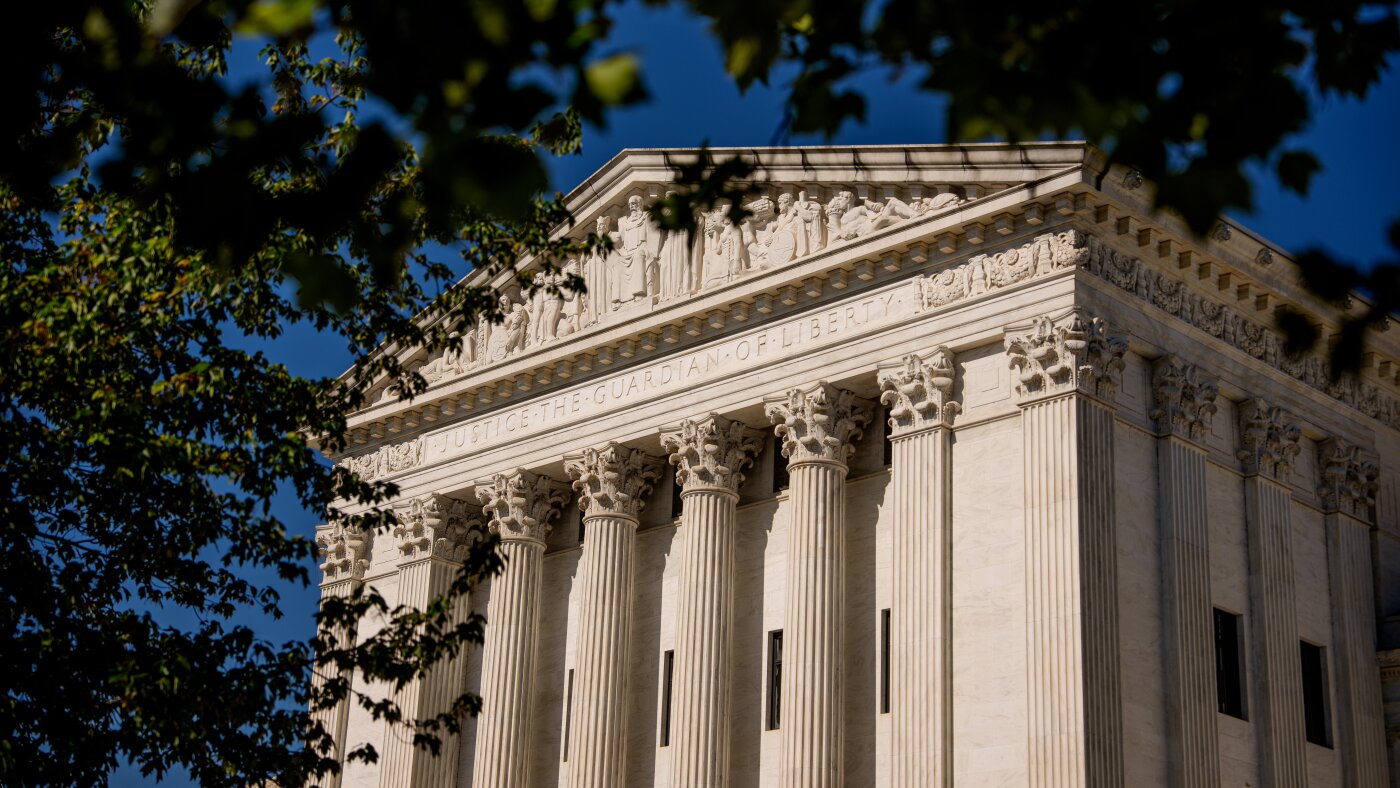
Supreme Court Blocks Virginia’s Democratic-Favored Redistricting Map
In a significant decision, the U.S. Supreme Court has opted not to allow the implementation of a new congressional map in Virginia, which was seen as advantageous to Democrats in all but one of the state’s congressional districts. This map was part of the Democratic strategy to counteract the Republican-led redistricting initiatives that emerged during President Trump’s tenure.
The map, crafted by Democrats, had gained approval from Virginia voters through an April referendum. However, a decision on May 8 by the Supreme Court of Virginia, with a narrow 4-to-3 vote, declared the referendum and the map itself null and void. The ruling cited procedural lapses by lawmakers in placing the issue on the ballot, thereby breaching the state constitution.
Subsequently, Virginia Democrats, alongside the state’s attorney general, appealed to the U.S. Supreme Court, advocating for the map that promised four additional Democratic-leaning seats. Their emergency application criticized the Virginia Supreme Court’s ruling as “deeply mistaken” on federal law issues of national significance and argued that it disregarded the electorate’s choice by mandating elections with districts that voters had rejected.
Republican legislators, however, contended that the U.S. Supreme Court should refrain from intervening in a matter solely concerning state law, especially since federal claims were absent in the lower court proceedings. In the end, the U.S. Supreme Court aligned with Republican views, leaving the state court’s decision to void the maps that favored Democrats intact.
This decision is part of a pattern of rulings by the high court on redistricting issues. In December, the court approved a gerrymandered map in Texas that could potentially augment GOP representation by five seats. In February, it sanctioned California’s voter-approved map that favored Democrats, intended to counterbalance Texas’s map. Additionally, in March, the court halted the redrawing of a New York map that was anticipated to shift a Republican district to Democratic.
In April, the Supreme Court made a pivotal ruling by declaring a Louisiana congressional map as a racial gerrymander, necessitating its redrawing. This decision spurred a wave of redistricting activities, especially in the South, where Republican legislators have moved swiftly to redraw maps that impact historically established majority Black and Hispanic districts.
This article was originally written by www.npr.org