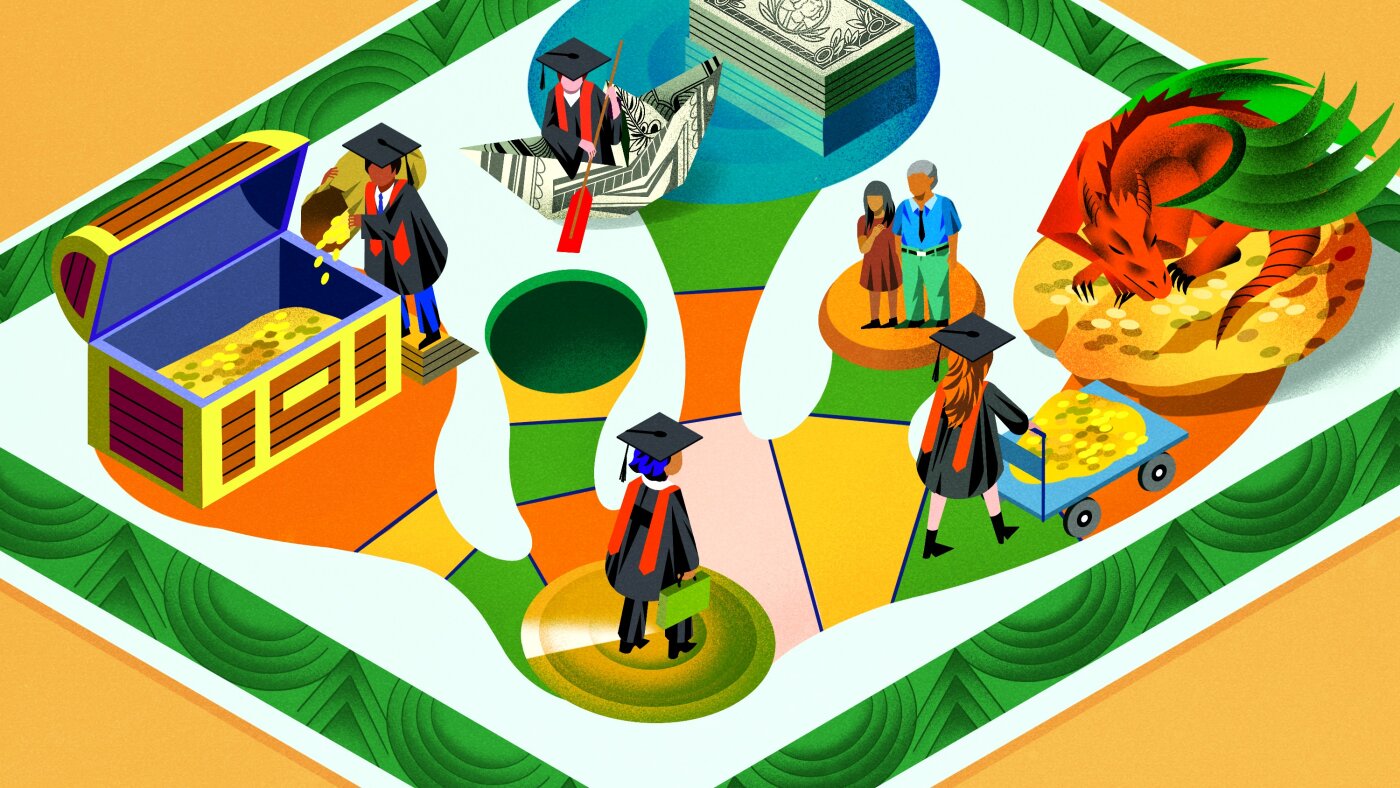
With significant changes to student loan policies on the horizon, borrowers need to prepare for new repayment plans and restrictions. Effective July 1, the One Big Beautiful Bill Act introduces two new repayment plans and imposes stricter borrowing limits, affecting millions of borrowers.
Changes for Current SAVE Plan Borrowers
The Biden-era Saving on a Valuable Education (SAVE) plan, once a popular choice for over 7 million borrowers, is ending. A recent legal battle culminated in the U.S. Supreme Court, leading to its cessation. Borrowers still enrolled in SAVE should expect notifications from the U.S. Department of Education, prompting them to switch to a different plan.
If no action is taken, the department will automatically enroll borrowers in a less flexible repayment plan. Experts warn that this transition could increase student loan defaults, particularly among those whose income previously qualified them for a $0 monthly payment under SAVE.
Options for Borrowers with Existing Loans
For borrowers with loans issued before July 1, multiple repayment options remain available, including a new plan. These options do not consider the borrower’s income:
Standard Repayment Plan
- How it works: Fixed monthly payments over 10 years, or up to 30 years if loans are consolidated.
- Upside: Predictable payments.
- Downside: Higher payments compared to income-based plans.
Graduated Repayment Plan
- How it works: Payments start low and increase every two years over a 10-year period.
- Upside: Initially lower payments that adjust with income growth.
- Downside: Payments can double over time.
Extended Repayment Plan
- How it works: Fixed or graduated payments over 25 years.
- Upside: Smaller monthly payments.
- Downside: Higher interest costs over time.
Income-Driven Repayment Plans
These plans base payments on income, offering potential forgiveness:
Income-Based Repayment (IBR)
- How it works: Payments are 15% of discretionary income for loans before July 1, 2014, and 10% for newer loans, with forgiveness after 20-25 years.
- Upside: Potential loan forgiveness.
- Downside: Long repayment period.
Income-Contingent Repayment (ICR)
- How it works: Payments are 20% of discretionary income over 25 years.
- Upside: Accessible to Parent PLUS borrowers.
- Downside: Higher monthly costs.
Pay As You Earn (PAYE)
- How it works: Payments are 10% of discretionary income over 20 years.
- Upside: Lower payments for two years before plan phase-out.
- Downside: PAYE will end by 2028.
Repayment Assistance Plan (RAP)
- How it works: Payments based on adjusted-gross income, with interest waived beyond monthly payment.
- Upside: Principal-matching payments and reduced payments for dependents.
- Downside: Requires 30 years for forgiveness.
New Borrower Repayment Plans
Borrowers taking loans after July 1 are restricted to two plans: RAP and the Tiered Standard Plan. The Tiered Standard Plan offers a structured repayment period based on the loan amount, ranging from 10 to 25 years.
New Loan Limits for Graduate Students
Graduate students will face new borrowing limits starting July 1, with most capped at $20,500 annually and $100,000 total. Only specific professional degrees qualify for higher limits, up to $50,000 annually.
Pell Grant Expansion
The Pell Grant will now cover short-term workforce training programs, offering financial aid for training lasting 8 to 15 weeks. To qualify, students must complete the FAFSA.
Public Service Loan Forgiveness (PSLF)
PSLF remains available, forgiving loans after 10 years of public service and 120 qualifying payments. However, recent changes may limit eligibility based on employer activities deemed illegal by the education secretary.
Changes to Parent PLUS Loans
Parent PLUS loans will now have a $20,000 annual cap per child and an aggregate cap of $65,000. New borrowers are limited to the Tiered Standard Plan, with no income-driven options or PSLF eligibility.