Jewish academic and Hebrew scholar Irene Lancaster reflects on the distinct importance of July 4th this year.
The date July 4th carries special meaning this year due to several notable anniversaries. It marks the 250th anniversary of the United States, the 50th anniversary of Operation Entebbe, and my granddaughter’s second birthday.
The Torah portion read on this day is Pinchas (Numbers 25:10-30:1).
Is there a unifying theme among these events? Consider the United States first. President Trump has proposed a national Shabbat to honor the Jewish contributions to American society over the years.
Jews began arriving in America in the mid-1650s, similar to Great Britain. Both groups were Sephardi, and the oldest synagogue in New York, Shearith Israel, was once led by Rabbi Marc Angel, whose books I recently reviewed for CT. But why did President Trump choose Shabbat as a symbol?
Shabbat embodies humility, recognizing human limitations. Even God rested on the seventh day after creating man. The phrase “What a piece of work is man,” often recited in prayers, reflects this sentiment. Perhaps God needed a rest after such creation!
Creativity requires values, a legacy Jews have imparted to the world. This was acknowledged by America’s Founding Fathers and the Pilgrims of the 17th century, who were well-versed in biblical and Jewish learning. Unlike elsewhere, Jews in America were not seen as an embarrassment but as contributors.
Rashi and Rambam, key figures in Torah interpretation, believed Shabbat transcends Judaism, representing the missing “menucha” or rest after Creation. This idea of rest completes creation, a gift Jews have shared with the world, as recognized by the U.S. President.
Operation Entebbe
The second significant anniversary is Operation Entebbe. On July 4, 1976, Yoni Netanyahu, brother of Israeli PM Benjamin Netanyahu, lost his life rescuing hostages from a plane hijacking in Entebbe, Uganda.
The Air France flight was hijacked by German and Palestinian terrorists and diverted to Uganda, where they received support from Ugandan leader Idi Amin. This story has been depicted in films and made Yoni Netanyahu a hero.
Jews were separated from other passengers who were released. The Air France crew stayed with the hostages. Israel’s Mossad, with PM Yitzhak Rabin’s government, decided on a rescue mission, despite Rabin’s initial caution and persuasion from Defence Secretary Shimon Peres.
The operation commenced on July 3, resulting in the deaths of three hostages and the murder of a 74-year-old UK woman, Dora Bloch, by Ugandans. Yoni Netanyahu was the only Israeli casualty. Israel’s operation received support from Kenya, prompting Amin to order the murder of Kenyans in Uganda, causing a mass exodus.
This impactful event left a mark on Israel and especially on Benjamin Netanyahu. The lesson learned? Sometimes caution is insufficient, and bold decisions are necessary.
A Personal Connection
The third anniversary is personal. My granddaughter’s father is Israeli, born to American parents. When my daughter learned she was pregnant, she had to leave northern Zfat due to Hezbollah’s attacks from Lebanon in autumn 2023. She moved to Jerusalem, receiving help from strangers, including Americans.
After my granddaughter’s birth on July 4, 2024, a caring community provided meals for three weeks. I like to think being born on such a notable day has positively influenced her as a young Israeli.
The Torah Reading
The Torah portion Pinchas (Numbers 25:10-30:1) is explored in Rabbi Nathan Lopez Cardozo’s book, ‘BaMidbar, the Book of Numbers’ (Kasva Press). Pinchas is portrayed as a figure who takes the law into his own hands, seemingly endorsing violence. God credits him for averting divine wrath by displaying passion.
Pinchas’ grandfather, Aaron, symbolizes peace and compromise, as seen during the Golden Calf incident. Pinchas may be compensating for Aaron’s leniency.
Sometimes, actions must override due process, as illustrated by Israel’s response at Entebbe, where the blame was misplaced on Israel.
Rabbi Cardozo notes that “occasionally the law must be violated for the sake of a greater good,” citing the COVID pandemic as an example of curtailed freedoms.
Pinchas recognized Israel’s moral decline and acted. Laws are refined by moral insight, and sages often reshape biblical law to reflect God’s deeper will.
This raises questions about “unchecked tolerance” and its limits. Karl Popper’s “The Open Society and its Enemies” (1945) discusses the paradox of tolerance, warning that unlimited tolerance can lead to the destruction of tolerance. Former UK Chief Rabbi Jacobovits similarly observed that kindness to the cruel can lead to the destruction of the kind.
Popper, a Nazi Austria refugee, argued that a tolerant society must refuse to tolerate intolerance. Rabbi Cardozo questions whether tolerance is a virtue or a guise for apathy.
Pinchas and other biblical figures are “moral pioneers.” On America’s 250th anniversary, we recognize the Pilgrim Fathers and Jewish refugees as such pioneers. Unlike in Europe, Jews in America were not merely tolerated but embraced.
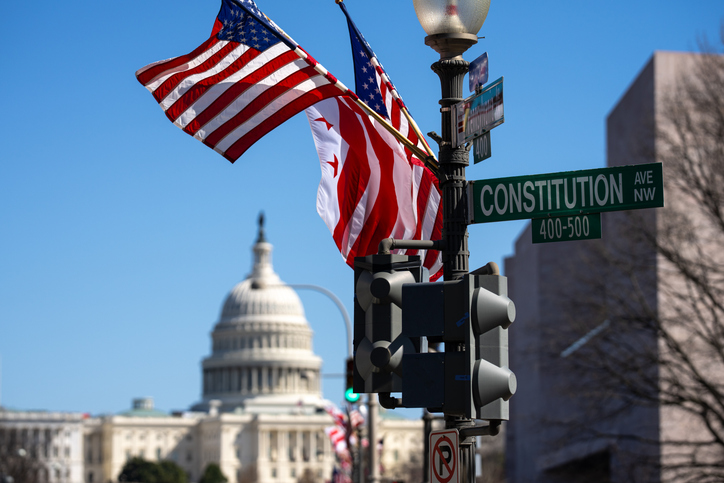
George Washington’s letter to the Jews of Newport, Rhode Island, in 1790 celebrated America’s liberal policy, later reflected in the First Amendment of the US Constitution, protecting freedoms of religion, speech, and more.
America’s generosity is well-known, as I experienced during COVID and in Israel. The nation is more than a country; it embodies a dream, much like the State of Israel.
This article was originally written by www.christiantoday.com