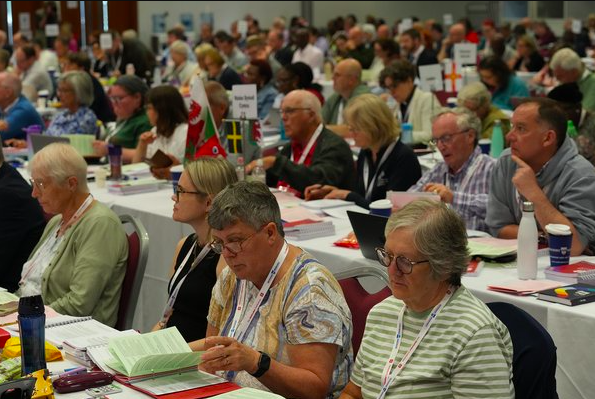
In a significant shift in strategy, the Methodist Church has been advised to abandon its ambitious goal of achieving Net Zero emissions by 2030. This recommendation, presented at the Methodist Conference, emphasizes the importance of sustained progress over setting potentially unattainable targets.
Despite considerable efforts by Methodist churches across the UK to reduce their carbon footprint, the Connexional Council has expressed concerns that maintaining the 2030 target could damage the Church’s credibility, raising fears of “greenwashing”.
The Council has instead proposed a more adaptable approach, focusing on steady advancements in reducing carbon emissions. This strategy, although seemingly a step back, is designed to be more realistic and enduring.
Dr. Hamish Leese, the Methodist Church’s Director of Environmental Engagement, highlighted the complexity of the climate crisis, stating that it is not only a practical concern but also a deeply spiritual issue linked to the Church’s mission. He said, “In 2021 the Methodist Conference agreed and affirmed that the global climate emergency is a crisis for God’s creation and a fundamental injustice.”
Leese acknowledged the progress made since 2021, with numerous churches integrating environmental concerns into their worship and educational activities. Many have taken significant steps, such as installing solar panels and heat pumps, and over 1,300 churches in Great Britain are now registered with Eco Church.
While the 2030 Net Zero target has been a driving force for these advancements, Leese admitted that achieving this goal was beyond the Church’s current capabilities. He stated, “The target was an aspirational one precisely because we knew the scale of the challenge in achieving it, and it is one which the Church has not had the capacity to achieve.”
Leese emphasized that the decision to reconsider the target does not diminish the importance of addressing climate change, which he described as an issue of mission, discipleship, and justice. “Indeed, this proposed change is a recognition that an issue of this importance requires a realistic and practical approach which moves beyond an aspirational target which is out of reach,” he explained.
This article was originally written by www.christiantoday.com