Federal Education Policy Targets Underperforming College Programs
A significant shift in federal oversight is on the horizon for colleges and universities, as a new accountability measure aims to withdraw federal support from educational programs whose graduates fail to surpass the earnings of those without a college degree.
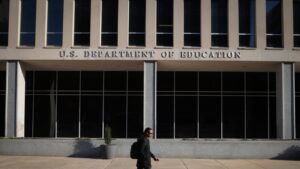
The U.S. Department of Education is implementing the “Do No Harm” test, a requirement that most academic institutions will soon face. This initiative stems from the “One Big Beautiful Bill Act” introduced by Republicans last year. The essence of the test is straightforward: undergraduate programs must demonstrate that their graduates earn more than high school graduates within four years of completing their studies. Similarly, graduate programs must show that their alumni earn more than those who hold only a bachelor’s degree. A program that falls below this earnings threshold for two out of three consecutive years risks losing access to federal student loans.
The Under Secretary of Education, Nicholas Kent, expressed the rationale behind this policy, stating, “if a program can’t show that it leaves its graduates financially better off than if they had never enrolled, it should not be underwritten by federal taxpayers.”
While some in the higher education community see this as a reasonable expectation, others voice concerns. Chris Madaio from the nonprofit Institute for College Access & Success commented, “this is really a very low floor, right? I mean, high school earnings is not an exceedingly high metric for a program to meet.”
Impact on Programs and Students
The Department of Education has provided data indicating that over 800,000 students are enrolled in programs that may not pass the “Do No Harm” test. Notably, around half of these students attend private for-profit institutions, which have previously been criticized for providing poor returns on educational investments.
Alarmingly, undergraduate certificate programs, particularly those promoting fast-track career paths, are at significant risk. Approximately 25% of students in these programs are in fields likely to fail the test. Cosmetology, in particular, shows a high predicted failure rate, with over 90% of programs not meeting the earnings benchmark.
In contrast, traditional bachelor’s and master’s degree programs show more promising results. Only about 1% of bachelor’s programs and 4% of master’s programs are predicted to fail the test. However, certain fields, such as theater, fine arts, music, and mental and social health services, are more vulnerable.
As Cory Turner from NPR notes, the new rule raises questions about the value of education in fields that may not lead to high earnings but are culturally and socially significant. Cindy Flores, a music teacher in Oregon, exemplifies this dilemma. She accumulated $55,000 in debt while pursuing her music degree at Portland State University, yet she values her career for its cultural impact rather than financial rewards. “If it wasn’t for PSU and the loans I could get, I wouldn’t be a Mexican-American mariachi teacher for my Mexican-American students,” Flores shared.
Critics argue that the earnings-focused test overlooks the broader goals of higher education. Lee Ann Scotto Adams from the Strategic National Arts Alumni Project points out that graduates in creative fields often prioritize cultural contributions over financial gain. “Yes, you need to make money and earn money to make a living to survive, but we see our creative workers, they want to make an impact culturally,” she stated. Adams also highlights that arts graduates’ incomes tend to stabilize and grow over time, a nuance not captured by measuring earnings just four years post-graduation.
Another concern is the exclusion of student loan debt from the assessment. Turner emphasizes that the financial burden on graduates can vary significantly based on their debt levels, suggesting that incorporating debt into the test could alter perceptions of program value, especially at costly institutions.
As the “Do No Harm” policy comes into effect, its implications for educational institutions and students remain a topic of active debate, reflecting broader questions about the role and value of higher education in today’s economy.