SpaceX Rocket Fragment Set to Impact the Moon
In a remarkable turn of events, a piece of a SpaceX Falcon 9 rocket is on a collision course with the moon. Scientists predict the impact to occur on Wednesday, marking a unique moment in space exploration.
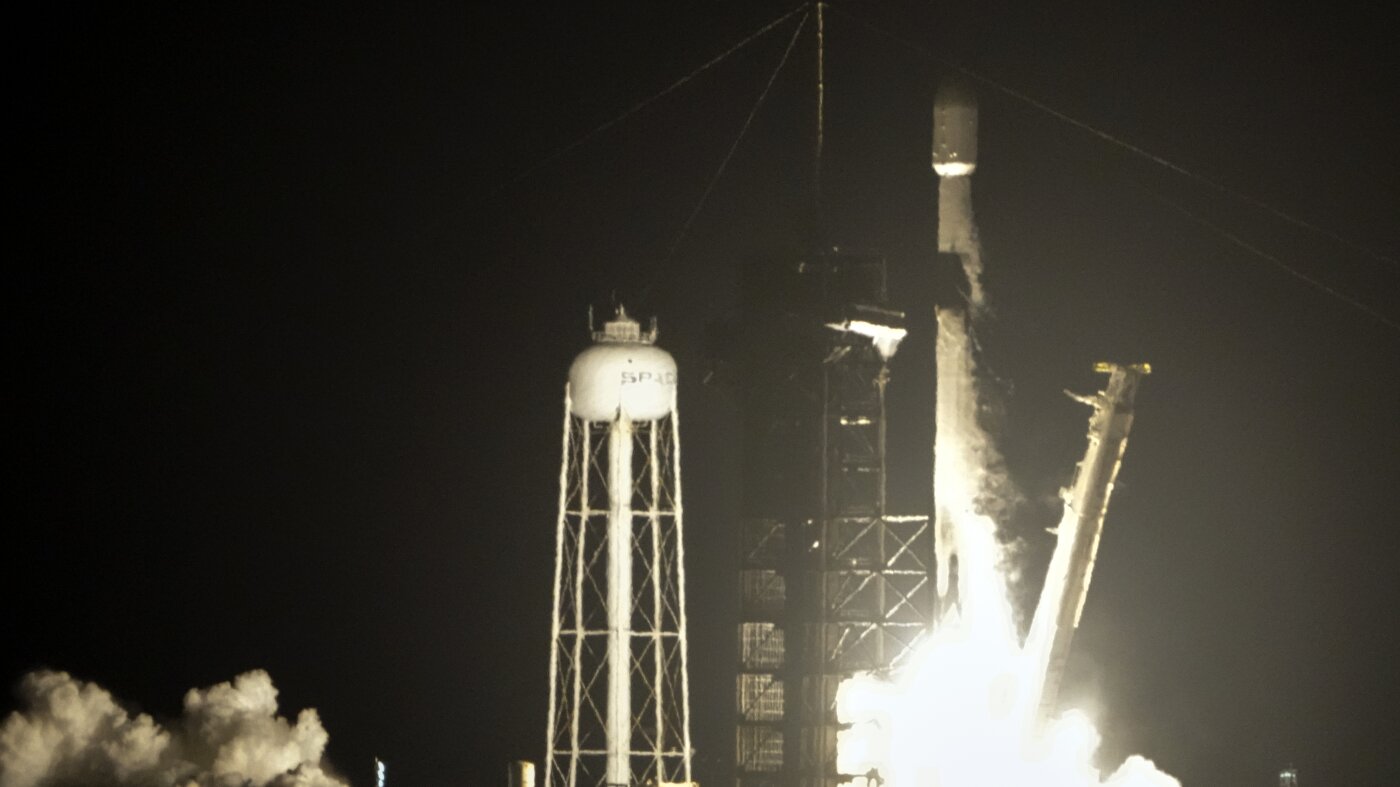
The fragment, part of the rocket’s upper stage, is expected to hit the lunar surface at approximately 2:35 a.m. ET, traveling over 5,000 miles per hour. This prediction comes from Bill Gray, a software developer who tracks space objects. Gray’s analysis indicates that the piece, roughly the size of a five-story building, was once part of a mission that launched in January 2025, carrying two lunar landers and scientific instruments.
The anticipated impact site is on the sunlit side of the moon that faces Earth, near the Einstein Crater in the northwest. Gray estimates that the collision could create a crater at least 17 meters in diameter.
Despite the fascination surrounding this event, SpaceX did not plan for the rocket piece to hit the moon. The company has not yet commented on the situation, according to the Associated Press.
NASA’s Lunar Reconnaissance Orbiter (LRO) is set to observe the aftermath of the impact. Brent Garry, a project scientist at NASA Goddard Space Flight Center, explained that the orbiter will monitor the region before and after the collision to assess changes to the lunar surface. “After the impact, we might have a little bit more knowledge of where it is,” Garry stated in a June discussion organized by NASA’s Solar System Exploration Research Virtual Institute (SSERVI). “We can do some additional targeting about a week after the impact.”
While the impact may not be directly visible, some researchers hope that sensitive telescopes could detect any resulting plume of rocks and debris. Bill Gray mentioned on his website that there’s a chance of seeing ejected rocks: “As with much in science, the answer is ‘we don’t know; let’s find out’…Maybe we’ll see rocks ejected from the crater.”
Ben Fernando, a postdoctoral fellow at Los Alamos National Laboratory, encouraged those with the right equipment to try observing the event, despite the challenges. “Given these are so rare, I would encourage people who are interested and aware of the risks to take a look,” Fernando said. “To be clear, this is not something that you’re going to see by pointing a pair of binoculars at the moon, but if you have the right equipment and the right time…why not take a look?”
This article was originally written by www.npr.org