
Sparks Ignite as Community Opposes Data Centers on Former Mall Site
An empty stretch of land once home to the bustling Landover Mall in Maryland is now the center of a heated debate. With overgrown grass covering the nearly 90-acre site, the area has been quiet since the mall’s closure in 2002. However, plans to turn this land into a massive data center complex have stirred local opposition.

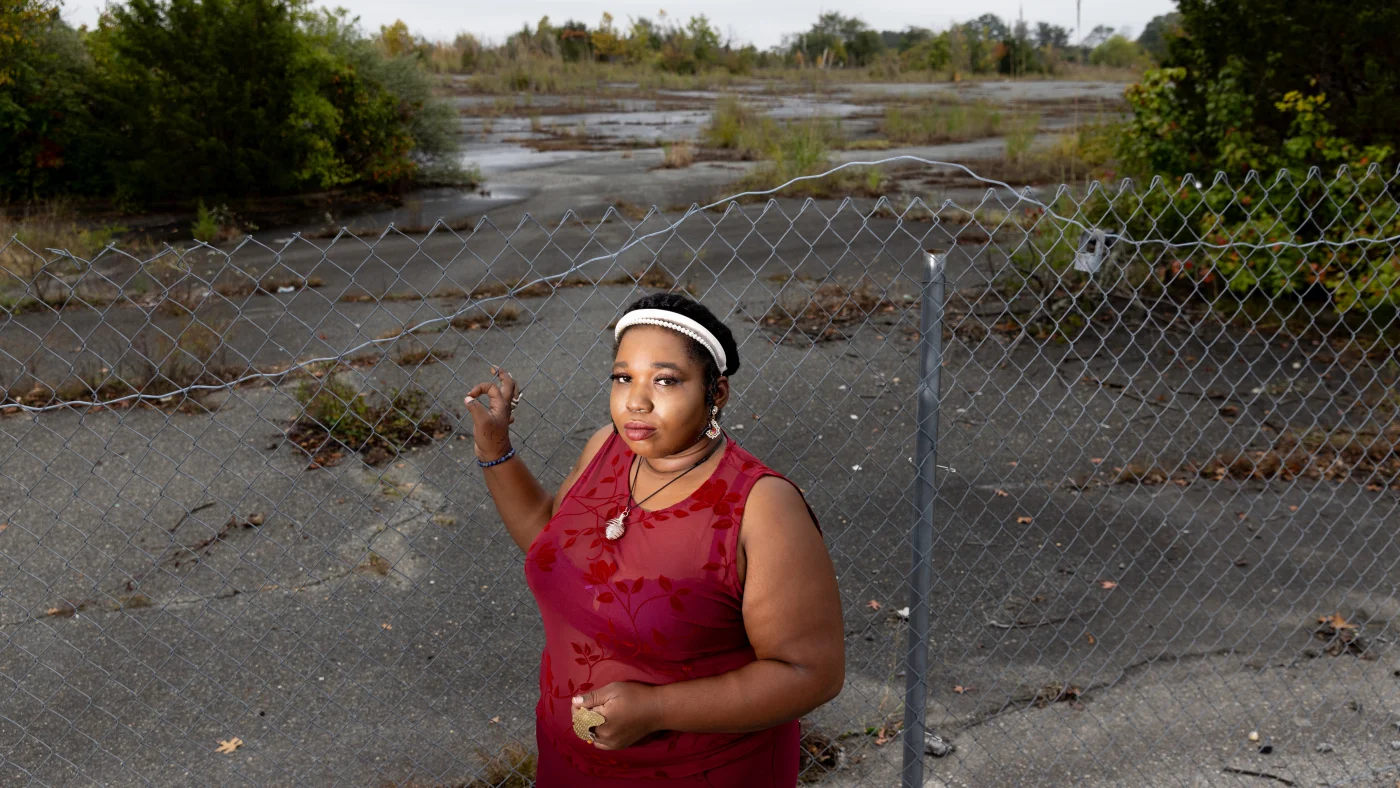
Taylor Frazier McCollum has been active in the opposition to the possible data center at the site of the demolished Landover Mall in Prince George’s County, less than a mile from where she lived. If the project is built, the development could occupy more than 80 acres.
Tyrone Turner/WAMU for NPR
Tyrone Turner/WAMU for NPR
In 2024, local developers received approval to transform this site into a $5 billion data center campus. This decision has been met with resistance from the nearby predominantly Black community.
“I was like, ‘Oh, hell no,'” Taylor Frazier McCollum exclaimed upon learning of the plans. Living less than a mile away, she questioned, “Why would you want to bring water-polluting, diesel-generating data centers right down the street from where people live, work, play? It just didn’t make sense to me.”
Frazier McCollum’s reaction is part of a larger movement across the United States, where communities push back against data center developments, resulting in approximately 500 moratoriums nationwide.
A New Wave of Activism
Unlike many land-use activists, Frazier McCollum does not own property. In 2024, she faced eviction from her apartment due to wage cuts at her job, forcing her and her daughter to move in with her grandfather. It was during this time she discovered the data center proposal.
Determined to fight, she launched a petition collecting over 25,000 signatures, leading to significant protests and multiple moratoriums halting the data center project scheduled for 2026-2027.

Taylor Frazier McCollum in front of her grandfather’s home, where she lived when she heard about the proposed data center site less than a mile away in Landover, Md.
Tyrone Turner/WAMU for NPR
Tyrone Turner/WAMU for NPR
Her activism has propelled her into local politics, where she has spoken at county meetings, testified before Maryland legislators, and aligned with various groups including socialists and environmentalists, all united against the data centers.
Despite her growing influence, Prince George’s County faces financial challenges. The closure of a local Six Flags, the planned exit of the NFL’s Washington Commanders to Washington, D.C., and job losses among federal workers contribute to a budget deficit that data centers could potentially alleviate.

The possible data center site, which was once the Landover Mall, in Prince George’s County. If the project is built, the development will occupy more than 80 acres.
Tyrone Turner/WAMU for NPR
Tyrone Turner/WAMU for NPR
During a county council meeting in September, Frazier McCollum advocated for a fund to support roof repairs, highlighting her grandfather’s home as an example. Council member Wanika Fisher, in support of some data center projects, emphasized the need for economic growth, stating, “Our county has an economic future that we have to grapple with.”
Expanding Horizons
As the Landover project remains stalled, Frazier McCollum seeks to ban data centers entirely. With support from grants, she takes her campaign to Black communities in cities like Atlanta and Memphis and even to Zambia, aiming to set a precedent against large-scale data centers.
“I feel like so many people are depending on this fight to be successful,” Frazier McCollum stated. She has made personal sacrifices, missing work and relying on family for support, yet remains committed to her cause, drawing parallels to civil rights struggles.
Her father, Lacy McCollum Jr., views her advocacy as part of a broader fight for fundamental rights. “We’re talking about the right to water, the right to clean air, the right to a place to live. That’s everybody’s fight, right?” he expressed, comparing her to historical civil rights leaders.
Although encouraged to run for office, Frazier McCollum prioritizes settling personal matters first but sees political involvement in her future. She envisions alternative uses for the Landover land, such as a sports complex or affordable housing, acknowledging these ideas may not be as financially rewarding as a data center.
Jenny Abamu is a reporter for WAMU.





Comments are closed.