
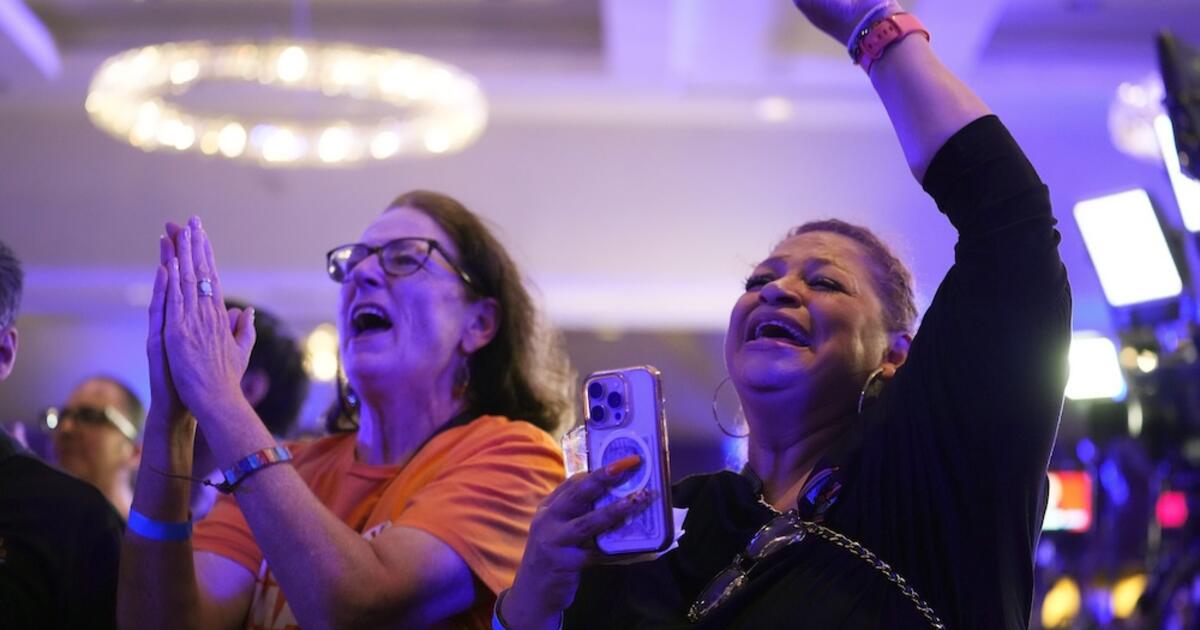
In a remarkable shift in political tides, Tuesday’s elections heralded a significant transformation in the United States’ political landscape. Voters saw unprecedented results as Abdul El-Sayed secured his senatorial seat, and a longstanding Republican incumbent was ousted from office. Such outcomes echoed a broader trend across the nation.
States traditionally leaning Republican, such as Texas, Kansas, and South Carolina, have elected Democratic senators for the first time in years. This development suggests a profound shift in voter sentiment, surpassing even the boldest polling forecasts.
The recent elections underscore a recurring theme in global politics: incumbency vulnerability. This phenomenon was evident in the 2018 midterms, which also saw a significant Democratic surge, akin to the Republican victories of 2010.
Politicians often cast themselves as outsiders with novel solutions, yet public opinion can shift as swiftly as it rises. The desire for leaders who can provide salvation, both politically and socially, is deeply ingrained in human nature. This narrative of disappointment and broken promises is compelling, reflecting a historical yearning for transformative leadership, reminiscent of the Israelites’ plea for a king in 1 Samuel 8.
While the system of democratic elections differs from a divinely appointed monarchy, the underlying belief in finding the “right” leaders persists. However, political victories alone cannot achieve societal transformation. The recent elections should not solely be viewed as strategic victories but as a reminder that voting is merely one aspect of democratic participation.
Reflecting on the past political cycles, such as the ascent of Donald Trump and the subsequent election of Joe Biden, reveals a pattern of rejection driving voter behavior. This dynamic was evident once again in 2024, emphasizing that political discontent cuts both ways.
It is a mistake to assume the midterms are a definitive predictor of future trends. Overreliance on a progressive wave can lead to the misconception that voting is the ultimate form of democratic engagement. The tumultuous Trump years have highlighted the importance of active civic involvement beyond the ballot box.
Churches have played a vital role in fostering community support, assisting undocumented individuals, addressing homelessness, and pursuing international collaboration despite growing isolationism. Such efforts resonate with the biblical concept of the Jubilee year, as described in Leviticus 25, calling for societal restoration and justice.
The teachings of Jesus, as presented in Luke 4, further illustrate this vision of an inclusive and restorative kingdom. Christians are inspired to embody these principles, using politics as a means to advance biblical justice and peace.
However, the pursuit of societal restoration is tempered by the acknowledgment that no earthly system can fully remedy the world’s brokenness. As the late theologian Walter Brueggemann noted in a 2020 interview with Sojourners, it is a “great temptation for liberals” to place ultimate hope in political solutions alone.
Brueggemann advocated for a “two-track system of hope,” balancing immediate political action with faith in divine redemption. This dual approach empowers individuals to engage boldly in political advocacy while recognizing that enduring hope lies beyond human efforts.
The challenge lies in harmonizing practical and eschatological hope. By doing so, individuals can contribute to a more just and peaceful society, while remaining grounded in the belief that ultimate salvation transcends temporal achievements.
The cure for our enduring fear and our politics of grievance is best found in renewing our full commitment to both our practical and eschatological hope. They should feed and intensify each other.
This article was originally written by sojo.net




Comments are closed.