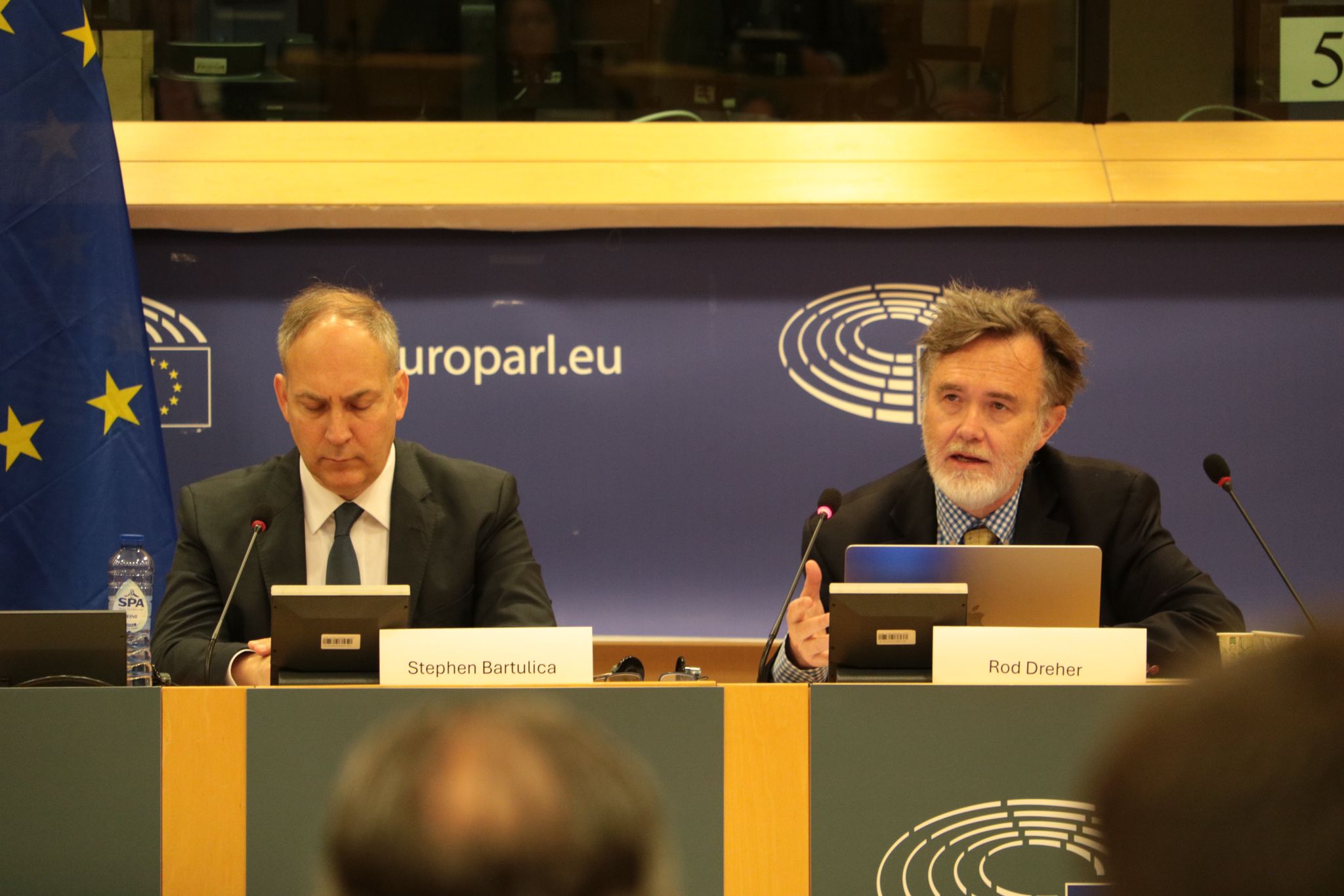
(Photo: The Alliance Defending Freedom International)
In the heart of the European Parliament, a pivotal discussion unfolded regarding the potential implications of the European Union’s proposed Digital Services Act (DSA). Spearheaded by the Alliance Defending Freedom International (ADF), this meeting brought together lawmakers and analysts to scrutinize the future of online speech across Europe.
The DSA, which targets non-European tech giants like X and Meta, mandates the removal of “illegal content” under threat of significant financial penalties. Critics fear that this legislation could enforce a uniform standard of censorship across the EU, potentially allowing the most restrictive speech laws from any member country to govern the entire bloc.
“Free speech is again under threat on this continent in a way it hasn’t been since the nightmare of Europe’s authoritarian regimes just a few decades ago. The internet is the frontline of this assault on free speech in Europe,” stated Paul Coleman, Executive Director of ADF International, during the assembly.
American author Rod Dreher, present at the event, voiced concerns over “two-tier policing” in the UK and warned of a growing “soft totalitarianism” in the Western world. He urged, “Refuse to participate in any event where one cannot speak the truth,” while emphasizing: “Prepare to suffer for the truth.”
Stephen Bartulica, a Croatian Member of the European Parliament, highlighted the mounting opposition to the DSA, both within and outside the European legislative body. He noted significant apprehensions from the United States, stressing, “Concern from the United States, including from their State Department and Congress, over the censorial impact of the DSA should not be ignored by the Commission — the US is a vital ally of Europe.”
Bartulica, a staunch advocate for free speech, called for the rejection of online censorship, warning that simply quoting Scripture is being labeled as “hate speech” in some European regions due to the ambiguous nature of the term as a legal concept.
Coleman further cautioned that the DSA, instead of safeguarding citizens, might serve as a political instrument. He remarked, “The DSA is one of the most serious threats to online free speech in the digital age,” and stressed the need for a unified stance on free expression that bridges the Atlantic divide.
Addressing the broader implications, Coleman asserted, “Those in positions of power turn to censorship because they don’t trust democracy. But this censorial impulse must be rejected. There is a rich history of valuing free speech on this continent.” The dialogue at the European Parliament underscored a critical moment for the future of digital freedom and the protection of free speech across Europe.
This article was originally written by www.christiantoday.com